
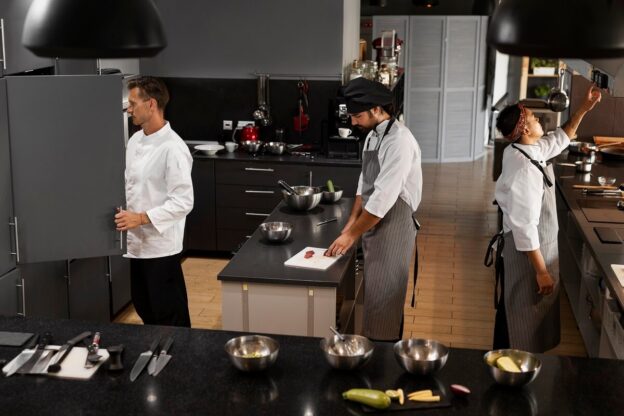
Do you want to make your mark in the restaurant industry? Create a well-thought-out commercial kitchen layout. First, create a detailed commercial kitchen blueprint. This will help you ensure efficient use of space. Knowing the basics of commercial kitchen design helps in creating a layout that supports smooth operations and meets health codes.
Aim for a setup that allows staff to move freely and safely, boosting productivity and customer satisfaction. This guide will cover the key steps to achieving an effective kitchen layout.
Let’s start the discussion.
How to Design a Commercial Kitchen Layout
Designing a restaurant kitchen layout involves careful planning and consideration. Here’s how to tailor it perfectly to your needs
- Ask your chef: Your chef knows what’s essential for efficient operation. Involve them early in the planning process. They can provide valuable insights on the placement and type of equipment needed. This helps you make informed decisions to enhance workflow
- Know your Menu: Your menu dictates the appliances and space you need. By understanding each dish’s preparation, you can determine the necessary equipment and optimize your kitchen’s design.
- Have a clear idea about what you don’t need: Avoid cluttering your space with unused equipment. Streamline your kitchen by selecting only the items that your menu requires. This saves space and cuts down on costs.
- Research local health codes: Your restaurant should be compliant with health codes. Research and adhere to local regulations.
Each of these steps helps you utilize commercial kitchen layout ideas and resources.
5 Basic Components of a Commercial Kitchen Design

Keep the floor of your commercial kitchen well-designed. To do that, here are a few basic things you need:
1. Washing
The washing area in any commercial kitchen layout helps maintain strict hygiene standards. This area is situated to avoid interference with food preparation zones. It typically features commercial-grade dishwashers, large sinks, and ample drying areas. Place everything in this area strategically. Cleaning and sanitation will be quick and hassle-free. Eventually, your operations will run smoothly and prevent cross-contamination.
2. Storage
An effective storage area is vital for maximizing space and maintaining order in a commercial kitchen. It should be designed to store dry goods, perishables, and cooking utensils in a particular manner. The storage process should prevent contamination and maximize efficiency. Arrange the shelves, refrigerators, and freezers carefully. This will help the staff access ingredients and tools easily.
3. Food Preparation
The food preparation area should offer ample countertops for sorting, chopping, and assembling dishes. Equip this area with all necessary tools and small appliances, arranged to minimize staff movement. This setup helps in maintaining a high-paced workflow and reducing bottlenecks during peak hours.
4. Meal Cooking
Cooking is the core activity of any restaurant kitchen blueprint. Have a specific layout for ovens, stoves, and grills. This promotes an easy flow of movement and efficient access to cooking tools and ingredients. Prioritize safety features like fire suppression systems and non-slip floors. An ergonomically designed cooking area helps chefs perform their tasks more efficiently. It leads to faster service times and higher-quality dishes.
5. Service
The service area is the final component of a commercial kitchen layout design, where dishes are plated and prepared for delivery to the dining area. This section should be strategically placed adjacent to the cooking area to ensure meals remain at an optimal temperature.
The layout must support a smooth transition from kitchen to table, with enough space for servers to move efficiently, reducing wait times and enhancing the dining experience.
5 Most Popular Commercial Kitchen Layout Design Ideas For 2026
Here are the layout designs you may consider for your restaurant:
1. Assembly Line Layout
This type of layout is ideal for restaurants specializing in. It streamlines the preparation process. In Assembly Line Layout, ingredients move down a line through preparation, cooking, and serving stations.
2. Island Layout
The island layout is useful in larger kitchens. It centralizes the cooking stations, making them the focal point of the kitchen. Surrounding this central island are peripheral stations for other tasks like cutting, washing, and baking. This layout allows for easy communication and access among staff, promoting an efficient workflow.
3. Zone-Style Layout
This layout divides the kitchen into different areas. This differentiation is mainly based on functions, such as prepping, cooking, and baking. The zone-style layout helps manage kitchen traffic. It also allows for specialized stations that can be customized according to the menu needs. It’s an effective design for larger kitchens that handle a diverse menu requiring various cooking techniques.
4. Galley Layout
Ideal for small commercial kitchens, the Galley layout features a narrow space with stations along two parallel walls. This design minimizes movement between stations. Thus, it maximizes limited space and enhances efficiency.
5. Open Kitchen Layout
An open kitchen layout merges the kitchen and dining area. It allows guests to view the cooking process. You can create an open kitchen in a tidy, well-organized space. In this type of layout, the chef’s interaction with guests also becomes part of the meal experience.
Key Things to Consider When Choosing the Commercial Kitchen Layout Design

When designing a commercial kitchen, consider the below-discussed factors
1. Ergonomics
This involves designing the kitchen layout in a way that minimizes staff fatigue and enhances productivity. It includes considering the placement of equipment to reduce unnecessary movement and ensuring that workstations are at comfortable heights.
2. Flexibility/Space
A flexible kitchen design can adapt to changes in the menu or staff. Additionally, it can efficiently handle high-volume periods. Thus, maximize your space usage while allowing for movement. This will provide adequate storage and preparation areas.
3. Cleaning
Ease of cleaning in commercial kitchens maintains hygiene standards and simplifies maintenance. Select surfaces and materials that are easy to wipe down. Design a space with minimal clutter and crevices where dirt can accumulate.
4. Safety
Safety considerations help protect staff and prevent accidents. Place the fire extinguishers properly. Keep the emergency exits clear. Make the kitchen floor slip-resistant.
5. Air Ventilation
Have proper ventilation in a commercial kitchen. This helps manage smoke, steam, and odors. The indoor air quality also stays clean and comfortable for staff and patrons.
6. Technology
Integrating modern technology can greatly enhance kitchen efficiency and accuracy. This includes using automated systems for inventory and ordering, energy-efficient appliances that reduce costs, and digital systems for temperature control and monitoring kitchen operations.
Conclusion
Each of these factors plays a crucial role in the overall functionality and success of a commercial kitchen.
When designing a restaurant kitchen, consider every minute detail. Each factor contributes significantly to creating an efficient and safe environment. Adhere to a well-planned restaurant kitchen blueprint. Make sure your commercial kitchen operates at its best. This careful planning leads to smoother operations and better service for customers.
Also Read: