
There are many ways to get a new good looking wood table top after time has made the table top look worn and in need of replacement. Although we sell new table tops it is not necessary to purchase new tables because with a little effort old table tops can be made to look new. The ash, oak, walnut or hickory that are the most common species we use and adding a new coat of polyurethane is the most inexpensive way to have new looking table tops. As a matter of fact, some customers have said that they like the look of reapplying a new coat of finish better than the original finish.
A new coat of finish provided a new warm layer of patina that gives the table top a refreshed table customers really enjoy.
Professional touch up – If wood table tops show scratches that go through to the wood under the finish a professional can touch up all the table tops for a reasonable cost. A scratch or ding showing the wood under the stain will be very visible and obvious eyesore to many customers. It’s like seeing a dirty window or glass door on the way into a restaurant. This type of touch up can be done on site usually at the time requested. Allow the recommended time for the table tops to be put back into service for best results.
Professional refinishing – If the table tops are too worn to be touched up then consider professional stripping to refinishing them. Cost is a consideration when comparing refinishing to purchasing new table tops as we have found the cost of refinishing to be somewhere between 60 to 100% of the cost of new table tops. One cost issue is that table tops will have to be removed from the business and delivered to a refinishing shop, wait at least a week or longer for them to be returned and assembled back on the bases.
In house touch up – Wood table top wear over time and busy restaurants should start a program of in house touch up to reduce cost before too much wear. Investing on in house repairs instead of buying new tops or having a professional touch up is the most economical. Here’s how:
 All the below supplies can be purchased with one stop at a local paint store like Sherwin – William, or a lumber store like Lowes or a local hardware store. If you give the below list to a clerk it will be surprisingly simple to fill. It is important that the stains and polyurethane are compatible and that is a reason to buy all materials from one store. Otherwise, there could be an unwanted chemical reaction between incompatible chemicals. These are the items that we have found to work the best at the lowest cost.
- TSP – trisodium phosphate. This is a common cleaner found in most stores that sell paint. It’s used by painters to clean surfaces prior to applying paint.
- 320 grit emery cloth for sanding. Depending on type of sanding need may need other grits as well
- Cheese cloth or tack cloth for removing dust.
- Paper to protect the floor from drips of stain or polyurethane.
- Matching stain to existing table tops.
- Disposable rubber gloves
- Small plastic bowl like one that whip cream comes in
- Several 3” disposable foam brushes which are disposable after one use.
- 1 quart of satin polyurethane. Paint can opener. Stir sticks. Avoid gloss polyurethane it shows scratches too easy
- 1 paper grocery bag. This is used to remove dust after poly urethane is dry.
- Touch up stain pen – after your tables are looking good, the inevitable scratch will happen again and this is a fast way to repair a scratch or a ding in just a minute or two. Apply the stain pen to the scratch and immediately wipe up excess around the scratch with a dry rag or paper towel. Make sure the touch up pen can be used on a polyurethane table top. This technique may even be the only step needed to make table tops look new.
 After materials are accumulated then these are the steps for success to reapply for a new finish.
- Find a quiet spot in the business to work on the table tops. Ideally the tables would not need to be moved from where they are currently sitting. This would be an area where foot traffic would be to a minimum because stirred up dust in the air will land on the fresh polyurethane and make the table feel rough when dry.
- Move the restaurant chairs away from the tables making sure there is enough room to walk around the tables.
- Use the TSP to clean the table tops following directions on the box and allow them to dry.
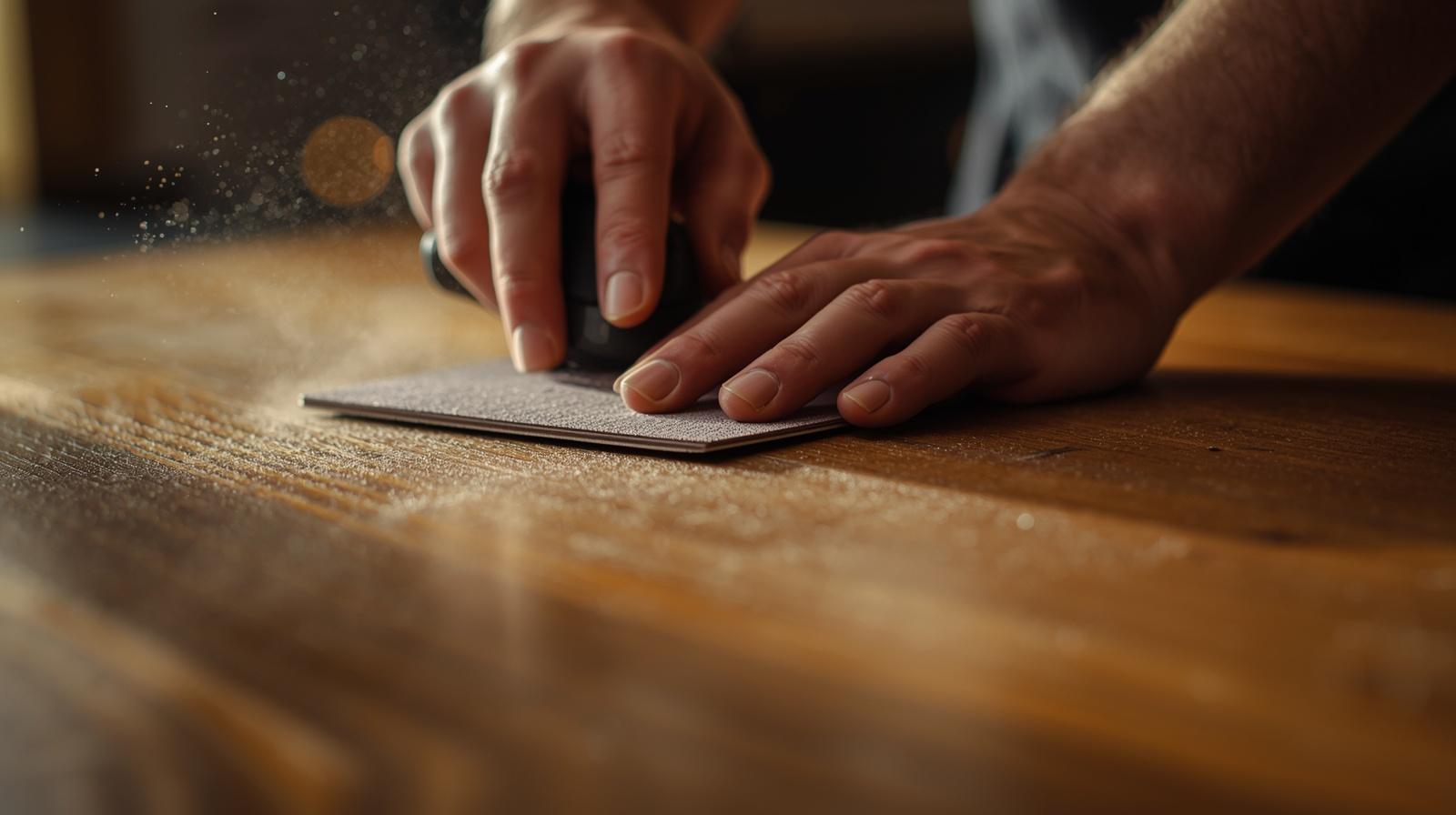
- Sand and test the emery cloth near where the table top damage is located. The old polyurethane just needs to be lightly sanded so the new polyurethane can stick well. Be careful not to sand areas where there is no polyurethane film. If this is an area with just stain sanding may remove the stain creating more work as stain has to be applied again.
- If there are spots with no stain then apply matching stain to the raw wood. Exact matches are close to impossible. Allow to dry by reading instructions on the stain label.
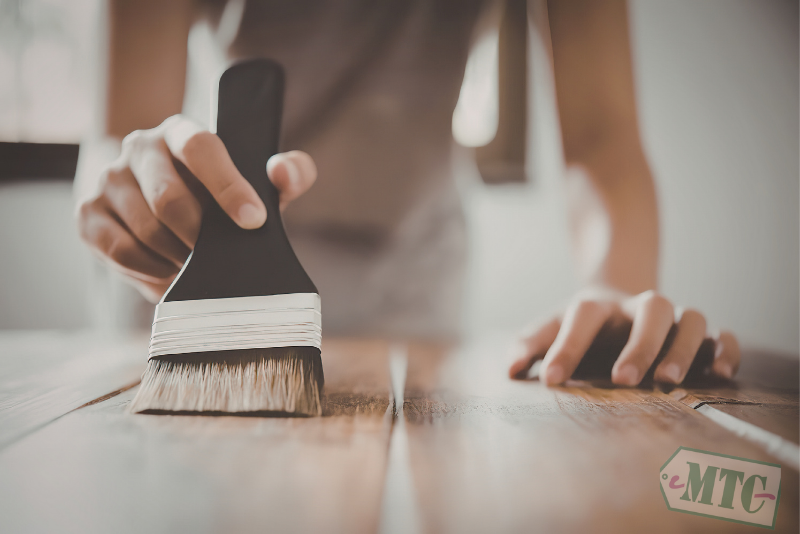
- After following the instructions on the polyurethane can, pour an inch or so into the plastic bowl. Using a foam brush apply the polyurethane in strokes with the grain from one end to the other. Use as few strokes as possible as the polyurethane will start setting up quickly. Apply polyurethane to the edges and check for drips. Allow to dry by reading the label on the can, keeping people and activity away from the restaurant table tops so no dust falls into the wet surface.
- After table tops are dry then if they feel rough with dust particles in the finish, use a piece of paper bag to gently wipe the table down which will remove most dust particles. Now the new polyurethane film should make the tables look like new.
What is written above may seem very challenging but is relatively easy for anyone that likes this type of work and can be delegated to people who do regular maintenance.
If there are questions about any of the above materials or steps, please contact Missouri Table & Chair at 816-246-4040.