
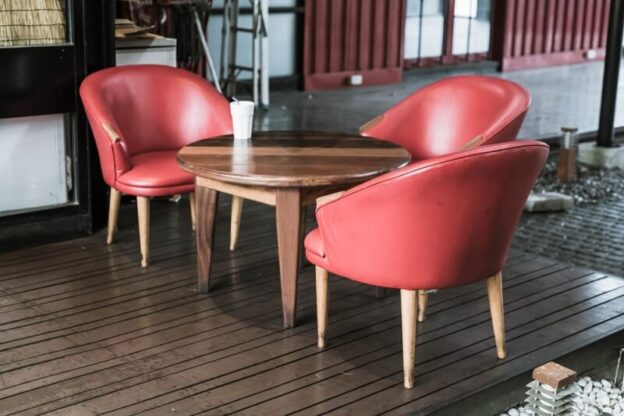
Creating a memorable dining experience goes far beyond the menu. The moment guests walk into your restaurant, they form impressions based on ambiance, comfort, and cleanliness. Seating plays a central role in that experience—not only because it’s where guests spend most of their time, but because it’s one of the most visible and heavily used elements in your space. Vinyl upholstery is a top choice for restaurant seating because it balances style, cleanability, and durabilty. But not all vinyl is created equal. Choosing the wrong type can cause your seating to wear out early, spiking your maintenance costs and ruining the guest experience.
At Missouri Table & Chair, we know that selecting furniture is a long-term business investment. Choosing the right commercial-grade materials protects your downstream restaurant revenue and keeps your seats standing up to heavy daily use. This comprehensive guide breaks down everything restaurant owners need to know before selecting vinyl fabric for booths, banquettes, barstools, and chairs. Whether you’re opening a new concept or refreshing an existing space, these insights will help you make a confident, informed decision.
Why Vinyl Upholstery is the Top Choice for Restaurant Seating
Vinyl upholstery has long been favored in commercial spaces because it strikes a perfect balance between aesthetics and performance. Modern vinyl fabrics are explicitly engineered to handle the unique challenges of a busy dining room—like spills, heavy traffic, and constant cleaning.
Key advantages of using vinyl for your restaurant seating include:
-
Exceptional durability: Commercial vinyl handles high-traffic use without stretching, sagging, or tearing. High-quality options feature advanced topcoats that resist tough stains like condiments, ink, and oils.
-
Easy to clean and sanitize: Vinyl has a non-porous surface. This makes it simple to wipe away food, grease, and liquids, helping you maintain strict hygiene standards.
-
Cost-effective investment: Vinyl offers a budget-friendly price point compared to real leather, giving you a high-end look without a high-end price tag.
-
Incredible design flexibility: It comes in hundreds of colors, textures, and patterns. You can easily find options that mimic natural leather, sleek modern finishes, or unique custom designs.
-
Moisture resistance: Vinyl naturally repels liquids, making it a smart choice for environments where spills are inevitable.
PVC vs. PU Vinyl: Choosing the Right Commercial Quality
Not all vinyl fabrics are suitable for a busy commercial dining room. The material you choose directly impacts customer comfort and the lifespan of your furniture. One of the most critical decisions you will make is choosing between PVC (polyvinyl chloride) and PU (polyurethane) vinyl.
Industry experts strongly recommend PVC over PU for restaurant seating.
-
PU Vinyl: PU fabrics feel soft and mimic real leather very well. However, PU has a major weakness called “puddling.” After customers sit on it, the fabric stretches out and sags. These loose, saggy wrinkles trap food crumbs, absorb body oils, and crack prematurely under pressure.
-
PVC Vinyl: PVC is the heavy-duty workhorse of the hospitality world. It is built in tough layers with a solid vinyl surface and a strong fabric backing. It holds its tight, smooth shape even when hundreds of guests slide in and out of your booths every single week.
Key Commercial Durability Specs for Restaurant Fabric
Commercial vinyl is specifically engineered for high-use environments like restaurants, hotels, hospitals, and healthcare facilities.
When evaluating vinyl, look for:
- Commercial durability ratings
- High double-rub counts
- Antimicrobial protection
- Stain resistance
- UV stability
If a supplier can’t confirm these specs, keep looking.
1. Wyzenbeek Double Rub Counts
The Wyzenbeek test measures how many times a machine can rub a fabric back and forth before it shows wear. For commercial environments, the standards are broken down by usage:
-
15,000 double rubs = light commercial use
-
30,000 double rubs = general commercial use
-
100,000+ double rubs = heavy-duty hospitality use
For restaurant booths, barstools, and main bar seating, you should always aim for at least 100,000 double rubs to handle continuous daily friction.
2. Vinyl Thickness and Fabric Backing
High-quality vinyl consists of a PVC top layer, a protective wear layer, and a strong woven backing. Backings made of polyester or cotton-poly blends add immense strength to the material. As a general rule, heavier vinyl lasts much longer in commercial spaces.
3. Tear and Seam Strength
Restaurant booths face constant stress at the seams where seat cushions meet. If the fabric lacks strong tear resistance, the seams will quickly split open. Poor seam strength is one of the most common causes of upholstery failure in the restaurant industry.
4. Cleanability and Sanitation Guidelines
Restaurants must sanitize seating surfaces multiple times a day. Look for non-porous vinyl that is explicitly bleach-cleanable (safe for a 10% bleach-to-water solution) and resistant to alcohol-based sanitizers. Using harsh chemicals on residential-grade fabrics will cause the surface to turn sticky, dry out, and crack, which quickly voids your warranty.
How to Evaluate Commercial Vinyl Samples Before Buying
Before committing to a large furniture order, always feel free to request physical fabric samples. Once they arrive at your restaurant, put them through these quick real-world tests:
-
Texture and Hand Feel: Touch the material directly. Does the vinyl feel soft, supple, and comfortable to sit on? Or does it feel stiff, cold, and plasticky?
-
Stretch and Recovery: Gently pull the sample in multiple directions. Does it immediately snap back to its original shape? High‑quality vinyl should not stretch out or warp.
-
Stain Testing: Apply common restaurant messes directly to the sample—like ketchup, mustard, coffee, or pen ink. Let them sit for a few minutes, then wipe them off to see how easily the surface cleans.
-
Chemical Resistance: Rub your restaurant’s actual daily sanitizing chemicals onto the sample. Make sure the spray does not cause discoloration, stickiness, or surface breakdown.
-
Colorfastness: If your seating will sit next to large windows, leave the sample in direct sunlight for a few days to check for early fading.
5 Common Restaurant Seating Upholstery Mistakes to Avoid
Avoiding these frequent missteps can save your business thousands of dollars in premature replacement and repair costs:
-
Choosing a vinyl fabric based entirely on color while ignoring abrasion and double-rub ratings.
-
Buying cheap, residential-grade materials that sag, puddle, and crack within a few months.
-
Using strong commercial sanitizers on a fabric without confirming its bleach-cleanability first.
-
Skipping UV-protected vinyl for booths placed next to large windows, leading to rapid fading and splitting.
-
Choosing high-gloss, ultra-shiny finishes that easily highlight scratches, scuffs, and wear.
Vinyl seating is one of the most cost-effective ways to enhance your restaurant’s appearance, improve guest comfort, and minimize long-term maintenance costs when chosen wisely.
Visit gotable.com today to speak with a dedicated furniture expert and request your commercial vinyl samples!