
Author Archives: Gayla

Showing Best Color For the Restaurants

What Are the Best Colors For Restaurant? : How Color Influence the Restaurant’s Success

Emotions and psychology go hand in hand when it comes to making important decisions about food. So, the interior décor or the table design alone won’t help you influence their thoughts and actions. Rather, you need something stronger, which can instantly reflect one’s emotions right from the moment the person enters through the door. And that’s where colors come into play! 

Have you ever noticed how different restaurants with a farm-to-table restaurant theme play with green and earthy colors? Similarly, if you look at the logos of top fast food brands in the USA, you will find the most dominating shade being red and its variants. 

Colors have a huge influence on the human subconsciousness. If your dream is to deliver an awesome and unforgettable dining experience to your guests, it’s time to decide which shade you would like to play with. But there’s a catch! You cannot just go with random hues and shades.

That being said, we have crafted a detailed guide below, explaining the best colors for restaurants and their roles in influencing your guests’ actions. 

The Psychology of Colors in Restaurant

Truth be told, the human subconscious mind is heavily influenced by external stimuli. Take rain sounds or ocean waves as examples. Listening to these can help calm your frenzied nerves and fall asleep within minutes.

Similarly, watching videos of your favorite food on your phone will make you salivate. Similarly, hues have an immense role in influencing a person’s emotions and appetite. 

From the brand’s logo to the restaurant’s interior, choosing the right color will help you influence your guests’ psychology greatly.  Take warm colors like red and orange as examples. It is believed that these shades evoke excitement and energy within the onlookers.

Red can easily stimulate one’s appetite by increasing heart rate and sending signals to the brain. On the other hand, orange is used to promote social interaction at diners. 

Cool tones, however, will have a completely different influence. For instance, blue and its variants are often associated with tranquility, imparting a sense of peacefulness in the ambience.

Unfortunately, it suppresses the hunger and that’s why restaurants don’t prefer using this as the dominating shade. Green and brown, on the other hand, are great in exemplifying your commitment towards serving fresh ingredients and healthy dishes. 

Whether you want to create a sophisticated ambience for your fine-dining setup or keep the queue increasing in size for your fast food restaurant, colors will be your best companion. All you have to do is focus on understanding their association with human psychology. 

Key Color Categories For Restaurants

Before you dive into researching the best paint color for a restaurant, let’s understand the categories first. It will help you decide which specific group of hues can be aligned with the interior theme and your target customers. 

Warm Tones

The main colors in this group belong to the red, yellow, and orange spectrum. They are associated with energy and excitement for food to be served on the table. That’s why fast-food settings often use different variants of this spectrum to increase their customers’ appetite. 

Cool Shades

Showing Cool Shade Restaurant Ambience Color

Cooler tones are said to have a direct association with serenity and peacefulness. Here, the most preferred shades will be of green, blue, and purple spectrums. So, whether it’s a fine dining table set up or a health-focused décor, they will amplify your brand’s purpose.

Neutral Colors

Lastly, we have shades like black, golden, and white. These are used for complimenting other colors and create a balanced look in the restaurant interiors. Most modern and minimalist diner setups leverage these tones to invoke a sense of cleanliness and sharpness. 

Best Color Ideas For Restaurant to Create An Awesome Ambience

Warm colors: Energize and stimulate

1. Red

Known to make a strong psychological impact, this shade is perfect for fast-paced diners, like a hotdog station or a burger restaurant. It raises the energy levels, increases appetite by several notches, and creates an urgency in the customers. They will make faster decisions about their orders and can wait a little longer to enjoy your delicious cuisine.

Red Color For Restaurant

Incorporating it can be a bit difficult because the darker hues tend to overwhelm the onlookers if not properly placed. So, use a red-colored accent wall or include it as a base for your brand’s logo. Do not go overboard as that will create a very powerful persona, not quite accepted in a dining setup. 

2. Orange and Yellow

If you want to go on a warmer side, choose restaurant color palette ideas that can blend in these two shades seamlessly. Both impart a welcoming feeling, ensuring your guests find comfort in the interior décor. For example, an orange-colored upholstered sofa with bright yellow colored tables will evoke happiness and optimism. Yellow instantly grabs the attention of the onlookers and boosts mental activity. Orange, on the other hand, is said to create an enthusiastic and warm ambience for the guests.

Orange and Yellow Color For Restaurant

You can go with accent walls having either shade incorporated strategically in the indoor décor. For something unique, place metal chairs having both shades on either side of a wooden table top. Place orange and yellow roses and carnations as the centerpiece on the restaurant tables. Another great idea is to paint the food or cash counters with yellow or orange hues. 

Cool Colors: Relaxing and Refreshing

1. Blue

Unlike other cool shades, this one is supposed to suppress one’s hunger. So, using it as the prime shade to decorate the restaurant indoors might not be a good idea. What you can do is pair it with other complimentary colors to create a balance and simultaneously impart warmth and coziness. For example, blue and white form an amazing palette combination for a coastal-themed restaurant. These shades, together evoke a sense of freshness and tranquility.

Similarly, when paired with forest green, you can portray your brand’s commitment towards nature and sustainability. Dark blue shades with warm beige look great for a semi upscale restaurant setup. In case of fine dining, go for a white-colored table décor paired with dark blue upholstered chairs. 

2. Green

Whether you have a vegetarian cuisine or want to promote the farm-to-table dining concept, this color is ideal. It is strongly associated with freshness, nature, and health. Take a green-colored dish for an example. Nature lovers or health-focused customers will always prefer being served such a dish, filled with different shades of green. Similarly, using it in your indoor décor will uplift the mood and create a soothing ambiance. 
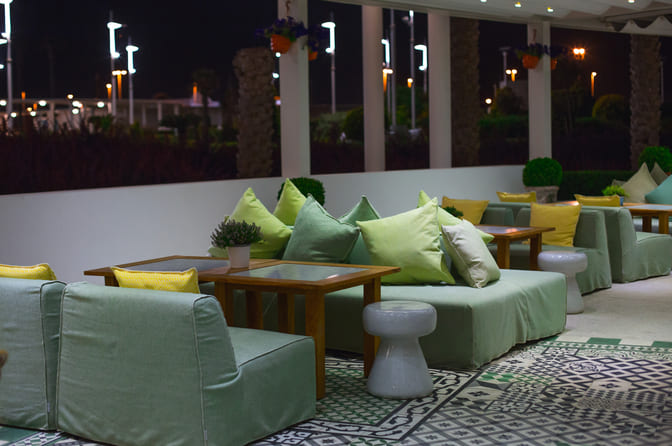
Green Color For Restaurant

The best way to incorporate it is to place potted plants at the restaurant’s entrance or on the tables as centerpieces. A vertical garden wall of succulents or herbs will serve as an awesome accent wall. Create garden walls on the back of the tables to add liveliness and tranquility. 

3. Purple

Considered as a regal color, it induces elegance and exclusivity in any restaurant décor. That’s why this shade is perfect for an upscaled-themed diner. When used thoughtfully, it can invoke a sense of luxury, sophistication, and intrigue in the ambience. This will automatically make your guests feel drawn to your restaurant.

Purple Color for Restaurant

Combine purple and pink shades to create a feminine-themed restaurant. Add purple-shaded upholstered furniture with wooden tables for a posh and luxurious setup. You can also use accent lights with purple hues to create an enigmatic and engaging ambience. 

Neutral Colors: Versatile and Sophisticated

1. White, Beige, and Gray

When it comes to neutral shades, these are the best colors for restaurants. However, you need to be very strategic in placing them so as to create a well-balanced look. They convey modernity, simplicity, and cleanliness, which is why your indoor décor will appear appealing to most guests. Each shade has a specific role to play.

White symbolizes purity and peace. Beige, on the other hand, offers warmth and comfort to the guests. Gray can be used to make the place look more elegant, balanced, and sophisticated. 

Choosing The Right Colors For Your Restaurant Concept

A. Aligning Color Selection With Brand Identity

Having countless options can leave you overwhelmed. It will make choosing the best colors for restaurants extremely challenging, especially if it’s your first time. Even seasoned players also struggle with deciding which shades to use for decorating their diners. 

That’s why begin with the very basics- your brand’s identity and the target audience. Whatever color you choose should align with these two factors completely. Take millennials as an example! They will most prefer balance, cleanliness, and peacefulness over everything else. So, go with cool tones with black or white as complementary shades. 

Similarly, if we talk about a burger or hotdog joint, warmer shades will form the perfect restaurant color palette idea. These will instantly increase the hunger level by several notches, keeping your guests rooted to their place, waiting for the delicious food to be served. 

B. Consider the Cuisine Type

The restaurant color scheme ideas you shortlist should define your cuisine amicably, leaving no gaps or discrepancies. Here’s a brief guide for you!

1. Fast food

These restaurants thrive on quick turnovers. So, you need to keep the energy of your customers at the topmost level possible. Play with warm colors, like red, yellow, and orange to increase their hunger and excitement, all the same time. 

2. Fine dining

Such a restaurant theme demands an interior that feels cozy and soothing for longer stays. You cannot go wrong with the color palette, especially as the décor has to be upscale. So, opt for different variants from the blue or deep red spectrum. Balance the darker shades with gold, white, or beige for a more sophisticated and minimalist look. 

3. Bakeries and cafes

As providing comfort is the ultimate goal, look for a color palette rich in earth or soft pastel tones. Take a bakery as an example. Here, you can create an inviting look with a combination of pastel pink and mint green shades. Similarly, combine lavender with baby blue hue to make the café look more elegant, calming, and upscale. 

Also Read: Bistro vs Café : What’s the difference?

4. Health-focused 

For such a cuisine, you will need the best colors for restaurants promoting freshness, wellness, and sustainability. Greens, especially olive, sage, and mint, symbolize vitality and nature. White will put more emphasis on purity and cleanliness. Earth tones, like terracotta or beige, focus on authenticity and warmth. 

C. Factor in Restaurant Size and Lighting 

While looking for an ideal color palette, consider the space and the illumination levels. Smaller places, like a café or a bakery, look airy and open when highlighted with soft pastels and neutral shades. On the other hand, larger restaurants, like a fine dining setup, can easily carry and demonstrate the beauty of darker and bolder colors. 

In addition to this, also consider the ambient lighting. Bright colors, like red, golden, and white will add more grace to a restaurant indoor having dim or artificial lighting. Neutral and earthy hues pair well with spaces receiving more natural light. 

Practical Tips For Applying Color in Your Restaurant

Add Accent Walls

Most often, using a single shade for the entire restaurant layout can become overwhelming and won’t be acceptable. So, instead, begin with an accent wall. Whether you want to incorporate bright red or dark purple as the main color, this will act as the main focal point. To top it off, the wall will add more depth and dimension, especially to smaller areas. 

Leverage Décor, Artwork, And Furniture

These are the perfect ways to incorporate multiple colors simultaneously in a subtle manner. Purple or blue colored upholstered sofas, orange-colored metal chairs, and golden tableware will add a cohesive look to your restaurant indoor. 

Coordinate Colors With Logo And Menu Design

One of the best ways to incorporate a statement color palette is to align the brand’s logo and the menu design with the same. Take a health-centric or farm-to-table themed diner as an example. Creating a menu with green colors or a branding logo with earthy hues will portray your commitment towards sustainability and eco-friendliness.

Choose Refreshing Colors For the Exterior

It’s not about the interiors only! Rather, you need to focus on the exterior design equally, if not more. Look for restaurant color schemes that will create an enticing and appealing visual for your customers standing outside. 

Don’t Overlook Restroom and Bar Areas

A well-colored restroom or an accent backsplash in the bar area will elevate the perceptions of your restaurant easily. Choose the colors strategically so that you can align the palette with the rest of your indoor décor and setup. 

Get Most Out Of Your Restaurant Colors

Choosing the best colors for a restaurant can be tedious work if you are not aware of their significance. Whether it’s the bright red shade or a muted pastel hue, every color you select will have a huge influence on your guests. so, be very strategic and ensure you do not go overboard by combining too many statement shades from different categories. Otherwise, it will overwhelm your guests and won’t help you enhance their dining experience. 

FAQs

1. What are the best colors for restaurant walls?

The best wall colors depend on the restaurant’s vibe and target audience. Warm tones like red and orange boost appetite and energy, making them good for casual eateries. Cooler shades like blue and green evoke calmness, ideal for fine dining. Neutral colors offer flexibility and a clean backdrop.

2. What color food is most appetizing?

Warm colors like red and yellow are generally the most appetizing. These shades stimulate the senses and grab attention, making the food appear more appealing. They often evoke feelings of warmth and comfort, encouraging people to eat more. It’s no surprise you’ll find them frequently in food advertising.

3. What are the best colors for restaurant walls to attract customers?

The palette will depend on your restaurant’s theme, target customers, and the indoor layout. Go with the shades that will help you engage your guests for long hours without overwhelming their senses too much.

4. Which colors stimulate appetite and encourage customers to eat more?

If you want to increase the hunger levels and boost your guests to place quick but big orders, go with warmer tones like red, orange, and yellow.

5. Are there any colors that should be avoided in restaurant interiors?

Blue is ideally not chosen to decorate a restaurant’s indoor as it can suppress one’s hunger. However, you can pair it with other colors evoking opposite emotions, like white for peacefulness, green for nature, and so on.

6. What colors are best for small restaurants to make them look bigger?

If your restaurant has a smaller space, use bright shades like yellow, orange, green, and red to create an illumination of a bigger indoor.

7. How do I choose a color scheme that matches my restaurant’s concept and cuisine?

Decide whether you want to impart warmth and coziness or play on tranquility and refreshing vibes. Based on that, you have to decide a color scheme that can be aligned with your cuisine and the restaurant’s theme.

8. What are some trendy restaurant color schemes for 2025?

Warm metallic with moody blue, lush green with earthy neutrals, sunset tones, and minimalist monochromes are the trendiest color palettes for restaurants in 2025.

9. Does lighting affect how paint colors look in a restaurant?

Yes, lighting will indeed influence how the paint is perceived in your restaurant.

Restaurant Table Décor and Centerpiece Decoration

20+ Unique Restaurant Table Décor & Centerpiece Ideas For an Inspiring Experience

Whether it’s a fine-dining restaurant or a casual Bohemian-themed café, table decoration has a huge influence on the guest experience. When it comes to table presentations, centerpieces take the top seat. These act as the focal point of the entire setup, drawing attention instantly. Whether it’s a candlelight setting or a vintage marble showpiece, you can keep your guests glued to their seat for prolonged hours.

That being said, we have elaborated the best restaurant table décor and centerpiece ideas that will help you create a wonderful presentation for your customers. Studies show that table aesthetics influenced the perception about food and customer service. Another source suggested that customers spent an average of 47.4 minutes on a table with better settings. So, it’s evident that this specific attribute can help you transform your restaurant’s image and deliver a stellar guest experience in no time.

Let’s have a look at some of the best restaurant table decorations ideas where centerpieces play a crucial part.

Why Decorating Your Restaurant Dining Table Is Must? 

These are not just decorative items you place on the restaurant tables. Centerpieces can shape the ambiance and influence your guests’ perception about your food menu and the service quality. To top it, these will further fortify your brand’s reputation and help you stand out in the highly competitive hospitality industry. So, before we delve right into the ideas for a restaurant table décor, let’s understand its significance. 

  1. Leverage a well-presented table with appealing decorations to make your guests feel special and cared for.
  2. Centerpieces can help you reinforce your brand’s identity by relaying what it stands for, like rustic, contemporary, casual, or finesse.
  3. Attention to table decoration detail signifies your priorities in cleanliness and professionalism. It will automatically amplify your first impression on the guests.
  4. Aesthetic table decors will influence your guests to click a picture and post on social media. It’s an indirect way of online promotion of your restaurant.
  5. Beautifully arranged décor items on the table will enhance the ambiance and its appeal, keeping guests engaged in long conversations.
  6. A memorable table décor can be easily translated into return promises and better customer satisfaction. 

Owing to these reasons, we have focused on elaborating the best decorating ideas for restaurant table tops that can be integrated seamlessly in your restaurant.

25 Unique Restaurant Centerpiece & Décor Ideas

1. Romantic Candlelight Centerpieces

Clustered votive candles or tall candelabras are best for creating an intimate and upscale ambiance for your customers. The soft flicker of the light will infuse romanticism into the atmosphere, setting the right mood for couples. You can take this centerpiece décor to the next level by using aromatic candles that will create a magical aura. However, ensure the décor is not too loud as that can overwhelm your guests.

A picture of romantic candlelight table centerpiece decor idea

Example: Le Coucou in NYC has mastered this décor idea to offer a romantic and refined fine-dining experience to its customers.

Also Read: A Restaurant Table Guide: Types, Materials, Size, and Cleaning Best Practices

2. Elegant Floral Arrangements

Floral arrangement is perhaps one of the most used restaurant table centerpiece ideas across the hospitality industry. Whether it’s the realistic faux floral blooms or the freshly cut ones, the purpose will be served anyhow. On top of this, they will also help you match the season or bring your restaurant’s color palette to life in no time. Just ensure the floral sticks are cut short so as to keep the sightlines clear and unhindered.

Elegant Floral Restaurant Dining Table Arrangement

Example: The French Laundry in Yountville, CA has reinforced its brand identity with centerpieces featuring seasonal flowers. 

3. Curated Decorative Trays

You can also place an accent tray right at the middle of the restaurant table. Fill the blank space with votives, miniature bottles, or artistic objects that reflect your brand’s concept or the cuisine. You can also change the decorative pieces to deliver a different visual to your return customers based on seasons or the restaurant theme.

Restaurant Table decoration with curated decorative trays

Example: Gramercy Tavern (NYC) uses rustic components like herbs and candle clusters on wooden trays as the table centerpieces. 

4. Farm-to-table

Celebrate the local farmers by placing their fresh produce, like fruits and vegetables on the table’s center. These will help you reflect on your restaurant’s goal towards sustainable dining.

Farm-to-table Restaurant Table Decoration

Example: A popular restaurant in NYC, Blue Hill at Stone Barns displays seasonal produce from the local farms to strengthen its commitment towards farm-fresh dining. 

5. Vintage Lanterns

Restaurant table decorated with vintage lanterns

Create a nostalgic dining experience for your guests just like The Smith by incorporating vintage lanterns in your table design. You can go with real candles or the LED lights as per your convenience. These will add a relaxed and cozy feel to every table. Let your guests enjoy both the delicacies and the vibes till the very end. What’s more, the lanterns won’t take up too much space, thus proving to be one of the unique dining table ideas. 

6. Rustic Floral Jars On Wood Slices

Rustic Floral Jars On Wood Slices decoration on restaurant table

Place a cross-sectional slice of a tree’s bark on the table cloth after staining it properly with the most natural shade you can find. You can decorate it easily with small mason jars having floral sticks, like lavender, roses, and even daisies. This will create a rustic charm and elevate the restaurant’s ambience by several notches. If you want to incorporate the country-style vibes like farmhouse Chicago, use seasonal and local wildflowers. 

7. Potted Succulents or Mini Plants

Restaurant table decoration with potted succulents or mini plants

Sweetgreen has transformed its interior with one of the best restaurant table ideas. All you have to do is gather a few succulents or small potted plants. These are extremely low maintenance and don’t even need regular watering. With this entire arrangement, you can create a modern, eco-friendlier vibe for your guests. 

8. Collection of Glass Bottles

Another great idea for decorating your restaurant table tops is by creating a collection of small-sized glass bottles. Add a single floral stem for a fresh vibe or LED lights to create a cozy atmosphere. You can also get these bottles painted and display your passion for art. 

Example: Take inspiration from the ABC Kitchen in NYC where eclectic glassware is used to impart an urban, chic feel. 

9. Metallic Accents

Go bold with brass candleholders, trays, or planters as centerpieces for your restaurant table tops. The metallic colors will redefine the dining experience, allowing your guests to indulge in the luxury of delicious food and ambience fully. Leverage these decor pieces to complement specific cultures, like a Chinese or Japanese décor. 

Example: Zuma in Miami is the perfect example you can consider for this table décor idea. 

10. Interactive Chalkboard Table Tops

Silence can ruin the dining experience completely. Sometimes, guests do not converse freely over their meals. So, to boost engagement, you can place a small chalkboard on the table. Here, customers can doodle, draw, or even play crisscross till the food arrives. What’s more, they can also leave their feedback on the chalkboard.

Example:  Jeni’s Splendid Ice Creams in Nashville has made the best use of this idea to offer an interactive dining experience to its guests. 

11. Miniature Art Installations

One of the best restaurant centerpiece ideas will be to place miniature versions of local arts and sculptures. Take Bi-Rite Creamery as an example in San Francisco. They have placed different types of community art pieces on the tables so that guests can participate more. 

12. Seasonal Décor Swaps

Seasonal Décor Restaurant Table Décor

Show your creativity and imagination like The Smith in NYC by swapping the table décor according to the seasons. For example, a small pumpkin showpiece will complement the fall season and also the seasonal dishes you will serve. Similarly, winters can be celebrated with miniature pine boughs handpicked to meet your restaurant’s theme. 

13. Edible Centerpieces

Olmsted in Brooklyn has gone another level and transformed the table décor completely. Rather than placing any décor, it serves a mini, edible garden so that guests can pick their own herbs freely. You can go with different ideas, like adding a bread basket or a bowl of candies for a sweet treat. 

14. Themed Table Runners

Placing a runner complementing the theme is indeed one of the smartest restaurant table decoration ideas. Have it customized to reflect your brand’s identity or the concept that sets it apart from the rest of your competitors. What’s more, you can also create a vibrant look with differently-colored runners, like red and black, blue and beige, and so on. 

Example: Eataly in Chicago draws inspiration from branded runners to promote Italian culture amongst its guests.

15. Neon Accent Pieces

Restaurant Table Decor with Neon Accent LED Lights

If you want to make your restaurant Insta-worthy, go with the neon accent pieces. Small table decors with neon pink or blue LED lights will set the fun-filled and amusing ambiance for your guests. 

Example: Take a look at the photo gallery of Sugar Factory in Las Vegas where these accent pieces have made every table worthy of a click. 

16. Lanterns With Seasonal Fillers

One of the most popular restaurants in NYC, The NoMad, has placed small lanterns on the tables filled with seasonal items. It’s indeed a unique approach to let the customers feel more connected to nature. For example, fresh leaves and flower petals in the lanterns will signify the spring season while faux snow and a small sledge toy will represent the winters.

17. Minimal Stone or Marble Pieces

Marble Pieces Decoration on Restaurant Table

Capitalize on marbled centerpieces like Eleven Madison Park (NYC) to deliver an elegant dining experience. These can be small coasters made from marbles or stone sculptures from the local artistry shop. Combine different sizes of the décor items smartly for a sleek, modern look in your restaurant. 

18. Personalized Menu Holders

Rather than using separate menu cards, why don’t you create a holder for every table? It will also serve as a décor item, if not the centerpiece. For a low budget, go with the acrylic or plastic holders having bright colors to add vibrancy to the table display. Apart from this, you can also get them customized with a material and design of your choice to reflect your restaurant’s brand identity like The Modern (NYC).

19. Vintage Books or Board Games

If you want to create a homey, cozy feel in your restaurant, go with this restaurant table décor. Place a stack of vintage books your guests would likely read. A combination of different genres will serve the purpose. If books aren’t the option, go with board games, like snake and ladder or chess. 

Example: The Uncommons in NYC ensure their guests can enjoy to the fullest while dining by placing board games as a table décor. 

20. Wildflower Arrangements

All you have to do is collect a few mason jars or wooden square boxes and have them filled with twigs, green leaves, and wildflowers. Add aromatic candles and in the private space to a few table arrangements to create a romantic table setting for couples. 

21. Artisan Ceramic Bowl With Decorative Stones

Handmade ceramic bowls alone cannot elevate the beauty of your restaurant tables. So, fill them with polished river stones or colorful pebbles. Use shades that will compliment the theme and interior of your restaurant for a cohesive look. 

Example: Add a few faux flowers in between the stones to create an earthy feel like ABC Kitchen in NYC. 

22. Colorful Glass Bottle Arrangements

Restaurant Table Decor With Colorful Bottle Arrangements

If you want to use the table décor to promote your brand story, nothing will be as good as the colorful glass bottles. These are readily available in the market in varying shades and hues. Ensure to combine different lengths to create a dynamic view. Use colors that can reflect your brand on the go and influence your guests for a wonderful dining experience. 

23. Edible Fruit Displays

Gather vibrant fruits and have them arranged in a wicker basket or a metallic tray. Having it displayed on the tabletop will impart a fresh and appealing feel to your guests. Remember to change the fruits everyday so that your guests won’t have to worry about hygiene or anything else.

24. Seasonal Herb Pots

Restaurant table decoration with Seasonal Herb Pots

Placing a small wooden or clay pot of fresh herbs is a great way to bring the garden to your guests directly. Go with multiple plants, like rosemary, basil, mint, parsley, and so on. It will allow your guests to pick the best herb according to their palette preferences without any hassle. 

25. Miniature Water Feature

Install a small, battery-powered fountain on the tabletop to create an elegant, natural look for your guests. Ensure to get a spill proof design so that the water won’t wet the surroundings or disturb people sitting on the table.

Get Most Out From Your Dining Centerpiece

Centerpieces aren’t placed just to enhance the visuals. Instead, they serve a greater purpose! Every item, whether it’s a brass candle holder or a custom menu holder, delivers a memorable dining experience to your guests. No matter what cutlery you use or the restaurant furniture, the restaurant table décor will draw the final line between a stellar and a poor dining experience. So, making a random selection out of the blue will never be an option, especially if you want to have an upper hand in the industry. Always be precise in choosing what defines your brand and restaurant theme perfectly for a cohesive appearance. 

Frequently Asked Questions

1. How do I ensure my table décor aligns with my brand identity?

Identify your brand’s prime theme, which can include modern, playful, rustic, or contemporary. Select textures, colors, and centerpiece items that will make this concept prominent in terms of feel and visuals. 

2. Can I use digital elements or technology in table centerpieces?

Some of the best restaurant table centerpiece ideas you can leverage to satisfy the technology lovers are LED-lit décor, digital menus, and special screens. 

3. How can I choose the most feasible centerpiece for my restaurant tables?

Whatever central décor item you choose for the tabletop, ensure it aligns with the theme, color, texture, and the overall vibes seamlessly.

4. How often should I update or change my restaurant’s table décor?

Changing your restaurant table décor every month will give new visuals to your customers, especially those coming for the second or third time. You can also celebrate special occasions with theme-based tabletop centerpieces.

5. What are some space-saving centerpiece ideas for small tables?

Small succulents, miniature art pieces, and compact trays are some of the best décor ideas to layout while enhancing the visuals.

Top Reasons to Not Buy a Used Restaurant Furniture

Why You Should Not Buy Used Restaurant Furniture: Top Reasons

During the first few months of starting the restaurant, you will have to make huge investments upfront for several reasons. Everything comes at a huge price, from the kitchen appliances to the décor items, especially since these are for a commercial setup. But what requires a significant investment in the initial days is the restaurant furniture. Purchasing them in bulk can introduce financial strain for a low-budget setup. Perhaps that’s why most restaurant owners try to cut costs by buying used products. 

Although it might seem to be tangible from an owner’s perspective, the reality is far from that. Buying these can come with numerous consequences, which can’t be detected until it’s too late. From wobbly legs to mite infestations, the list is endless. That being said, we have brought forth the top reasons not to buy used restaurant furniture. With this guide, you will have all the answers to your questions and, henceforth, make the best decision for your business.

Top 6 Reasons You Should Not Buy Used Restaurant Furniture in 2025

1. Hidden Damage and Wear

At first glance, used restaurant furniture will appear in a decent condition, which makes the investment worthwhile. But in reality, these come with numerous hidden damages and signs of prominent wear. Structural weak points, like cracked wooden frames, loose joints, and compromised fasteners, are the most common problems that you may discover later. Sometimes, upholstery in the restaurant chairs also displays wear signs. Thinned fabric, deformed padding, and frayed seams are a few to name.

A hidden damage in the restaurant table

Having such furniture units at your restaurant will:

  1. Make a poor impression on your customers
  2. Increase the risks of sudden accidents of your staff or guests
  3. Incur higher repair costs 

For example, let’s assume the used restaurant chairs you got from the market have wobbly legs. Although fixing wobbly table legs will not be an easy thing to do. At first, it might not be a problem. However, when exposed to stress for long periods, the weakened legs will give out, causing the furniture to collapse. This will put the person sitting on the chair at a higher risk of potential injury.

2. Lack of warranty and guarantees

Once the restaurant furniture changes hands, the manufacturer’s warranty becomes void. In other words, whatever the issue is, the new owner will have to bear the expenses from his or her pocket. So, when you get second-hand restaurant furniture, you won’t have the luxury of enjoying the manufacturer’s warranty coverage. Whether it’s a broken leg or a stained upholstery that needs repair or replacement, the financial burden will fall upon your shoulders. 

Without the warranty cover, even the smallest issue can become a costly hassle. So, the money you saved by purchasing used furniture pieces would be used up in the repairs and replacements. Truth be told, this level of uncertainty can be detrimental to your business. Operation disruption and a strained budget are the two major hiccups you will have to encounter. The problems will escalate further in case it’s a small or a newly opened restaurant, where consistent performance of furnishings and equipment is the key to survival. 

How Does Buying New Restaurant Furniture Solve the Issue?

If we talk about new restaurant furniture brought straight from the manufacturer, you will get the financial protection. Most companies offer a warranty covering workmanship and material defects for a specified period. Sometimes, it may get extended to complete replacements, in case there is premature product damage. 

3. Limited Replacement And matching options

Imagine replacing a broken chair or adding new tables to the commercial setup. Now, when you have invested in used restaurant furniture, getting an exact match in the market will be next to impossible. That’s because these often come from one-off sales or discontinued lines, making the options pretty limited with what’s available within your line of vision.

Restaurant table and chairs without matching

Because of this, you are bound to face difficulties, like:

  1. Inconsistent availability: Used furniture is usually sold in a single piece or small batches. There might not be enough product availability to meet your requirements. 
  2. Mismatched aesthetics: Adding furniture with mismatched aesthetics to the rest of the setup will create a discontinuity. 
  3. Costly custom solutions: Even if you try to recreate the same look by looking for custom furniture design or upholstery, the investments needed will be quite huge. 
  4. Discontinued designs: Most often, the second-hand restaurant furniture pieces come from a line that is no longer manufactured. So, getting replacements will to difficult. 

Significance of Consistent Aesthetics for your restaurant 

Maintaining continuity in your restaurant’s aesthetics is of utmost importance. Find here the reasons!

  1. It gives off the impression of an organized and professional establishment. 
  2. A cohesive look will make the atmosphere pleasant, allowing you to deliver a wonderful guest experience.
  3. Customers often associate quality and care with a polished, consistent interior design. 

4. Questionable Quality and Commercial Suitability

One of the major concerns with used restaurant furniture is its feasibility for commercial uses. Restaurants, regardless of the type or size, have a high-traffic atmosphere. The daily wear and tear levels are pretty high due to constant relocation and use. So, if the products are not meant for commercial use, they will soon give out and start showing signs of prominent damage. For example, furniture products originally manufactured for residential purposes are often repurposed and sold to restaurant owners.

Low-quality restaurant table and chair in the picture

Despite their visual appeal, withstanding constant wear and tear is highly questionable. As a result, they will deteriorate much faster and pose a huge risk for your guests and staff. The maintenance costs will skyrocket in no time. To help you understand better, we have presented here a few durability and quality concerns that often arise with second-hand restaurant furniture. 

  1. Non-compliance with commercial standards: Sometimes, the furniture units fail to adhere to the stringent industry regulations. These can include non-compliance with fire codes, accessibility, and ergonomic guidelines in a commercial setup. 
  2. Insufficient weight-bearing capacity: Residential-grade furniture is built for occasional use only. Hence, placing them in a high-traffic commercial environment isn’t feasible. They won’t be able to bear the constant strain from customer weights or frequent cleaning activities. 
  3. Lack of weather resistance: Used furniture, not intended for outdoor use initially, will rust, crack, or fade if you place it on the patio or anywhere outside the restaurant. That’s because they lack the protection required against fluctuating weather conditions. 

5. False economy- Not always cheaper in the long run

Getting a good-looking restaurant furniture at almost half the expected budget sounds great. But this is too good to be true! The underlying damages and durability issues will compensate for the savings you made on the deal. How? Here’s the answer!

  1. Frequent repairs: Whether it’s a snapped chair leg or a rusty metal table, frequent repairing needs will drain your cash flow. 
  2. Operational downtime: If two out of the six tables in your restaurant become non-operational due to the damage, you won’t have the expected seating capacity. This will automatically introduce operational downtime, causing significant monetary losses.
  3. Early replacements: Since used restaurant furniture generally comes with a shorter lifespan, they will need replacements sooner than expected. So, you will have to invest in new products at a much higher price. 

What seemed to be a smart investment will soon turn out to be a costly mistake with ongoing expenses once you factor in the repair, replacement, and maintenance costs. However, if we consider new furniture, the calculated cost based on the market prices isn’t what you need to pay. Rather, the amount will get reduced further, thanks to the seasonal discounts, bulk purchase offers, and package deals. Besides, the ongoing costs after the purchase will be significantly lower. So, considering all these, investing in new restaurant furniture is a cost-effective solution in the long run. 

6. Limited Styles and Customization Options

If you plan to buy used restaurant furniture, you will be stuck with only a few options in terms of style and design. Most sellers maintain an inventory containing furniture items having similar or common looks. Even if you want to create a distinct look for your restaurant, it won’t be possible. Besides, you will nowhere have access to the trending designs and styles amongst the used furniture products. 

Below, we have explained further the limitations you will have with such utilities. 

  1. Restricted availability: The current inventory might not have enough stock to fulfill your restaurant’s requirements. As a result, you will have to manage with what’s available, and it might create a discontinuity in the aesthetics. 
  2. No customization options: When it comes to reclaimed restaurant furniture, sellers do not offer customization. So, you won’t be able to make any adjustments in the design or style that could be aligned with your brand image. 
  3. Functional limitations: Besides design restrictions, used furniture may not have the required functional features. For example, the chairs may lack ergonomic build, or the restaurant dining tables might not meet the standard height requirements. 

What Should You consider Then?

From the above explanations, it’s evident that investing in used restaurant furniture will bring more problems than benefits to the table. Underlying damages, limited availability, mismatched theme, and questionable quality are a few to name. Now, the question is, what can you do for your restaurant to get this problem resolved?

Stylish and new restaurant furniture at Missouri Table & Chairs 

The answer is to buy new furniture elements from a reputable manufacturer like Missouri Table & Chair. It provides premium-quality products manufactured in the USA, and that too at wholesale prices. What’s more, you can customize the product design or style to match your brand statement seamlessly. 

Conclusion

While used restaurant furniture units are available at much lower prices, buying them will open the doors for several hidden risks. Unstable and poor-quality products won’t be able to withstand the wear and tear for too long. Hence, the risks of sudden accidents and injuries will be much higher. Apart from this, the ongoing maintenance and repair costs will make your finances highly unstable. Because of this, you should set up your restaurant with brand-new furniture elements from promising manufacturers, like Missouri Table & Chair. 

FAQs

1. How often should you replace your dining room table?

5 to 7 years is the standard time frame for replacing the dining room tables used in high-traffic commercial establishments, like restaurants. 

2. Can I get bulk discounts on new furniture that make it as affordable as used?

If you are buying new restaurant furniture in bulk orders, most manufacturers will give excellent discounts on the total bill amount.

3. Does used restaurant furniture come with a warranty or guarantee?

While some used restaurant furniture products may have a warranty, most of them won’t come with this benefit. 

4. How difficult is it to repair or replace parts of used restaurant furniture?

Whether it’s due to the unavailability of matching parts or damages that are beyond repair, fixing the issues with second-hand restaurant furniture is immensely difficult.

Types of Table Bases

11 Questions You Should Know Before Buying Restaurant Table Bases

Since restaurant table bases are not discussed in everyday conversation, even among restaurant owners, there are important questions that should be considered before purchasing them. Before these questions are addressed, let’s examine what types of bases are used in restaurants.

There are various ways to support a table top, but most all bases for restaurants are metal bases which are composed of three parts. The top part is the cast iron top plate, also known as the spider, which is the piece of metal that attaches to the bottom of the table. The middle part is the column, composed of a tube usually 3″ or 4″ in diameter, with a ½” rod in the middle of the column which connects the spider to the base plate. The bottom part is the base plate that sits directly on the floor. The base plate usually has levelers in it to help prevent the table from wobbling.

Consider Below Mentioned 11 Secrets about Restaurant Table Bases

The secrets below only relate to the metal restaurant bases just described and the metal cantilever. There are other types of bases, but they comprise around one percent or less of restaurant table bases. Read on for all the information you need to know about restaurant table bases.

1. Is Base Shape Important For Me?

Table Base

Table base shape is important because of the basic difference between the two basic bases. The two basic base types are the round base or the cross base, which is also known as the X base. Generally, round base bottoms are heavier, and can have 5 levelers, while a cross base normally has 4 levelers. When round bases are manufactured with 5 levelers, there is one more point of contact with the floor to level the base, which helps prevent it from wobbling. Round base plates also tend to make it easier for customers to find a place to put their feet, as a cross or x-style base has 4 arms that change the elevation of the base bottom.

2. Is There An Alternative to Prevent Customer’s Feet Kicking Table Base Bottoms?

Restaurant owners should consider using a cantilever. When using the cantilever style base, customers’ feet hit the floor and not a table base bottom. Cantilever bases should be consider when restaurant owners are concerned with customer comfort. A cantilever is a square metal tube table base that is attached to the wall, so there is no base bottom. All of the weight of the table top is supported by the cantilever, so there is no weight on the floor. The cantilever base is typically used with booths, but can be used with any table next to a wall.

A cantilever does require some pre-planning when constructing a restaurant, because extra strength needs to be applied to the wall. Plain sheet rock will not hold the bolts of the cantilever base effectively. Brick or concrete walls work well. If the wall is composed of studs, then a 2” x 6” or 2” x 10” block of wood placed between the studs will work well.

3. Are All Table bases the same weight?

All metal table bases are not the same weight. Round table bases will usually be heavier, and because of their weight, can support tables a bit more solidly. Round bases can also hold an extra leveler for more table stability.

4. Designer bases, are they right for any size table?

Designer Table base

Because of the shape of the designer restaurant table base, the base bottom does not spread out as far on the floor. Caution should be taken to match the correct table base size with the table top size.  If there is close decision whether to go with the larger base as a rule of thumb, always go with the larger base. Designer bases are frequently used in coffee shops, ice cream stores or waiting areas where smaller table tops are used and where it is important to have the base to have a look other than a plain round column.

5. Can I put my table bases outside?

There are aluminum or stainless steel bases that are manufactured for outdoor use, and can be placed directly outside. The metal bases discussed here are usually made of steel, which would rust even though the outer side is painted with a black lacquer. The secret here is to spray paint the steel metal base with a rust-blocking paint. Rust-blocking paint can be purchased at almost any hardware store. Painting the steel bases is inexpensive and surprisingly easy to do.

6. What should I use to prevent my table base from wobbling?

At many restaurants, you’ll see napkins, coasters and other objects placed under table bases in an attempt to prevent the table from wobbling. This is a very bad idea. Many customers who notice table napkins or other items under their table may think the restaurant is unsanitary, which is not beneficial in trying to attract repeat customers. Servers, busboys and customers only use these items to try to fix a wobbly table top. Restaurant staff should be trained to use the levers, or replace missing levelers, to prevent a table top from wobbling. Restaurant table tops should be tested for stability at the beginning of every shift.

7. Are all Table Bases The Same Height?

No, table bases are not the same height. Different manufacturers make their table bases in different heights for various reasons. One reason for different height bases is some manufacturers make them for either thinner or thicker top tables. Bases can be cut shorter to accommodate various table thicknesses. For most restaurants, metal table bases with the table top attached should not be higher than an overall height of 30 inches.

8. When Does a Table Top Need More Than One Base?

There are two situations where two table bases may be a better choice. The bases referred to here are ‘T’ bases, called that name because they look like an upside down ‘T’. Rectangular tables such as a 30” x 48” are more stable with 2 of these bases than just one round or X base. Also, larger round tables are sometimes more effectively stabilized with 3 or more ‘T’ bases.

9. Why Do Stand Up Bar Tables Need Better Bases?

Bar Table Base

Stand up tables are typically 42” tall, while dining height tables are about 30” tall. With the extra height on a stand up table, a thicker column more beneficial in preventing the taller tables from wobbling. Columns come in different steel gauges, and for a stand up table, it is better to use a 16 gauge column rather than a 22 gauge. The heavier the table top, the thicker gauge column is needed. And like dining height bases, stand up restaurant table bases need to have the table top size matched to the size of the supporting metal base.

10. What Is Important About Table Base Parts?

Quality parts are one of the most important aspects regarding because most table bases are purchased outside of the USA and there is no standard for quality. The bolts or also called threaded rods sometimes do not match the nut to assemble the base, or the column can be cut at a slight angle causing the table to lean. The best practice is to avoid inexperienced table base vendors.

11. Why Should Table Bases Be Checked At The Start Of Every Meal Shift and Between Customers?

Many restaurant owners work very hard at making sure the food is prepared correctly, but they may miss the importance of a safe, stable table for the customer. Wobbly tables do not create a positive dining experience. Most restaurant floor surfaces are not flat, so when tables are moved around the restaurant, odds are that the base will have a leveler fall out, or the table will be placed on an uneven surface causing it to wobble. This is why table bases need to be checked every time a table changes customers.

Conclusion

Use these 11 small restaurant table base secrets to help create a great customer experience and ensure your customers will return. Yes, the rarely talked about or noticed table base is really that important!

restaurant table

A Restaurant Table Guide: Types, Materials, Size, and Cleaning Best Practices

As a restaurant owner, you thrive to offer an indulging experience for your guests. As you might have figured out by now, every little detail in your restaurant can significantly alter your guests’ impression. From service to the ambiance at your restaurant, from restaurant furniture to food, a memorable dining experience depends on several aspects. In this regard, your restaurant tables, being the highlight of the dining room, have tremendous power. Therefore, you must select the tables in your restaurant with utmost diligence.

Apart from the obvious functionality, affordability, comfort, durability, etc., requirements, there are design considerations as well. The aesthetic design and visual appearance of the table must gel with the overall ambiance of your restaurant. Excel in all these aspects, and you can offer a complete dining experience for your guests. Read on to about types of restaurant tables, their materials, restaurant table sizes & shapes, and how to make the most of them.

What are the Types of Restaurant Tables?

Restaurant Tables for two

1. Two to four-person tables

Perhaps the most common restaurant table, two to four-person tables have two parts – base and the table top. While the table bases are usually made of metal, table tops come in various finishes like marbles, granite, wood, laminate, resin, etc. Square or rectangular and circular are the most common shapes for two to four-person tables at restaurants.

Fatal error: Uncaught Magento\Framework\Exception\NoSuchEntityException: The product that was requested doesn't exist. Verify the product and try again. in /chroot/home/a3ea06d8/gotable.com/html/vendor/magento/module-catalog/Model/ProductRepository.php:287 Stack trace: #0 /chroot/home/a3ea06d8/gotable.com/html/generated/code/Magento/Catalog/Model/ProductRepository/Interceptor.php(23): Magento\Catalog\Model\ProductRepository->get('square_butcher_...', false, NULL, false) #1 /chroot/home/a3ea06d8/gotable.com/html/pub/scripts/blogproduct.php(25): Magento\Catalog\Model\ProductRepository\Interceptor->get('square_butcher_...') #2 {main} thrown in /chroot/home/a3ea06d8/gotable.com/html/vendor/magento/module-catalog/Model/ProductRepository.php on line 287

2. Bar height tables

Originally bar tables were meant to accommodate the guests as they waited for their tables to open up. However, bar tables have evolved to be a preferred choice for many restaurant customers over time. Bar tables provide an interactive, relaxed seating option for a personalized dining experience. Many customers now choose to avoid the wait at some restaurants and dine in the bar area using the comfortable bar height barstools and tables.

3. Restaurant Booths

The classic booth and table seating option are highly sought-after. For the customers, booths offer comfort, privacy, coziness, and extra legroom. Restaurant booths help utilize the corners to maximize the seating capacity and cause minimum disturbance to the customers.  While they might not be the most affordable option in initial cost, booths are space-efficient and save money in the long run for restaurant owners. So, it is a win-win situation.

4. Family dining tables

At family diners or banquet halls, family dining tables that can accommodate large gatherings are suitable. Often made in a circular or rectangular shape, family dining tables can seat 8 to 10 guests. Many restaurants use these tables in a separate section for large groups.

outdoor tables

5. Outdoor tables

Outdoor seating in your restaurant can be highly beneficial. It allows your customers to bask in nature’s glory and have a memorable dining experience. Also, it generates additional revenue by being able to seat guests outdoors as well as in your dining room.  From aluminum to wicker, from wrought iron to wicker, you have endless material options for outdoor restaurant tables. These commercial-grade tables, with a protective coating, can withstand extreme weather conditions.

What Are The Common Restaurant Table Shapes?

All restaurant tables sizes fall into any of the following two categories – round and rectangular or square. Each of them has some advantages, and selecting a particular shape depends on your personal preference, restaurant’s layout, and your requirements.

  • Square or Rectangular Restaurant Tables: From banquets to family dinners, rectangular or square restaurant tables are work well for any occasion. These tables can fill any dining space perfectly and symmetrically. You can place them against a wall or place them together to modify your restaurant’s layout to accommodate different seating groups and events. Square tables are perfect for hosting large gatherings in a lesser space. In a nutshell, they are practical, comfortable, and functional.

square restaurant tables

  • Round Restaurant Tables: A round table can be the centerpiece design element of your restaurant. Moreover, as your guests face each other, it allows them to engage and socialize. Additionally, round tables can offer more leg room and a larger seating capacity per table. As these tables does not have any corners, they can be used safely for any family restaurants with kids. All in all, round table tops are perfect for a get-together with friends or family.

What Are The Restaurant Tables Made Of?

1. Wood (Hardwood Restaurant Tables)

Wooden dining tables have a vintage look and old-world charm that light up any ambiance. The versatile wooden restaurant tables are available in hardwood, softwood, or a mixture of both. Hardwoods like Oak, Maple, Cherry, Walnut, Mahogany, etc., are more suitable for commercial dining tables as they are durable and last long. Laminated table tops have extra shining, while treated wooden tables provide a rustic look.

2. Granite (Black Galaxy and Tan/Brown Colors)

Rich multi-colored tones of granite table tops make them look premium in any dining area. Their smooth edges and polished surface create visual interest. With an extensive collection of various colors and patterns like Kashmir White, Black Galaxy, Tan/Brown, etc., you can get custom designs that match any theme in your restaurant.

granite counter top

3. Metal (Offers High Strength and Durability)

Metal tables are durable, sturdy and have been used for ages for commercial use in restaurants. Metallic table tops, due to their high tensile strength and stain-resistant properties, are suitable for family restaurants. If you wish to create a contemporary or trendy industrial look in your restaurant, metallic tables are a perfect choice.

4. Resin (All Weather Restaurant Tables)

Resin is a high-performance material made by combining specific woods and resins under heat and pressure. Cost-effective Resin table tops are synthetic materials that mimic the look and feel of any organic materials. These versatile, all-weather restaurant tables are built to last and are becoming popular these days. Contrary to wooden tables, resin tables are durable and require low maintenance.

5. Laminate (Dark Walnut, Traditional Mahogany)

Laminate table tops contain synthetic materials and look like natural wood. Made by sandwiching multiple layers of PVC, melamine, and wooden grain finishing, laminate is the perfect material for affordable and durable commercial furniture. The availability of hundreds of design options gives you sufficient room for customization.

6. Glass (Look Premium and Easy to Maintain)

Glass restaurant tables bring sophistication and elegance to your dining room. They look premium, modern, and are easy to clean. Moreover, glass tables usually have metallic or wooden table frames that provide a minimalist look and a powerful first impression. The stylish, timeless design of glass table tops makes them stand out in any restaurant theme to catch your guest’s attention.

glass restaurant tables

7. Quartz (In Many Colors, Pattern and Design)

Quartz is a relatively new material for table tops, and its manufacturing process involves combining ground quartz with coolants and resins under high temperatures and pressure. Since quartz is an engineered product, it is available in many colors, patterns, and design options. Also, it is possible to fine-tune the appearance and properties of quartz. Non-porous, rich in appearance, durable, quartz restaurant table tops with metal bases are the go to choice for any setup.

What Are The Standard Restaurant Table Sizes And Dimensions?

table measurements

The standard table sizes depend on the type, layout, and table-capacity of the restaurants. For example, a fine dining restaurant will require more table space per diner than a fast-food restaurant. Similarly, the location of kitchen and utility areas demands you to leave more gaps. As an industry-standard practice, you should leave at least 300 square inches of table room per diner. Here are the typical restaurant table dimensions according to the seating capacity for different shapes:

Seating Capacity Square Table Dimensions Rectangular Table Dimensions Round Table Dimensions(Diameter)
Two Persons 24” X 24” 24” X 30” 30”
Two to Four Persons 30” X 30” 42” X 30” 36”
Four to Six Persons 42” X 42” 60” X 30” 48”-54”
Eight Persons 48” X 48” 72” X 30” 60”

How to arrange restaurant tables?

Your restaurant type determines its furniture, theme, layout, menu, food prices, etc. While arranging the restaurant tables in your dining room, you must consider the type of service you provide and your customers’ expectations. Laying out restaurant tables requires you to make a tradeoff between seating capacity and comfort. A good rule of thumb is to leave at least a 24-inch gap between two tables.

restaurant table arrangement

Here are some common characteristics of typical food service styles to decide the perfect layout and concept for your restaurant:

  • Fine Dining: The luxurious dining room typically consists of sturdy wooden dining tables with cushioned chairs. Some fine dining restaurants use bars that double as a waiting area.
  • Steakhouse: Another upscale restaurant type, steakhouses usually have a rustic theme and layout. Generally, wooden tables, comfortable chairs or booths, and bricks are the main design elements.
  • Family Dining Restaurants: Family dining or casual restaurants witness high traffic and require low-maintenance furniture that is easy to clean. Typical restaurant furniture for such setup includes resin or reversible tables with vinyl-cushioned chairs or booths.
  • Fast Food Restaurant: Fast food joints and casual dining restaurants are famous for quick service at affordable prices. The restaurant layout is minimalist and consists of reversible laminate tables with metal chairs.

How To Clean And Sanitize Restaurant Tables?

The ongoing Covid-19 pandemic has stressed the requirement of hygiene. To win back the trust of your customers, you must provide a safe dining experience. So, what is the difference between cleaning and sanitizing? Cleaning is merely removing the dust or leftover food particles as you prepare the table for the next customer. Sanitizing, on the other hand, is protecting your guests and staff from germs by killing pathogens. Follow these steps to clean and sanitize your restaurant tables:

  • Clean the table top with a soap solution and moist cloth to remove all the food particles or stains.
  • Dry the surface with a paper towel or microfiber cloth.
  • Spray a disinfectant solution on the table top.
  • Leave the spray for 4-5 minutes, and wipe the wet areas using a microfiber cloth.

tables sanitization

Such a short sanitizing regime ensures your guests and staff are safe. Before trying a new disinfectant directly on your furniture or cushion, perform a spot test to check for the product’s compatibility.

How to Assemble Restaurant Tables?

Restaurant tables usually come in two parts- table bases and table tops. Assembling the restaurant tables is a relatively simple task. With the right set of mechanical tools and equipment, assembling a table only requires few minutes. When you purchase a restaurant table from a reputed and well-established supplier, many table options all the drill holes and markings or instructions. Alternately, you can grab a drill machine set, a screwdriver set, and basic tools like measuring tape, pencil, screws, etc., and assemble it yourself.

table assemble

Where to buy restaurant tables?

At Missouri Table & Chair, we build restaurant tables that offer durability and quality at the most competitive prices in the commercial furniture industry. All our modern restaurant tables feature our one-of-a-kind customer service, tailored to each client. With over 30 years of experience in commercial restaurant furniture, we understand the hospitality industry, what customers want, and how to make your establishment more profitable with the right look. With our durable, attractive, and best-in-segment products that withstand harsh commercial conditions, you get complete peace of mind.