Author Archives: Gayla

bistro vs café

Bistro vs Café? Understand the Difference Before You Launch!

Planning to open a cozy, warm, and comforting eatery but just couldn’t place your fingers on what to call it- a café or a bistro? Do not worry as you are not the only person stuck in the whirlwind of this dilemma. Even the most seasoned players in the industry often get confused. 

The fine difference between bistro and café setups is so blurred that people often consider them interchangeable. Although they seem similar superficially, the differences run deeper. 

Both concepts are rooted in the European culinary traditions. However, they attract slightly different groups of customers and deliver separate experiences. 

On the one hand, a café emphasizes a laid-back experience and comes with a coffee-centric menu. On the other hand, a bistro sheds light on heartier meals and a robust dining experience. 

We have curated a detailed guide, explaining the arguments for bistro vs café. With this, finding the right theme for your upcoming restaurant won’t be a cumbersome task any longer. 

What is a Bistro?

Bistro is a restaurant theme placed around the French tradition. From the interior décor to the culinary menu, everything speaks of perfection and comfort. 

Do you love the menu being written on a chalkboard rather than getting it printed? Do rustic furniture or the aroma of freshly baked brioche bread draw in your target audience? Now that’s what a bistro will offer!

The atmosphere is slow-paced but nonetheless relaxing. Every meal served on the table speaks of a meaning or purpose. So, understanding what elements will tick off the chart will help you craft a bistro concept for your restaurant

Menu and Cuisine 

When it comes to the difference between bistro and café, the culinary experience will take the top seat in the list. It will follow French home-style cooking techniques, where simple yet flavorful meals will be served on the table.

Think of a ratatouille, beef bourguignon, or coq au vin as the star dishes on your restaurant’s menu. Here, you need to emphasize quality over quantity, leveraging limited and seasonal dishes. 

Experimental or fancy doesn’t quite define the cuisine. Rather, the taste is all about familiarity and comfort. Several well-established bistros include a “plat du jour” menu. It allows chefs to flex their creativity and transcend beyond the boundaries of tradition. 

Ambiance & Décor

A bistro’s charisma lies in the welcoming and warm feel offered to the guests walking through the door. The interior décor usually includes soft ambient lighting, exposed brick walls, and vintage accents. 

Restaurant dining tables are placed closely, creating a communal sense. Chalkboards can be used to highlight the day’s special dishes, chef’s notes, or wine lists. 

In bistro, the aesthetics have more inclination towards rustic elegance rather than extravagance.

Hours of Operations

In bistros, you can keep the doors open only for lunch and dinner, skipping the breakfast hours completely. 

In France, many bistros follow a strict schedule where they will close their service for a couple of hours between two meals. In that way, chefs can focus on food prep and quality. 

Dining Pace

At a bistro, meals aren’t rushed. Rather, they are meant for enjoyment. 

Patrons are encouraged deeply to savor the taste and get engaged in heartfelt, long conversations. Tables won’t be flipped quickly and the waitstaff won’t hover or push for a faster turnover. 

It makes it a slow pace environment, food is cherished as an experience and not a necessity to satiate hunger. 

Service Style

Unpretentious, knowledgeable, and friendly are the terms to define the service style at a bistro. Every staff member needs to be acquainted with the wine pairings and the menu. There won’t be any type of formality practiced here that you can usually find at an upscale restaurant. 

Seating Arrangements

The seating arrangement in a bistro often follows a communal, compact form. Smaller round or square-shaped tables are placed closely. In a typical European-style bistro, outdoor seating will be common. 

Communal or social dining is also encouraged through long tables. Here, guests can share their love for food and indulge in hearty talks and gossip. 

Furniture style

Every restaurant furniture element for a bistro comes with a unique, rustic appeal. From antique mirrors to wine racks, décor elements should promote the French tradition and charm. 

Marble or wooden table tops paired with wooden chairs and wrought iron accents will dominate the floor layout

For solo diners or quick bites, counters and bar stools can be included.

What is a café?

A café is a small, casual place where people go to eat light meals, drink coffee, and relax or socialize. It is the specific restaurant theme more than a caffeine pitstop.

Whether it’s the hum of conversations or the sound of cups getting clinked, cafes cherish an atmosphere that will make every passerby stop and take a peek inside. The tantalizing aroma of freshly baked goodies and strong brews coming from the kitchen is a go-to lure. 

Menu and cuisine 

The menu is mostly centered around light snacks and coffees rather than focused on a full-course option. 

In café, beverages are the star- from cappuccinos to espressos, teas, and smoothies. Croissants, sandwiches, muffins, and pastries usually dominate the food menu. 

Here, the cuisine is a bit inclined towards signature drinks and season specials. Mainstream items take the back seat. Modern-day menus can include gluten-free and plant-based options for health-conscious food lovers.

Ambiance & décor

Every café thrives well on the ambient atmosphere. Whether it’s industrial chic or cozy, everything needs to be thoughtfully curated. Imagine an interior with earthy tones, soft lighting, and inviting layouts. These elements work well in harmony and impart a cohesive but warm feel. Bookshelves, wall arts, and soft background music will add more charm to the atmosphere. 

Here, the goal is more customer-centric, luring them in to spend more time. It can be for catching up with a high school friend or reading a newly launched Amazon’s best seller. 

Hours of operations

Daytime and early evening hangouts mean going to a café. If you want to cater to the morning rush, the doors need to be opened around 7 to 8 AM. Closing the doors by 9 or 10 PM will help you maintain that daytime rhythm. 

Sometimes, you can also extend the weekend hours to accommodate the social circles. Remember, cafes are not built for moonlight but rather the sunshine. In other words, these aren’t places where a night crowd will come knocking at the door. 

Dining pace

Everything in a café fosters a self-paced, slower experience, which is indeed different from a fast-paced diner. There won’t be any pressure on the customers to finish their meals and leave the tables. 

In fact, most setups encourage their diners to stay for extended hours and enjoy the food being served or the ambience. 

The unhurried vibe encourages digital nomads and remote workers mostly. 

Service style

One of the main parameters to consider here for bistro vs cafeteria is the service style. Here, at the latter, a minimal touch with slow speed is mostly preferred. 

A counter-style service enhances both the efficiency and feel of the ambience. This is where your guests will place their order, pay, and wait for the drinks to be served. For larger orders, you can go with a table delivery format. 

Seating arrangements

The best plan will be to create both solo and social seating layouts in the café. 

Window-side stools, communal tables, and two-seaters will create a cohesive and harmony-filled dining experience for your guests. 

For customers seeking quiet times, you can arrange corner seats, overlooking the streets outside or far away from the hustle-bustle. 

Furniture style

As for the café furniture, metal, wood, and cane will dominate the material list, either with a modern flair or the rustic charm. These elements need to prioritize comfort over functionality in all aspects. 

Bistro VS Café: Key Differences

FeaturesBistroCafé
Menu & cuisineFrench-inspired menu having full, hearty mealsEmphasizes fresh brews and light snacks
Ambience and décorIntimate, cozy, and often dimly lit interiors with a vintage or rustic décorRelaxed, bright, and casual with modern flair or a touch of artistic elements
Hours of operationUsually open for lunch and dinner on regular days and might extend through evening hours during weekendsOpens early, almost around 7 to 8 AM and stays open till 9 to 10 PM
Dining paceModerately paced sit-down meals that encourage casual dining and socializingSelf-paced and slow to allow customers enjoy their time without any restrictions
Service styleFull-service style with waitstaff and table serviceSelf-service or counter-style service
Seating arrangementTable-centric for small groups and couplesFlexible seating, having a mix of communal, two-seater, and outdoor options
Furniture selectionUpholstered chair, wooden tables, and formal layoutsMismatched, casual, minimalist with prime focus on comfort

Bistro vs Restaurant: What is the Difference Between a Restaurant and a Bistro?

If you also get confused with bistro vs restaurant, you aren’t the only one with this question as it is often use combined. 

Besides, given how subtle the difference is between these two terms, being confused is expected. 

If I say in one sentence to understand, then the sentence will be: All bistros are restaurants but all restaurants aren’t bistros. 

In other words, a bistro is a type of restaurant that encourages intimate setting, cozy ambience, and simpler menu. Consider it to be a middle ground, sitting right between upscale, fine dining setups and casual, fast-paced diners.

You won’t find a full-service system here, offering multi-course meals coupled with an upscale ambience and formal layout. 

Instead, bistros put forth hearty and uncomplicated meals on the table, often paired with wine minus the white tablecloth.

Compared to the casual diner setups, these feel less commercial and a tad more personal. Smaller menus, chef-inspired dishes, and more relaxed pace of dining are the key characteristics you will find in a bistro. 

Which one is right for your concept: Bistro or café?

Reaching a conclusion for bistro vs café can become overly complicated if not proceeded with a proper strategy. Beginning will happen with answering a few questions by yourself. Only then can you decide which style will suit your future business goals. 

  1. Do you want fast turnovers or slow sips: Bistros are more inclined towards a leisurely sit-down experience while cafes are best for casual lingering.
  2. Timing: With bistros, you can have closed doors for a couple of hours between two meals. On the contrary, cafes attract the AM PM crowd, usually with no scope of having closed doors.
  3. Do you want snacking or hearty meals: Bistros are known for their greater inclination towards French cuisine, where food is cherished in the simplest way. However, if serving pastries or fresh coffee brews is your goal, the cafe will be the next best option.
  4. Interior décor:  if you want to add a modern flair or twist to the ambience, the cafe theme will be perfect for your business model. On the contrary, bistros will require you to be a little more extravagant with the rustic or vintage charm. We have discussed a few interior decor ideas for a restaurant here

Bistro Vs Café: Both can success with the right vision

While the argument of a Bistro vs café might put you in a tight spot, both are profitable, if implemented and executed correctly. From planning to execution, everything needs to adhere to the rule book. You cannot merge or mix the elements, be it the cuisine or the furniture. Everything needs to be on-spot, which will help you deliver a stellar dining experience to your guests. 

You should choose the theme correctly, based on your target audience, budget, restaurant layout, and workforce. Going for a bistro with chefs not experienced in French cooking or a café with vintage accents will lead to a disaster. So, be very specific whether the chosen theme meets your vision cohesively or not. 

FAQs

1. Can a café serve food like a bistro?

Sometimes, a café can include the lighter meals or entrees from a bistro’s menu. However, the cuisine will mostly adhere to snacks and coffee or tea brews, unlike the heavier, hearty meals served at bistros.

2. Is a bistro considered a restaurant?

Yes, indeed a bistro is a type of restaurant having it’s roots embedded in the French culinary culture. It cherishes a more relaxed, slow-paced, and intimate ambience.

3. What furniture works best in a bistro setting?

Furniture pieces with a vintage or rustic charm will add a new level of dimension or depth to a bistro’s overall aesthetics.

4. What makes a restaurant a bistro?

A restaurant that’s neither too formal like an upscale diner nor too casual like a fast-paced eatery sits right at the middle and often referred to as a bistro.

5. How is a bistro different from a café?

While a café focuses on casual, bright, relaxing experience, a bistro is inclined towards hearty, comforting, and slow-paced culinary experience.

Metal Restaurant Table Vs Wood Restaurant Table

Is a Metal Table Better Than Wood Table For Restaurants?

Have you ever noticed that the table materials influence your guests’ actions?

Gleaming table tops and sturdy frames will give customers the confidence that your restaurant pays attention to every minute detail. Whether it’s the functionality or the aesthetics, choosing the right restaurant tables will make a real difference. From ongoing maintenance costs to durability and repair needs, it will influence several attributes. That’s why you cannot overlook this aspect and just go with random table material.

Now, the question is, what will be better, metal or wood?

While both materials put forth innumerable benefits on the table, a random selection might not be apt. Take durability as an example! Fast-paced diners usually require restaurant furniture units that can tolerate the daily wear and tear without succumbing to damage. But if you get a wooden table, you may have to replace it within a couple of years. That’s why deciding between metal table vs wood table is crucial before you invest your fortune. 

Advantages of Metal Restaurant Tables

Made with premium-grade metal sheets, these restaurant tables are known for their extreme physical strength and extended lifespan. You no longer need to implement any type of extensive proactive maintenance routines, thanks to their durability. To top it off, purchasing these will be wallet-friendly. That being said, let’s explore the benefits these will bring for your business.

Durability in a High-traffic Restaurant Environment

Busy restaurants like fast-food diners see a huge influx of customers regularly. For such settings, metal tables will be the go-to furniture, owing to their exceptional physical strength. Unlike plastic or wood, this material won’t form cracks or warp with time. To top it off, you won’t have to worry about the table’s surface or frame getting damaged due to the weight of heavy dishes or after being rearranged frequently. 

Easy to Maintain

For restaurants looking for a quicker turnover and gleaming presentation, a metal table is indeed the best option. Unlike other materials, it won’t need extensive proactive maintenance cycles. Here’s why!

  1. The surfaces are resistant to spills and odors, which will allow you to maintain the hygiene standards at optimal levels.
  2. Thanks to smooth surface finishes, cleaning the metal tables won’t require too much physical effort. Standard procedures, like the use of a damp cloth, will suffice.
  3. Once coated with waterproof finishes, metal tables won’t form rust or corrode with time. 

Cost-effectiveness in Long-term

In the battle of metal table vs wood table, the former is certainly the winner when it comes to cost-effectiveness. Even though the initial upfront investment could be high, the ongoing maintenance expenses won’t incur financial burdens. They do not need frequent sanding, refinishing, or other types of protective treatments. It will automatically help you cut down the continuous upkeep costs. To top it off, their chic, industrial appearance imparts a classic, timeless aesthetic appeal, eliminating the need for frequent interior upgrades. 

Safety 

Metal tables are known to have multiple built-in safety features. Here’s how!

  1. Smooth and rounded edges minimize the potential risks of physical injuries, especially in fast-paced diners. 
  2. Non-porous surfaces keep the tables free from microbial infestation. 
  3. Thanks to the solid base, these are sturdier and won’t wobble or trip when exposed to uneven loads.

Lightweight 

As these metal tables are lightweight, repositioning them won’t be difficult. Your staff members can easily move them and clean the floors regularly without suffering from physical exertion. What’s more, their stackable features allow proper storage, especially in restaurants where space is limited.

Advantages of wood restaurant tables

Before you decide whether you want metal or wood table for your restaurant, let’s explore the latter’s benefits. Only then can you draw a clear line between these two and choose the apt furniture.

Aesthetics

Wooden tables are known for their timeless appeal that cannot be surpassed by anything else. The rich tones, natural grains, and varied textures will add more depth to your restaurant’s aesthetics. Whether you have an upscale diner or a boutique eatery, these will blend in seamlessly with different types of interior décor styles.

Offer Customization Option

Although you can customize both wood and metal dining table, the former comes with more advantages. Here’s how!

  1. Choose from different types of wooden materials as per your restaurant’s requirements. Popular options include oak, walnut, chestnut, and teak. 
  2. Match the tables with your interior décor by choosing the best finish or stain type. For a shiny, gleaming appearance, go with the high-gloss finish, while for a natural look, a satin or matte finish will suffice.
  3. Get the edges, legs, or the overall shapes customized to fit your restaurant’s layout.

Warmth, Cozy, & Comfortable

Wooden tables are known for their natural grain textures and visual softness. Owing to these two features, they will impart an exceptional warmth and coziness in the restaurant’s interior. This will help your guests enjoy an intimate dining experience while basking in the warm glow of the wooden tables.

Sustainable & Longevity

Premium-grade wooden tables are built to last for years to come. With proper proactive maintenance and regular deep cleaning, these won’t require frequent repairs or replacement anytime soon. Here are some of the benefits the material will bring to the table. 

  1. A proper care routine will prolong the tables’ longevity, ensuring no replacement for the coming years.
  2. Wooden tables with high-quality surface seal and finish become resistant to scratches and stains. 
  3. When damaged, you can opt for refinishing instead of replacing. This will reduce financial burden on you while ensuring your restaurant’s décor remains the same.

Eco-friendly 

Wood is a sustainable material. Hence, it can be renewed once discarded and reused for other purposes. In addition, the material won’t have any negative impact on the environment, unlike plastic or metal. That’s why purchasing wooden tables will help you foster eco-friendliness as part of your brand commitment. 

Disadvantages of Metal Tables

While metal tables are long-lasting, durable, and exceptionally strong, they do have some drawbacks. Below we have explained the challenges you may encounter with these furniture units.

Can Be Cold and Hot Due to Weather

Metals are susceptible to ambient temperature changes. Sometimes, the tables could feel too cold or too hot to touch. For instance, if you place the metal table outside under the sun for a couple of hours, the surface will become so hot that touching it with bare hands won’t be possible. 

Make Noises

The moment you pull the table or try to shift it by even an inch, your ears will start ringing due to the weird noises. It’s a huge disadvantage as the sounds can disturb the otherwise quiet and peaceful ambiance of your restaurant.

Scratchy

If the metal tables do not come with a protective finish, the surface is likely to develop scratches. Over time, these will demean the visual appeal and can also render permanent physical damage.

Limited Varieties

Unlike wood, metal doesn’t come with too many variations. You can choose from different colors, though. But apart from this aspect, customizing the furniture won’t be possible. This might limit your options for using the tables as the spokesperson of your brand.

Can Corrode Over Time If Not Maintained Properly 

Without timely maintenance and proper cleaning, the metal tables will soon form rust or suffer from other corrosive agents. Once they get rusty, their physical strength will start declining. 

Disadvantages of Wooden Tables 

From varied customization options to eco-friendly nature, wooden tables surpass metal ones in several aspects. However, you cannot overlook the downsides the material has. 

More Chances of Damage

Wood is vulnerable to severe damage, like scratches, stains, heat marks, and more. As the material absorbs moisture, it might warp or form cracks if not taken care of on time.

Not Easy to Maintain

It’s not easy to maintain and clean wooden tables. You will need specialized cleaning products and implement regular deep cleaning techniques to remove food crumbs, spills, and stains. 

Expensive

Unlike metal tables, wooden ones are costly. It is not just the initial purchase cost we are talking about. Rather, you also need to consider the ongoing maintenance costs required for sanding, refinishing, and repairing. 

Limited Varieties

In terms of varieties, you may not get too many options. For example, wooden tables with ultra-modern styles are limited in terms of design and customization options.

Not Weather-proof

Owing to this, using wooden tables outdoors isn’t feasible. Long-term exposure to sun, rain, and other weather elements will cause permanent damage like cracks, warping, and so on. 

Chances of Deformation In The Long run

Wooden tables pose a huge risk of structural deformation in the years to come, especially when exposed to moisture, spills, and varying temperatures.

Comparison: Metal Vs wooden restaurant tables

FeaturesMetal tableWooden table
Initial cost✅Lower upfront cost❌High upfront costs
Lifespan✅Long-lasting with proper care✅Long-lasting when maintained thoroughly
Durability✅Highly durable❌More prone to damage
Maintenance requirements✅Low maintenance needs❌High maintenance needs
Heat resistance❌Can get hot or cold✅Retains neutral temperature
Weight✅Lightweight ❌Heavyweight 
Hygiene standards✅Hygienic and non-porous❌Can absorb spills when not sealed
Cleaning requirements✅Easy to clean❌Harder to clean
Aesthetic appeal❌Limited styles and finishes✅Elegant and natural appearance
Customization options❌Less customizable✅Highly customizable 
Load capacity✅Strong load-bearing capacity✅Strong 
Environmental impact❌Higher✅Eco-friendly if sourced sustainability
Replacement cost✅Lower with time❌Higher due to refinishing and repairing
Noise level❌Noisier✅Softer and quieter sounds
Weather resistance✅With rust-proof coating❌Not ideal for outdoor use
Customer experience❌Less inviting and warm✅Cozier and more comfortable

Metal or Wooden Restaurant Table: What should I choose?

In the never-ending battle of metal table vs wood table, there is no definite winner. Everything will come down to the specific needs of your restaurant. On the one hand, wooden tables are known for their cozy, warm appearance and higher customization options. But the maintenance needs and upkeep costs are quite high. On the other hand, metal offers an exceptional durability, ease of maintenance, and a timeless chic appeal. However, you won’t find customization options. So, while choosing the table’s material, consider the restaurant’s theme, budget, customer preferences, and the atmosphere.

Conclusion 

Confused with the question of is a metal table better than a wood table? The answer will depend on your priorities. If durability and ease of maintenance are your primary goals, metal tables will surely become your long-term companion. However, if you want to leverage customization options or deliver optimal comfort to our customers, wood will be the winner.

Restaurant Booth Vs Table

Restaurant Booth Vs Table: Which One to Choose For Your Restaurant?

From choosing the right lighting system to placing the kitchen strategically, innumerable factors come into play to make a restaurant bustling with customers. But what truly sets the bar high is how you arrange the seats for your guests. It’s important for restaurant owners to understand what customers truly prefer- booths or tables!

Only then can they create a perfect seating infrastructure that will keep their guests engaged for long hours. The choice actually depends on personal taste and preferences. On one hand, some like the plush comfort and privacy that booths bring along. On the other hand, others prefer the accessibility and open feeling of the tables. That’s why understanding the differences between booth and table will bring in more clarity about which seating arrangement to incorporate.

With this in mind, we have presented a detailed illustration of a booth vs table restaurant. Let’s determine together which approach to follow to help your business thrive and flourish! 

Difference Between A Booth And a Table: What You Should Know

Restaurant Booths can be defined by fixed seats, a booth consists of high-backed, padded benches, with or without upholstery. You can either place them against the walls or in a semi-enclosed space as per the existing layout. 

Restaurant table, on the other hand, can be characterized as a freestanding furniture piece. It gets accompanied by movable, independent chairs, the number of which will depend on the table’s size. For instance, a square-shaped table can accommodate four chairs at the top, while a rectangular or a round one can house 6 to 8 chairs.

Key characteristics of booth seating 

  1. Padded benches with a fixed high back
  2. Provides a sense of privacy with noise reduction
  3. Positioned against the walls or in enclosures
  4. Maximizes the restaurant’s seating capacity
  5. Creates an intimate, cozy dining experience 

Key characteristics of table seating 

  1. Freestanding structure coupled with movable, independent chairs
  2. Offers flexibility to accommodate different group sizes
  3. Creates an open, airy dining experience
  4. Easier for staff to serve and access different areas
  5. Used in casual and formal dining layouts 

Advantages and Disadvantages of Restaurant Booths

Advantages

Enhanced privacy 

Restaurant booths are characterized by enclosures on three sides and high-backed benches. These create a sense of seclusion, allowing guests to enjoy an intimate dining experience.

Superior comfort

Many guests look for restaurant seats with the highest comfort level. That’s where booths enter the picture! Their padded seats and back supports allow them to dine in absolute comfort.

Space efficiency

If you plan to maximize floor capacity, go for the booths. They can be easily incorporated along walls and in spaces that otherwise will remain isolated or unused. 

Acoustic benefits

Thanks to the enclosed design and high back, your guests won’t be disturbed by the noises. The fabrics and materials used can absorb most sounds, thereby creating a quiet dining ambience.

Aesthetic appeal

Whether it’s a retro design or a classic décor, booths can complement your restaurant’s interior greatly. When chosen carefully, they will add more dimension to the overall aesthetic.

Better for children

Parents who are visiting your restaurant with their kids are likely to prefer the booths. These allow them to keep the hyperactive children seated against the wall and prevent them from running here and there.

Also Read: The History Of Restaurant Booths

Disadvantages

Limited flexibility

In the comparison of booth vs table, the former lacks in terms of flexibility. In other words, you won’t be able to accommodate groups of different sizes due to limited seats.

Accessibility challenges

Your staff will have difficulties in serving food or attending to the guests sitting on the inner side of the booth. That’s because only two people will have easy access to the aisle.

Greater maintenance requirements

As most booths come with upholstery, regular deep cleaning will be needed to maintain the hygiene standards. Removing stains and food crumbs becomes more difficult with fixed arrangements.

Increased upfront costs

Compared to standard tables and chairs, purchasing and installing the booths will require more upfront costs. 

Advantages and disadvantages of restaurant tables

Advantages

Maximum flexibility

Freestanding tables offer independence to restaurant owners to accommodate groups of different sizes. For instance, you can use a single table arrangement for couples and families by simply rearranging the chairs. 

Better accessibility

As the tables create an open setting, your staff members can access every corner with ease. This will help them to serve food or clean the tabletop in no time.

Easier cleaning and maintenance

Chairs can be moved aside to clean the floors. Hard table surfaces can be cleaned with a damp cloth. You no longer have to worry about deep cleaning since no upholstery will be present.

Lower initial investment

Purchasing and installing these furniture units will be wallet-friendly compared to the booths. Besides, upgrading them or replacing the damaged ones won’t incur an excessive financial burden.

Adaptable arrangement

Repositioning the tables during buffets, events, or other celebrations will be hassle-free. Hence, you can use your restaurant’s floor space for various purposes and even redesign the layout. Check out our guide on designing restaurant floor and layout plan to learn more.

Individual space control

Diners can easily move their chairs closer or further to one another or the table according to their comfort level. 

Disadvantages 

Less privacy

Since tables are positioned out in the open, your guests won’t have privacy. Creating an intimate dining experience isn’t possible with these.

Potential noise issues

If we compare booth vs table for acoustic benefits, the latter will be at a disadvantage. As they will be placed in open areas, guests will be exposed to the noisy environment, especially during peak times.

Less comfortable

Restaurant chairs placed with the tables lack a high backrest and padded seats. Hence, providing optimal comfort to your guests might not be possible.

Greater space requirements

Placing the tables against the walls or in enclosed spaces will never be feasible. So, your restaurant layout might have isolated areas, especially the corners.

Reduced aesthetic appeal

Tables sometimes feel too formal or generic. They do not impart coziness in the ambiance, especially for themed or romantic dining setups.

Why do people prefer booths over tables?

Several Reddit users who are frequent restaurant visitors have mentioned on several occasions that booths feel “more personal, private, and cozy”. The high backrests and padded seats deliver an exceptional comfort level, which makes dining comfortable. Thanks to the enclosed areas, guests can enjoy their food or share gossip without worrying about anyone prying into their privacy. 

Here’s a brief answer: 

  1. These create a cocoon-like space, giving a sense of psychological safety to your guests. It allows them to focus on the conversation or the food without worrying about anything else.
  2. High backrests offer seclusion to couples and groups, allowing them to carry on with their private conversations.
  3. Small, closed-knit groups can bond easily through focused interaction. As the noise levels will be dampened, they won’t be disturbed by the bustling restaurant interior.
  4. Thanks to the solid back support and padded seats, most customers prefer the booths over the hard restaurant chairs.

Also Read: Why is Restaurant Booth Seating So Popular?

Booths or Tables: Which One Should I Choose For My Restaurant?

Deciding between a booth vs table restaurant might be extremely challenging, especially since it will influence your diner’s decision for the day. So, here’s what you need to do!

Choosing booths when:

  1. Small groups or couples are your primary guests.
  2. Privacy will be needed for intimate chats or business meetings.
  3. You are also accommodating children in your restaurant.
  4. Providing comfort is your topmost priority.

Choosing tables when:

  1. You are expecting groups of varied sizes.
  2. The restaurant needs to adhere to the accessibility rules and ADA compliance standards.
  3. You need to make the aisle accessible for wheelchairs or strollers.
  4. The primary focus is on casual dining or quick service.

Choosing hybrid arrangement when:

  1. You want a flexible layout for both couples and large-sized groups.
  2. Efficient use of layout is your priority, including the walls and the corners.
  3. You have enough financial ability to accommodate both furniture units.

Making the Right Choice For Your Dining Experience

Whether it’s the table or the booth seating, fitting one size for everyone isn’t possible. You may receive more customers who prefer the privacy and comfort of the booths than the ones who like the open-air ambiance. So, your choice will depend on the type of experience you want to offer to your guests and the ambience to be set. 

Take an example of a restaurant table! It will create an open-air ambience but won’t provide privacy or acoustic benefits. Similarly, booths will help you maximize the floor space and increase the overall seating capacity. 

Frequently Asked Questions

1. Why is it called a booth?

The term “booth” originated from the Middle English term bothe. In a literal sense, it means an enclosed space or shelter. 

2. How can I make my booth more attractive?

There are several ways to use booths to add more depth to the visual appeal. Begin with upholstered arrangements having rich colors and premium textures. Ambient lighting right above the booths will set the mood right. Decorative elements, like small plants, wall art, and others, can also be incorporated.

3. How big should a booth be?

A standard restaurant booth typically measures 48 to 72 inches in length, 24 to 27 inches in depth per seat, and about 42 to 48 inches in back height.

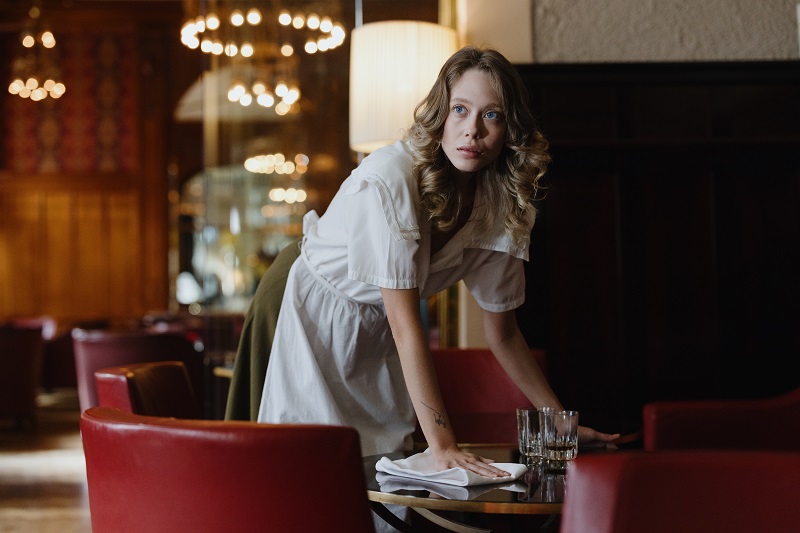
A woman is cleaning a wooden table at a restaurant

How to Clean a Wood Table: Best Ways to Clean Table Top At Restaurant

Wooden furniture, especially the restaurant tables are hard to maintain. The table tops usually become dull and suffer from permanent damages due to prolonged wear and tear. Take water marks, food spills, stains, and sticky fingerprints for example. 

Not cleaning wooden furniture from time to time will further diminish the finish’s shine and charismatic appearance. As A result, your restaurant’s furniture won’t be appealing any longer to the guests. 

While maintenance is crucial, many people get confused about how to clean a wood table. You cannot randomly use any cleaning agent or continue to scrub the wooden table top with a rough cloth. By doing so, you will soon end up with dull furniture having lost its shine. 

There are certain factors you need to consider while cleaning them, like knowing the finish type, selecting the right materials, and so on. 

That being said, here, we will walk you through a detailed guide, explaining the best way to clean wood tables for restaurants.

Understand Your Wood Table Finish First

Common Table Wood Types and Finishes

Restaurant tables are exposed to constant wear and tear from everyday use, unlike the ones you use at your home. The extent of damage will be incomprehensible if poor-grade material is used. That’s why solid hardwoods, like cherry, oak, maple, and walnut are mostly used in their manufacturing. After all, these are known for their excellent physical strength and immense durability. 

In addition to this, a protective layer is further applied on the tabletop. Lacquer, polyurethane, oil, and varnish are the most commonly used finishes you can find in restaurant furniture units. Here, you should know that each finish has a dedicated purpose.

For example, polyurethane is water-resistant while lacquer offers a glossy, fast-drying appearance. On the contrary, table tops coated with an oil finish will have a more natural appearance. Varnish is often used to provide a heat-resistant, durable protective coating on the wooden tables.

Using harsh chemicals on oil finish will strip the protective layer from the table top. Excessive water can cause warping in restaurant tables having a lacquer finish.

On the contrary, improper care routines will render a polyurethane table top finish appear dull and lifeless. That’s why you need to tailor the cleaning methods according to the finish type.

It will help you extend the furniture’s longevity and preserve the aesthetic beauty for months to come. On top of everything, this will also help you stay compliant with hygiene standards, especially in commercial dining table setups.

Well, if you don’t know the types of finish you have on your wood table, follow the below steps:

How to Identify The Common Wood Finish Types for Restaurant Tables?

You can carry out a few common tests to identify the table’s finish type accurately. 

  1. Visual test: A smooth, glossy appearance indicates polyurethane or lacquer finish while a natural or soft sheen appearance suggests the use of wax or oil.
  2. Touch test: Feel the table top gently. If the surface appears hard and plasticky, it’s probably due to the polyurethane finish. On the other hand, oil finishes will provide a smooth and natural feel against your skin.
     
  3. Water drop test: Place a few drops on a visible area of the table top. If it forms a bead, your furniture has a sealed finish, like that of varnish or polyurethane. However, if it gets soaked, you have a wax or oil finish in hand.

How to Clean a Wood Table in Restaurants?

The best and quickest way to do it is by clearing the debris and fallen food first and then wiping it with the warm water and mild dish soap with soft cloths – typically a diluted bleach solution (1 tablespoon per gallon of water) or commercial restaurant-grade wood-safe sanitizer.

Let me break it down in details:

Furniture in any busy restaurant undergoes a lot of wear and tear, and even if you clean the tables regularly, they require deep cleaning once in a while. Here is your step-by-step guide on how to clean a wood dining table:

1. Use Organic Cleaners (Supplies Required)

Organic cleaners are free from harsh chemicals and have minimum side effects on the wood surface. Some of the popular organic materials to clean wood restaurant tables are:

  • Olive Oil
  • White Vinegar
  • Baking Soda
  • Dish Soap
  • Mineral Spirits

2. Get the Right Accessories & Tools

Make sure to use any of the following accessories or tools while using the above cleansers:

  • Damp Cloth
  • Microfiber
  • Small container or bowl
  • Semi-solid wax
  • Soft Plastic Scraper

3. Time Required

  • 5-10 Minutes

4. Estimated Cost

  • $10-$20
table cleaners

How to Remove Stains and Sticky Residues From Wood Tables?

A. Water rings

These being one of the most frequently formed stain marks, owners often wonder how to clean wood table tops safely. So, here’s the answer! Take a soft cloth, preferably a microfiber. Prepare a mixture of non-gel toothpaste and baking soda. Always use the correct proportions because either of these chemicals can be harmful when used in excess quantity.

Continue to buff the affected area gently in a circular motion. Wipe everything off after a couple of minutes using a damp cloth. Dry the table top immediately to prevent the wood from soaking moisture. 

B. Heat marks

Hot dishware, when placed directly on the table top can leave white streaks. Removing them on time is of utmost importance. Otherwise, you will soon end up with a dull-looking or warped restaurant table. Here, the safest and best way to clear these ugly streaks is to place a clean cloth over them and iron for approximately 15 to 20 seconds. It will release the trapped moisture from underneath. 

C. Sticky residue

For regular build-ups stuck on the table top, go with a mild dish soap solution. On the other hand, if the stains are too stubborn, use a diluted solution made with water and white vinegar. Soak a clean, soft cloth in it and then gently rub the area. The alkalis present will react with the sticky substance and help you remove them easily. 

D. Food

Dried food particles are quite stubborn. Regular cleaning techniques might not yield the expected results, especially if it has been long since the residues were left behind on the table top. So, what you have to do is scrape off the particles gently using a soft scraper or clean cloth. After that, wipe off the area using a mild soap solution. Never use any abrasive cleaner, especially if the table has a lacquer finish.

E. Oil build-up

Removing oil can be difficult using water only. So, prepare a solution by mixing equal parts of lukewarm water and white vinegar. Add a few drops of the dish soap liquid you use in the restaurant kitchen. Soak a clean cloth in it and ensure you drain out the excess water before rubbing the area with it. 

F. Ink

Use acetone-free or alcohol-free nail polish remover to remove the ink stains, but only if the table top has a durable polyurethane finish. Baking soda paste will work wonders on delicate finishes. 

E. Cloudy Films 

Moisture or wax build-up for days can cause cloudy films on the table top. So, gently wipe the area in circular motion using a solution made with water and white vinegar in equal parts.

What Materials to Use to Clean a Wood Table?

Using harsh chemicals to clean the table tops will render permanent damages. For example, they can strip away the protective sealant, leaving the underlying hardwood material exposed to warping and moisture absorption. Excessive scrubbing, especially with rough fabric can destroy the table’s aesthetics, making the top appear dull after a couple of cleaning sessions. 

Most restaurant owners struggle to decide what to clean a wood table with. If you are also in the same dilemma, here’s the list of things to add to your cart. 

  1. Use soft cotton rags or a microfiber cloth for simple dusting or wiping the table tops. These are effective in removing dry dust particles without scratching the surface.
  2. If the table has corners or any intricately carved detailing, go with a soft-bristled brush. It will make it harder to reach areas accessible. Besides, maneuvering a brush along the curves is much easier.
  3. Prepare a mild dish soap solution. Ensure not to use too much of the chemical as that can damage the table top’s finish and strip away the protective layer. Be very gentle while cleaning wood furniture.
  4. If you are using water, ensure it’s lukewarm. This can help remove the hard stains and sticky fingerprints left on the wooden table top. Also, use a damp cloth as it won’t affect any finish that doesn’t have water-resistant properties.
     
  5. If you want to remove stains, use a non-gel toothpaste or baking soda. However, limit the frequency. 

Materials To Avoid When Cleaning Restaurant Wooden Table Tops

Never use any type of bleaching agent or ammonia-based solutions to clean the wooden furniture. These are extremely harsh chemicals and can cause sudden warping or dullness. Steer clear of silicone-based sprays as these can cause residue build up.

How Would You Restore The Shine Of Your Wood Table?

Several factors can cause the tabletop’s finish to lose its shine and charming look. For example:

  1. Using wax or silicone-based cleaning agents can leave a cloudy residue film on the table surfaces.
  2. When exposed to UV rays for prolonged time, the finish will appear dull.
  3. Frequent exposure to moisture or high humidity can break down the finishes, causing the tabletop to appear lifeless.
  4. Harsh chemicals and abrasive cleaners strip off the protective coating from wooden tables.

If you want to restore the shine of your restaurant tables, use a commercial-grade wood polish. Ensure it is free from harmful chemicals, especially silicone. Also, read the reviews thoroughly before purchasing the product to ensure it is of the premium quality. 

For DIY hacks, go with a solution made from olive oil and white vinegar. However, this method is safest only for oil finishes and not the usual polyurethane or lacquer surfaces. Buff the wood tables with a clean, dry cloth to remove the residue build-up or cloudy films.

Restoring Shine VS Refinishing

Tabletop’s shine restoration is much quicker and takes a low to moderate level of physical effort. All you will need is a silicone-free commercial-grade polish, clean microfiber cloth, and oil. There won’t be any major surface alterations. 

On the other hand, if we talk about refinishing, it will require too much effort and may take longer due to sanding, re-coating, and other tasks. You will have to gather sandpapers, finishes, sealants, and other types of prerequisite materials.

How Often Should You Clean a Wood Table?

You can never keep your restaurant tables in their optimal conditions with infrequent cleaning schedules. Whether it’s the white streaks left behind by hot utensils or cloudy film due to wax buildup, you need to be prompt in removing these from the tabletops. So, here’s what you need to know apart from a clean wood table. 

Once customers leave the table, clean the surface using a mild soap solution and a damp microfiber cloth. It will help you remove food stains, sticky fingerprints, and spills. After the service hours are over, use a silicone-free conditioning or polishing chemical to restore the shine. These products also help prevent sudden cracking or drying of the tabletops. 

Weakly maintenance routines will include checking for cloudy films, stubborn stains, and sticky spots thoroughly. If you discover any issue, immediately take prompt actions according to the finish and material types the tables have.

Tips For Long-term Care for Wooden Furniture 

Now that we have discussed restoring shine to a wood table using different techniques, let’s explore a few tips for long-term care. Always use coasters and placemats underneath the hot dishes and tableware. This will prevent the white streaks or heat marks from appearing on the tabletops. Besides, too much heat from the tableware won’t strip away the protective cover. 

Ensure you maintain appropriate humidity levels indoors to prevent warping or cracking of the furniture. Check for any sign of dullness or dryness in the wooden table furniture units. If discovered, use oil or wax polish to restore the shine and improve the durability. For restoring any antique wooden table or removing deep scratches, call for a professional’s help.

What Is the Best Way to Clean Wood Table?

Now that you have everything you need to clean your wood restaurant tables, here is your stepwise guide for a DIY wood table cleaning regime.

1. Preparing Wood Furniture Cleaning Solution

  • Prepare a mild soap solution by adding one drop of dish soap to a bowl of warm water.
  • Alternately, you can use a solution prepared by mixing white vinegar (3 tablespoons) with water (1 cup).

2. Pre-Cleaning Steps

  • Wipe down the dust from the table surface using a soft, dry cloth.
  • Dip a microfiber cloth in the cleaning solution and squeeze hard to take out excess water.
  • Wipe the entire table with a damp cloth.
  • Use a dry cloth to remove any water or moisture from the wood surface.

3. Cleaning Method for Dirt Removal

  • You will need some extra effort if you still notice some accumulated dirt.
  • Never use abrasive sponges, scrubbers, or harsh chemicals to clean the dirt from wood furniture. 
  • Use a soft plastic scraper to remove food items or dirt build-up.
  • Consult professional cleaners if you still have stains, sticky spots, or dirt marks.

4. Water Stain Removal From Wood Furniture

  • Usually, water stains from glasses affect only the surface finish. 
  • Take equal parts of cooking oil and white vinegar, mix, and rub gently along the grain in a circular motion.
  • Buff with a soft cloth to clear the ring spot.

5. Protecting and Restoring Wood Table Finish 

  • After the wood surface is clean and dry, it’s time to apply a protective layer. 
  • Use a semi-solid wax with a soft cloth and buff it into the wood.
  • Wax not only acts as a protective layer on your wood table but also helps restore the luster and warm glow of the surface. 
  • Alternately, you can use a mixture of vinegar (1 tablespoon) and olive oil (3 tablespoons).
how to clean wood table

Summing it up

Wood is a warm, beautiful, and vintage material for restaurant furniture. No wonder it is so popular with restaurant owners. Cleaning and maintaining wood furniture is relatively simple if you know what you are doing. With the right cleaning material, regular cleaning, and minimal effort, you can preserve your wood restaurant table like a pro. 

This short article guides you on how to clean a wood restaurant table to maintain its elegant look and extend its life span. Hopefully, by taking notes from this quick guide, you can have long lasting wood furniture and a better return on your investment.

FAQs

1. Can I clean my wood table with vinegar?

Yes, vinegar is an organic substance and is effective in cleaning wood tables. It removes dirt without damaging the finish or warping the surface.

2. How to clean wood table naturally?

Use organic cleaners like vinegar, oil, baking soda, mild dish wash, spirits, alcohol, etc., to clean wood tables naturally.

3. What is the best thing to clean a wood table with?

A cleaning solution made by mixing olive oil, vinegar, and water is a great way and probably the best thing to clean wood tables.

4. Is it possible to remove grime from a wooden table?

Eliminating oil and wax build ups from the tabletops won’t be easy. The process does require meticulous cleaning plans. So, use a mix of dish soap, white vinegar, and lukewarm water.

5. Can you use dawn soap to clean wood furniture?

Yes, you can use a dish soap solution to remove the cloudy film or stubborn stains from a wooden tabletop.

6. Why is my wood table sticky after cleaning?

If the wooden tabletop still feels sticky, it means the cleaning technique didn’t remove the food stains or grime build up properly.

7. What’s the best way to clean a wood kitchen table daily?

For daily cleaning, use a damp cloth and a mild soap solution for your kitchen table.

Showing Best Color For the Restaurants

What Are the Best Colors For Restaurant? : How Color Influence the Restaurant’s Success

Emotions and psychology go hand in hand when it comes to making important decisions about food. So, the interior décor or the table design alone won’t help you influence their thoughts and actions. Rather, you need something stronger, which can instantly reflect one’s emotions right from the moment the person enters through the door. And that’s where colors come into play! 

Have you ever noticed how different restaurants with a farm-to-table restaurant theme play with green and earthy colors? Similarly, if you look at the logos of top fast food brands in the USA, you will find the most dominating shade being red and its variants. 

Colors have a huge influence on the human subconsciousness. If your dream is to deliver an awesome and unforgettable dining experience to your guests, it’s time to decide which shade you would like to play with. But there’s a catch! You cannot just go with random hues and shades.

That being said, we have crafted a detailed guide below, explaining the best colors for restaurants and their roles in influencing your guests’ actions. 

The Psychology of Colors in Restaurant

Truth be told, the human subconscious mind is heavily influenced by external stimuli. Take rain sounds or ocean waves as examples. Listening to these can help calm your frenzied nerves and fall asleep within minutes.

Similarly, watching videos of your favorite food on your phone will make you salivate. Similarly, hues have an immense role in influencing a person’s emotions and appetite. 

From the brand’s logo to the restaurant’s interior, choosing the right color will help you influence your guests’ psychology greatly.  Take warm colors like red and orange as examples. It is believed that these shades evoke excitement and energy within the onlookers.

Red can easily stimulate one’s appetite by increasing heart rate and sending signals to the brain. On the other hand, orange is used to promote social interaction at diners. 

Cool tones, however, will have a completely different influence. For instance, blue and its variants are often associated with tranquility, imparting a sense of peacefulness in the ambience.

Unfortunately, it suppresses the hunger and that’s why restaurants don’t prefer using this as the dominating shade. Green and brown, on the other hand, are great in exemplifying your commitment towards serving fresh ingredients and healthy dishes. 

Whether you want to create a sophisticated ambience for your fine-dining setup or keep the queue increasing in size for your fast food restaurant, colors will be your best companion. All you have to do is focus on understanding their association with human psychology

Key Color Categories For Restaurants

Before you dive into researching the best paint color for a restaurant, let’s understand the categories first. It will help you decide which specific group of hues can be aligned with the interior theme and your target customers. 

Warm Tones

The main colors in this group belong to the red, yellow, and orange spectrum. They are associated with energy and excitement for food to be served on the table. That’s why fast-food settings often use different variants of this spectrum to increase their customers’ appetite. 

Cool Shades

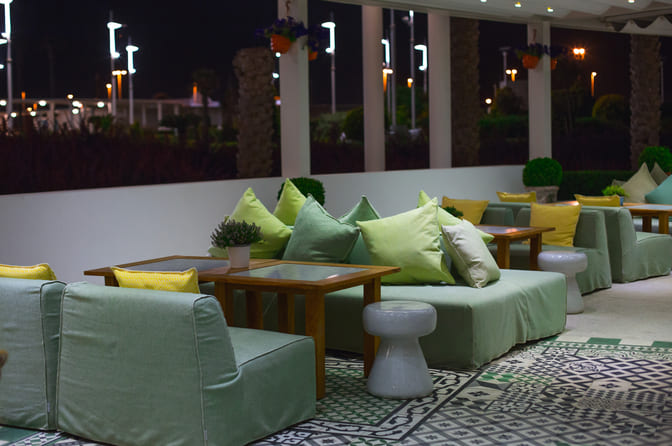
Showing Cool Shade Restaurant Ambience Color

Cooler tones are said to have a direct association with serenity and peacefulness. Here, the most preferred shades will be of green, blue, and purple spectrums. So, whether it’s a fine dining table set up or a health-focused décor, they will amplify your brand’s purpose.

Neutral Colors

Lastly, we have shades like black, golden, and white. These are used for complimenting other colors and create a balanced look in the restaurant interiors. Most modern and minimalist diner setups leverage these tones to invoke a sense of cleanliness and sharpness. 

Best Color Ideas For Restaurant to Create An Awesome Ambience

Warm colors: Energize and stimulate

1. Red

Known to make a strong psychological impact, this shade is perfect for fast-paced diners, like a hotdog station or a burger restaurant. It raises the energy levels, increases appetite by several notches, and creates an urgency in the customers. They will make faster decisions about their orders and can wait a little longer to enjoy your delicious cuisine.

Red Color For Restaurant

Incorporating it can be a bit difficult because the darker hues tend to overwhelm the onlookers if not properly placed. So, use a red-colored accent wall or include it as a base for your brand’s logo. Do not go overboard as that will create a very powerful persona, not quite accepted in a dining setup. 

2. Orange and Yellow

If you want to go on a warmer side, choose restaurant color palette ideas that can blend in these two shades seamlessly. Both impart a welcoming feeling, ensuring your guests find comfort in the interior décor. For example, an orange-colored upholstered sofa with bright yellow colored tables will evoke happiness and optimism. Yellow instantly grabs the attention of the onlookers and boosts mental activity. Orange, on the other hand, is said to create an enthusiastic and warm ambience for the guests.

Orange and Yellow Color For Restaurant

You can go with accent walls having either shade incorporated strategically in the indoor décor. For something unique, place metal chairs having both shades on either side of a wooden table top. Place orange and yellow roses and carnations as the centerpiece on the restaurant tables. Another great idea is to paint the food or cash counters with yellow or orange hues. 

Cool Colors: Relaxing and Refreshing

1. Blue

Unlike other cool shades, this one is supposed to suppress one’s hunger. So, using it as the prime shade to decorate the restaurant indoors might not be a good idea. What you can do is pair it with other complimentary colors to create a balance and simultaneously impart warmth and coziness. For example, blue and white form an amazing palette combination for a coastal-themed restaurant. These shades, together evoke a sense of freshness and tranquility.

Similarly, when paired with forest green, you can portray your brand’s commitment towards nature and sustainability. Dark blue shades with warm beige look great for a semi upscale restaurant setup. In case of fine dining, go for a white-colored table décor paired with dark blue upholstered chairs. 

2. Green

Whether you have a vegetarian cuisine or want to promote the farm-to-table dining concept, this color is ideal. It is strongly associated with freshness, nature, and health. Take a green-colored dish for an example. Nature lovers or health-focused customers will always prefer being served such a dish, filled with different shades of green. Similarly, using it in your indoor décor will uplift the mood and create a soothing ambiance. 

Green Color For Restaurant

The best way to incorporate it is to place potted plants at the restaurant’s entrance or on the tables as centerpieces. A vertical garden wall of succulents or herbs will serve as an awesome accent wall. Create garden walls on the back of the tables to add liveliness and tranquility. 

3. Purple

Considered as a regal color, it induces elegance and exclusivity in any restaurant décor. That’s why this shade is perfect for an upscaled-themed diner. When used thoughtfully, it can invoke a sense of luxury, sophistication, and intrigue in the ambience. This will automatically make your guests feel drawn to your restaurant.

Purple Color for Restaurant

Combine purple and pink shades to create a feminine-themed restaurant. Add purple-shaded upholstered furniture with wooden tables for a posh and luxurious setup. You can also use accent lights with purple hues to create an enigmatic and engaging ambience. 

Neutral Colors: Versatile and Sophisticated

1. White, Beige, and Gray

When it comes to neutral shades, these are the best colors for restaurants. However, you need to be very strategic in placing them so as to create a well-balanced look. They convey modernity, simplicity, and cleanliness, which is why your indoor décor will appear appealing to most guests. Each shade has a specific role to play.

White symbolizes purity and peace. Beige, on the other hand, offers warmth and comfort to the guests. Gray can be used to make the place look more elegant, balanced, and sophisticated. 

Choosing The Right Colors For Your Restaurant Concept

A. Aligning Color Selection With Brand Identity

Having countless options can leave you overwhelmed. It will make choosing the best colors for restaurants extremely challenging, especially if it’s your first time. Even seasoned players also struggle with deciding which shades to use for decorating their diners. 

That’s why begin with the very basics- your brand’s identity and the target audience. Whatever color you choose should align with these two factors completely. Take millennials as an example! They will most prefer balance, cleanliness, and peacefulness over everything else. So, go with cool tones with black or white as complementary shades. 

Similarly, if we talk about a burger or hotdog joint, warmer shades will form the perfect restaurant color palette idea. These will instantly increase the hunger level by several notches, keeping your guests rooted to their place, waiting for the delicious food to be served. 

B. Consider the Cuisine Type

The restaurant color scheme ideas you shortlist should define your cuisine amicably, leaving no gaps or discrepancies. Here’s a brief guide for you!

1. Fast food

These restaurants thrive on quick turnovers. So, you need to keep the energy of your customers at the topmost level possible. Play with warm colors, like red, yellow, and orange to increase their hunger and excitement, all the same time. 

2. Fine dining

Such a restaurant theme demands an interior that feels cozy and soothing for longer stays. You cannot go wrong with the color palette, especially as the décor has to be upscale. So, opt for different variants from the blue or deep red spectrum. Balance the darker shades with gold, white, or beige for a more sophisticated and minimalist look. 

3. Bakeries and cafes

As providing comfort is the ultimate goal, look for a color palette rich in earth or soft pastel tones. Take a bakery as an example. Here, you can create an inviting look with a combination of pastel pink and mint green shades. Similarly, combine lavender with baby blue hue to make the café look more elegant, calming, and upscale. 

Also Read: Bistro vs Café : What’s the difference?

4. Health-focused 

For such a cuisine, you will need the best colors for restaurants promoting freshness, wellness, and sustainability. Greens, especially olive, sage, and mint, symbolize vitality and nature. White will put more emphasis on purity and cleanliness. Earth tones, like terracotta or beige, focus on authenticity and warmth. 

C. Factor in Restaurant Size and Lighting 

While looking for an ideal color palette, consider the space and the illumination levels. Smaller places, like a café or a bakery, look airy and open when highlighted with soft pastels and neutral shades. On the other hand, larger restaurants, like a fine dining setup, can easily carry and demonstrate the beauty of darker and bolder colors. 

In addition to this, also consider the ambient lighting. Bright colors, like red, golden, and white will add more grace to a restaurant indoor having dim or artificial lighting. Neutral and earthy hues pair well with spaces receiving more natural light. 

Practical Tips For Applying Color in Your Restaurant

Add Accent Walls

Most often, using a single shade for the entire restaurant layout can become overwhelming and won’t be acceptable. So, instead, begin with an accent wall. Whether you want to incorporate bright red or dark purple as the main color, this will act as the main focal point. To top it off, the wall will add more depth and dimension, especially to smaller areas. 

Leverage Décor, Artwork, And Furniture

These are the perfect ways to incorporate multiple colors simultaneously in a subtle manner. Purple or blue colored upholstered sofas, orange-colored metal chairs, and golden tableware will add a cohesive look to your restaurant indoor. 

Coordinate Colors With Logo And Menu Design

One of the best ways to incorporate a statement color palette is to align the brand’s logo and the menu design with the same. Take a health-centric or farm-to-table themed diner as an example. Creating a menu with green colors or a branding logo with earthy hues will portray your commitment towards sustainability and eco-friendliness.

Choose Refreshing Colors For the Exterior

It’s not about the interiors only! Rather, you need to focus on the exterior design equally, if not more. Look for restaurant color schemes that will create an enticing and appealing visual for your customers standing outside. 

Don’t Overlook Restroom and Bar Areas

A well-colored restroom or an accent backsplash in the bar area will elevate the perceptions of your restaurant easily. Choose the colors strategically so that you can align the palette with the rest of your indoor décor and setup. 

Get Most Out Of Your Restaurant Colors

Choosing the best colors for a restaurant can be tedious work if you are not aware of their significance. Whether it’s the bright red shade or a muted pastel hue, every color you select will have a huge influence on your guests. so, be very strategic and ensure you do not go overboard by combining too many statement shades from different categories. Otherwise, it will overwhelm your guests and won’t help you enhance their dining experience. 

FAQs

1. What are the best colors for restaurant walls?

The best wall colors depend on the restaurant’s vibe and target audience. Warm tones like red and orange boost appetite and energy, making them good for casual eateries. Cooler shades like blue and green evoke calmness, ideal for fine dining. Neutral colors offer flexibility and a clean backdrop.

2. What color food is most appetizing?

Warm colors like red and yellow are generally the most appetizing. These shades stimulate the senses and grab attention, making the food appear more appealing. They often evoke feelings of warmth and comfort, encouraging people to eat more. It’s no surprise you’ll find them frequently in food advertising.

3. What are the best colors for restaurant walls to attract customers?

The palette will depend on your restaurant’s theme, target customers, and the indoor layout. Go with the shades that will help you engage your guests for long hours without overwhelming their senses too much.

4. Which colors stimulate appetite and encourage customers to eat more?

If you want to increase the hunger levels and boost your guests to place quick but big orders, go with warmer tones like red, orange, and yellow.

5. Are there any colors that should be avoided in restaurant interiors?

Blue is ideally not chosen to decorate a restaurant’s indoor as it can suppress one’s hunger. However, you can pair it with other colors evoking opposite emotions, like white for peacefulness, green for nature, and so on.

6. What colors are best for small restaurants to make them look bigger?

If your restaurant has a smaller space, use bright shades like yellow, orange, green, and red to create an illumination of a bigger indoor.

7. How do I choose a color scheme that matches my restaurant’s concept and cuisine?

Decide whether you want to impart warmth and coziness or play on tranquility and refreshing vibes. Based on that, you have to decide a color scheme that can be aligned with your cuisine and the restaurant’s theme.

8. What are some trendy restaurant color schemes for 2025?

Warm metallic with moody blue, lush green with earthy neutrals, sunset tones, and minimalist monochromes are the trendiest color palettes for restaurants in 2025.

9. Does lighting affect how paint colors look in a restaurant?

Yes, lighting will indeed influence how the paint is perceived in your restaurant.