

Choosing natural material restaurant tables is a practical design decision that sends a positive message to customers. Restaurant Table tops having sustainable natural materials as source provide an authentic sensory experience which will associate with the servings.
The table tops having butcher block or granite as a material are long lasting and it will not need any replacement. It will surely provide a steady return over time on your investment. Here’s what you need to know about the two most common and appealing natural materials for restaurant tables.
Today, you can find table tops made from a wide mix of natural and eco-friendly options. Each has its own style, durability, and upkeep needs. Let’s look at six popular choices for restaurant tables in 2025 and see where each one fits best.
3 Types of Natural & Sustainable Materials for Restaurant Tables
1. Reclaimed and Responsibly Sourced Wood
Wood has always been the classic pick for restaurants. But now, many places are turning to reclaimed wood or wood certified by the Forest Stewardship Council (FSC). Reclaimed wood comes from old barns, warehouses, or even flooring.
Every piece has a story, with unique marks and patterns that make each table one of a kind. This narrative quality is what makes wood restaurant tables particularly appealing to establishments seeking authentic character and connection with their guests.
2. Bamboo
Bamboo has grown in popularity because it’s both stylish and sustainable. It’s not technically wood, but a fast-growing grass. Some species grow several feet a day, which makes it one of the most renewable materials available.
Bamboo tables often have a light, modern look. They work especially well in casual cafés or restaurants that want a clean, eco-conscious style.
They are Affordable, renewable, and naturally attractive.
-
Sustainability: Harvested without replanting, minimal impact compared to hardwoods.
-
What to know: Needs treatment against moisture and humidity. Poor-quality bamboo tables can warp if not finished properly.
3. Stone and Engineered Stone
Stone is often seen in fine dining or hotels. Granite, quartz, and engineered stone tops are heavy but incredibly durable. They resist heat, stains, and scratches, which makes them a long-term investment.
Engineered stone often includes recycled content and uses less raw stone, which lowers waste. Many restaurants choose these tops for a sleek, modern look that pairs well with upscale interiors.
A. Granite Table Tops
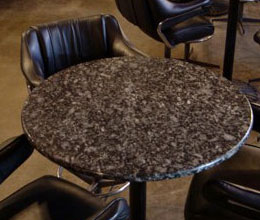
Manufactured table tops have a factory-produced uniformity, but every slab of granite is unique and features a slightly different pattern of feldspar veins and flecks.
Granite restaurant tables are also sanitary because germs can’t penetrate the slab, and the surface doesn’t have cracks or joints in which food can collect. Because they aren’t porous, granite tables can be easily washed with a mild detergent or soap and water and are impervious to weather.
A granite tables can be used outdoors with no special treatment needed. The stone is also heat resistant and it will not get any damage through hot pans. It is tough enough to resist the heat, even if they come straight from the oven or broiler.
Why Granite is Better than Marble?
Marble is another beautiful stone that is often used architecturally, but it’s not the best choice for table tops. Marble is softer and more porous than granite, which makes it susceptible to stains. Red wine and certain fruits are notorious for their ability to permanently stain marble.
Marble is also vulnerable to scratching, and can be discolored or etched from contact with acids. The edges of marble table tops can be chipped or cracked on impact if they are moved carelessly.
BONUS & TRENDING: Butcher Block Table Tops
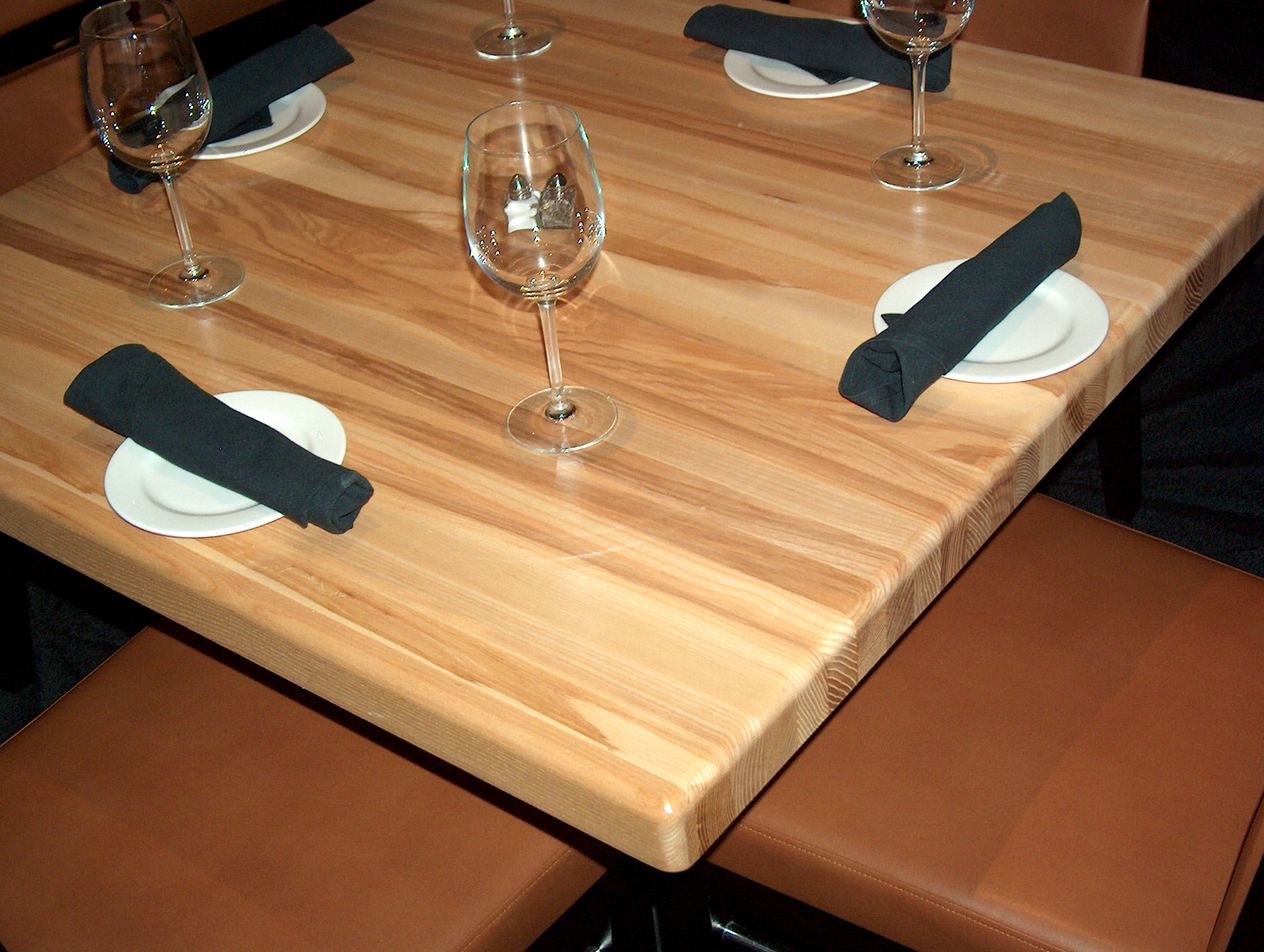
The allure of butcher block table tops is warmth. The eco-friendly glow of honey-toned wood encourages restaurant guests to linger. Usually a butcher block is having a mix of maple, oak and cherry wood as source materials.
Although, almost any type of hardwood can be incorporate for the making, where each one has its own unique character. It gives warmer feeling than stone table to the customers when they keep their hands or elbows on the table.
Butcher block tables can have a fair seal against stains and scratches, and after each refinish, they look new again.
There are more trees growing at a faster rate than they are being harvested. Therefore, the wood that goes in to the manufacture of restaurant butcher block tables makes it a very sustainable product.
The permanence and sustainability of granite and butcher block make them a wise investment. Designing a restaurant with sustainable, natural table tops and wood chairs will create an inviting atmosphere that draws guests back again.