Author Archives: Gayla

maintain restaurant cleanliness

4 Important Tips on How to Train Your Staff to Maintain Restaurant

Most restaurant owners get into this business because of their passion for food and serving others. While many restaurant owners pay special attention to creating a perfect restaurant culture, serve lip-smacking food, hire courteous staff, etc., maintaining their restaurants often takes a back seat. If you maintain restaurant properly that helps in extending the life of your kitchen equipment and furniture as well as creating a hygienic dining experience. Moreover, with the ongoing Covid-19 pandemic, emphasis on sanitation has become paramount.

Dirty washrooms, odor in utility areas, unclean restaurant chairs, etc. are among the top reasons why customers avoid revisiting a restaurant. Therefore, a clean and tidy restaurant not only creates a hygienic place to dine, but it is also beneficial for your business. Cleaning your restaurant requires a collective effort by your staff.  Read on to find out how to train your staff to maintain your restaurant well.

Tips to Maintain Your Restaurant

1. Provide the Right Training to Take Care of and Clean Furniture:

Restaurant furniture is a significant investment, and you must ensure that your staff takes care of it. To create an inviting atmosphere for your guests, you might be using various restaurant furniture items like tabletops, chairs, cabinets, display units, etc. made from different materials. Cleaning different materials requires awareness and proper training of your staff. Here are some useful tips:

Train staff for cleaning

  • Since outdoor furniture faces the brunt of weather and external elements, use an anti-bacterial agent to ensure they are free from damp and debris.
  • For metal restaurant chairs, use a soft cloth with all-purpose cleaner and disinfectant.
  • If you are using wooden restaurant tables and chairs, grease marks and stains require a special wood-purpose cleaning agent. Since wooden furniture is easily scratch-able, ensure to treat and paint the chipped portion.
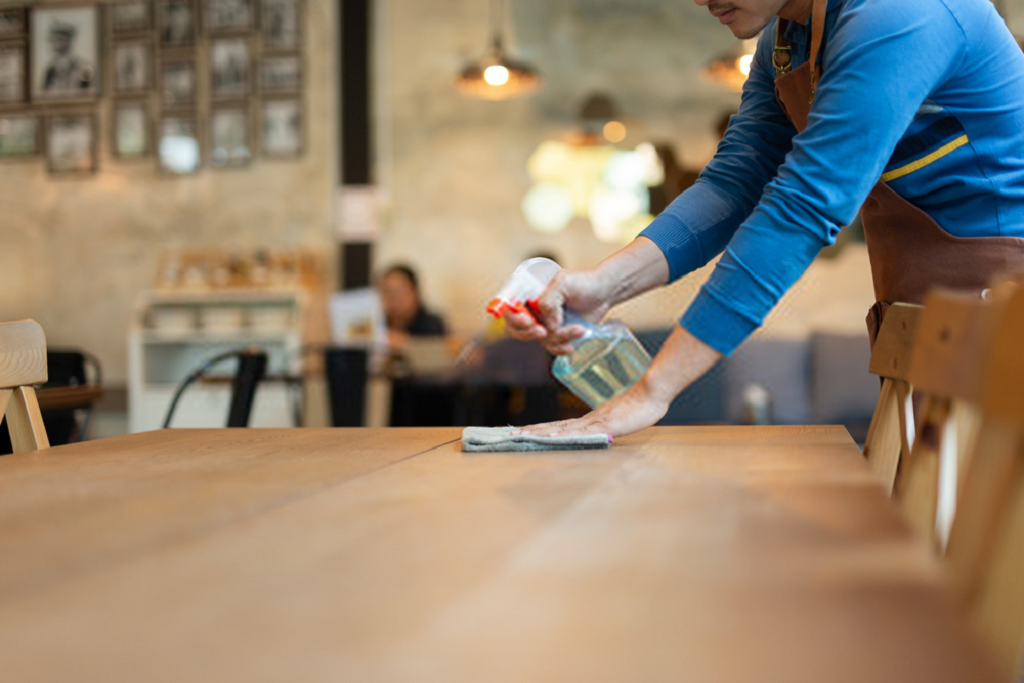
  • Disinfect the restaurant table tops regularly with an anti-bacterial cleaner to ensure a hygienic food-eating area for your customers. 

2. Create and Maintain a Schedule for Cleaning:

Rather than doing all of the cleaning of your restaurant at once, you can divide the chores depending upon the cleaning frequency. Here are some examples for scheduling the cleaning work in your restaurant:

photo-of-woman-writing-on-white-pape

  • Restaurant Cleaning Between the Shifts:

Instead of waiting for the closing time for all-round cleaning, set aside some chores for your restaurant staff between their shifts. For example, performing chores like emptying the trash-bin, wiping counters, cleaning cutting boards and blenders, etc., between the shifts can significantly reduce the burden on your staff.

  • Cleaning at the End of the Day:

Although cleaning between the shifts takes the stress away from cleaning, you can’t complete some exercises until the restaurant closes. Ensure that tasks like sweeping the floors, vacuuming the carpets, washing the counter tops, cleaning fryers and cook tops, cleaning the outdoor furniture are done before you call it a night to assure freshness on the next working day.

  • Weekly Cleaning:

Kitchen equipment in your restaurant often requires a weekly cleaning schedule to work suitably and efficiently. For example, check the coffee machines, sinks, and deep fryers for scaling. Similarly, clean the area in and around the refrigeration units and scrub the interior as well as the exterior of your ovens thoroughly.

  • Monthly Cleaning:

Despite the rigorous cleaning exercise in your restaurant, you must check and perform a monthly deep cleaning on your refrigeration units, plumbing fittings, drainage, etc. Make it a point to clean the condenser coils and air filters of your refrigerators. Similarly, remove the grease formed in and around the water tubes and drainage pipes in the kitchen.

3. Assign Cleaning Tasks to Your Staff:

From preparing raw materials to cooking dishes to serving them to your customers, it passes through several pairs of hands before reaching to your customers. Therefore, you must emphasize the importance of following the best hygiene practice to your staff. Apart from training and educating your staff, you must assign specific tasks to them. You can use maintenance checklists not only to assign tasks but also to ensure strict adherence of the tasks assigned.

assign task

Quite often, restaurant owners prepare checklists but fail to follow-up on them. When it comes to the cleanliness of your restaurant, you must see to it that every member is performing the task routinely and appropriately. When you hire a new staff member, show them your entire restaurant and train them on working with the equipment as well as cleaning it. A simple yet efficient way is to use a dry erase board to chalk out the chores, responsibilities, and duties for each of your staff members.

4. Have a Restaurant Deep Clean or Inspect for Damage on a Specific Day Once Per Month: 

As mentioned above, inspecting the damage and deep cleaning your restaurant once every month can do wonders for the equipment’s life and overall hygiene. If your staff is unable to carry out these deep cleaning activities, you can hire professional restaurant cleaning services. Here are some suggestions for monthly cleaning different sections of your restaurant:

1. Back of the House Cleaning: 

  • Wash the utility area and hotline to prevent clogs
  • Deep clean the coffee machine using chemicals to remove the built-up grime
  • Sanitize the freezer and clean the refrigerator coils to prevent accumulation of dust
  • Spray-wash the walls and ceiling to remove grease
  • Wash vent hoods and change air filters

take care of restaurant furniture

2. Front of the House Cleaning:

  • Dust the wall paintings, decorations, and figurines
  • Inspect and clean cobwebs from the ceiling, washrooms, counter, etc.
  • Wash the walls
  • Chemically treat to maintain restaurant furniture
  • Pressure-wash the driveway and curb

Summing it up:

As you might have figured out by now, maintaining a restaurant is not a single step process but requires constant effort and participation from your staff. This article discusses how, as a restaurant owner, you can train your staff to keep it sparkling clean and healthy by following the safe practices.

By following these tips, you can maximize the hygiene at your food establishment. Additionally, you will be able to provide the best dining experience to your guests and gain their trust as well.

restaurant-culture

How to Build A Strong and Effective Restaurant Culture

Culture is a collective term that describes the social behavior and norms in a society. It is the culmination of knowledge, language, arts, ideas, customs, beliefs, vision, habits, symbols, etc. in a group of people. In corporate jargon, culture in a workplace represents the way employees carry out their duties to accomplish their responsibilities.

What is Restaurant Culture?

Restaurant culture describes the way its owners combine profitability and hospitality to accommodate their customers. A healthy restaurant culture reflects the job satisfaction amongst its employees and increase in its revenue with happy customers. Additionally, a strong restaurant culture helps in creating and boosting brand image to compete in the marketplace.

How Should the Restaurant Culture Be?

Restaurant Culture

Restaurant owners and managers are responsible for motivating their employees and leading by example to bring out their best behavior. It is management’s responsibility to help employees understand their roles, duties, and expectations. From offering an inviting restaurant ambiance to using quality ingredients, from being courteous to preparing healthy food, from durable restaurant booths to consistent service, from straight-forward menu to transparent pricing, a restaurant culture should be the perfect mix of sustainable, cohesive, and profitable.

Tips on How to Maintain a Strong Restaurant Culture

If you are managing a newly established restaurant, you can try to create from the start the right culture by following the best practices and hiring the right people. However, if you are taking over at an existing facility, you need to focus on all of the existing elements of your restaurant to create or maintain a healthy culture. Here are a few tips to help you achieve the same:

1. Refine the Vision and Mission of Your Restaurant

The most defining decisions of a restaurant take place during the initial phases of its operation. To offer unbeatable service to your customers, you must have a vision and mission that reflects your restaurant culture. Adopting and refining a restaurant’s vision and mission helps you in setting clear-cut roles for your employees. It helps your employees understand your restaurant’s core beliefs and its operating principle. Additionally, having a well-defined vision and mission guides you in the decision-making process.

Important Terms while Creating Vision & Mission

When creating the vision and mission statements for your restaurant, here are a few terms you’ll need to know:

  • Vision Statement: A concise statement that tells your plans, potential, and goal. While crafting your restaurant’s vision statement, try to explain what you are doing and why. Using a concise, short, and basic vision statement leaves plenty of room to revise and expand the scope in the future.
  • Mission Statement: An action paragraph that reviews your values, strengths, and weaknesses. While finalizing the mission of your restaurant, try to share your experiences and the connection between your customers as well as suppliers. Additionally, try to highlight how you are going to realize your vision.

Instead of trying to copy a competitor restaurant, create a vision that incorporates your core values and how you want to share this with customers. Here is a practical way of chalking out the vision and mission statements for your restaurant.

restaurant vision

  • Make a list of 10 elements like custom decor in restaurant chairs, hygiene, discounts, etc. that will give your restaurant an edge over your competitors.
  • List five things like attentive staff, prompt service, etc. that your guests will appreciate in the restaurant.
  • Make a list of 10 items that you dislike when you are visiting another restaurant. These items can be design-oriented like tableware, menus, etc. or service-oriented like dirty restaurant tables, floors, washrooms, etc. This list can guide you in taking care of these unwanted attributes in your restaurant.
  • List five steps to recover from a bad experience for a customer so you’ll be prepared for this eventuality and staff will know what to do.
  • List 3 ways how you intend to improve your brand awareness, increase the revenue per customer, and create loyalty.

2. Build an environment according to your culture.

Now that you have established the vision and mission of your restaurant culture, it’s time to create a workplace that imbues these values. Here is how you can accomplish it:

  • Recruit the Right Workforce: Being a service industry, waiters and chefs are the backbone of any restaurant business. Although skills and experience are desirable traits, personality is the most crucial and sought after characteristic of restaurant employees. While hiring for your restaurant, ensure that you select people that have a passion to serve others. You can teach them skills, but passion can’t be taught.
  • Motivate Existing Staff: Restaurants typically see high staff turnover rates. While it is not possible to change the working culture over-night, managers can specify habits and behavior that is unacceptable. Engaging in a dialogue with your employees is an effective approach that helps in explaining your stand and building trust.
  • Provide Consistent Coaching: As a manager, it’s your responsibility to improve the professionalism of your employees and provide continuous coaching. You can observe the employees during shift breaks to find out if they are emulating your restaurant culture. Find out the struggling employees and explain to them how to handle situations in a better way. However, you must have this conversation in a private and safe environment.

3. Emphasize the Ethics

Defining your restaurant culture is one thing, but incorporating it into your workplace is not as simple. Emphasizing ethics in your restaurant culture requires you to lead by example regularly and consistently. Ethical conduct by your employees ensures that your restaurant creates and maintains its reputation for professional excellence, and operates according to its mission and vision. Here are a few ways to encourage and emphasize ethical behavior in your employees:

Train staff

  • Treat your employees fairly. It doesn’t reflect well on your part to merely emphasize ethics and be unfair to your employees.
  • Lead by example, and follow ethical conduct in your restaurant to build trust and connect well with your employees.
  • Train your employees about the best ethical practices at work by conducting workshops and training courses.
  • Reward ethical behavior to encourage your employees.

Conclusion:

In a nutshell, you have to create a restaurant culture that best explains your core values and helps you in achieving the vision of your restaurant. This article highlights the importance of creating and implementing a healthy restaurant culture. By following these tips, you can create a happy workplace with satisfied customers and staff.

wood restaurant tables

Make Your Restaurant Stylish & Functional with Proper Furniture

Have you ever visited a restaurant where everything seems to fall in place to offer you a top of the world experience? Did you ever consider how they created such an experience? From taste to decor, from food to furniture, from ambiance to service, everything blends to combine the perfect dining experience. As a customer, you want nothing short of perfection; a comfortable place you can enjoy with your loved ones. To make your restaurant stylish & to create a satisfying experience, you need to combine different elements of a successful restaurant and combine them for your customers. If any of these elements are not up to par, customers will notice.

Tips for Creating Restaurant Style

The decor of your restaurant should be appealing and inviting. Right from the design concept to its implementation, your restaurant should stimulate your customers’ senses.  While many restaurants focus primarily on taste buds, if you want to stand out of the competition, combine eye pleasing decor, comfortable furniture, and music for an unforgettable experience. In a stylish restaurant, from cutlery to seating layout, from lights to fabric and furniture, every component appears to be in sync with each other.  Now that you know what customers want from a stylish restaurant, here is how you can incorporate these restaurant design ideas:

1. Create the Perfect Atmosphere & Ambiance:

Location, layout, and dining area are the stepping stones on which you build your restaurant. Although these parameters may not be under your control, they can help you in deciding the right atmosphere for your restaurant. For example, ideally, you would want a prime location in a busy neighborhood, with easy access for your restaurant. However, such property may be cost prohibitive. The same applies to the layout and floor area of your restaurant as well, so you may have to make the most of the space available.

stylish ambiance

However, even under these constraints, you have plenty to decide and implement. A crucial element for coming up with great ambiance is lighting. Since each restaurant sets against a particular backdrop, you can experiment with lighting to lift the mood of your diners. For example, if your restaurant lacks natural light, test a variety of lighting styles to brighten it up.

2. Optimize the Space

Whatever the size of your space, create the seating arrangement that balances the number of tables with the comfort of your guests. Start by observing the overall layout of your restaurant and analyze any inefficient sections. These could be either under-utilized or dead spaces that require change. Combine functionality with aesthetics to manage your dining area more effectively.

create the ambiance

An optimized dining and kitchen space means your staff won’t need to compromise serving speed or efficiency. In the dining area, ensure there is sufficient space between tables for waiters to move around and serve the customers without bumping into each other. An open, ergonomic kitchen area increases the efficiency of your staff by reducing the distance.

3. Go for Durable Furniture

While selecting your restaurant furniture, focus on its quality and durability. When you buy durable furniture, there are unlimited options and styles so there is always a style to go with the theme and design of your restaurant. Wooden furniture is a classic for restaurants and always popular.  All-weather light-weight restaurant chairs and tables from aluminum or plastic give you the flexibility to modify the seating arrangement for different events.

Durable table and chairs

If you have an outdoor seating arrangement, ensure you are buying furniture made for outdoor use.. From sunlight to rain, from blowing winds to chilly winters, outdoor tables and chairs bear the brunt of extreme weather conditions throughout the year. Purchasing high-quality, durable, commercial-grade furniture from the start will give you better returns in the long run.

4. Get Stylish but Functional Tables and Chairs

Stylish table and chairs

When you are searching for furniture for your restaurant, focus on its style as well as functionality. If your space is limited, ensure that your restaurant chairs and tables fit your layout properly. Simple chair and table options with clean lines may fit this layout perfectly. Apart from your furniture’s dimensions, assess the material and finish of your desired furniture as well. Your restaurant furniture should be practical, easy to clean, and maintain. For example, look for chairs that allow for quick and easy cleaning. Similarly, ensure tables have proper support to ensure they don’t wobble, and proper spacing for chairs to make it easy for your customers to get in and out.

5. Avoid Undesirable Seating

You might have come across some tables in restaurants that every customer avoids. Every restaurant has tables in areas where customers don’t care to sit. In the restaurant business, examples of some of these tables are ones facing the restroom or adjacent to the door, under the stairway, etc.

Sit at each chair of table of your restaurant to analyze the view as well as the surroundings. Once you have identified any undesirable areas, you can work on the ways to utilize the space. For example, you can remove the seating arrangement and place additional storage  or decor such as tall plants, or artwork that complements your decor. Perhaps you can use a divider or half walls separate the dining area from any undesirable view.

6. Practical Finish & Upholstery

Selecting the upholstery for your restaurant is a big decision, and you must consider practicality and upkeep. Additionally, it should enhance the ambiance of your restaurant too. Since the upholstery of your restaurant furniture goes through a lot of wear and tear, it must be durable.

Upholstery Seating

While selecting a particular fabric, consider how it will age with time. If yours is an outdoor restaurant, consider external environmental factors like the effect of sunlight, moisture, etc.

7. Create the Perfect Restaurant Experience with Right Furniture

Selecting your restaurant furniture and its placement depends on the atmosphere you want to create. By changing furniture parameters like their height, size, arrangements, etc. you can bring different atmospheres within your restaurant. Properly selected furniture can influence the restaurant experience of your customers tremendously.

By carefully analyzing your restaurant’s layout, and having the idea of the atmosphere you want to create, you can create the best aspects for your restaurant. This article guides you about several aspects of creating a stylish restaurant. Hopefully, by following these simple tips for creating a successful restaurant, you can select the best furniture that combines functionality and style for the ultimate dining experience for your customers.

commercial furniture

How to Set up Your Restaurant to Serve the Most Customers

Like any other service industry, restaurants thrive on happy customers. Even before your guests order and taste your food, the restaurant tables and overall dining area set-up at your restaurant sets the tone of the customers’ experience.

Selecting the number of seats in your restaurant, and therefore the amount of restaurant furniture necessary,  depends on different factors like the size and layout, the comfort of your guests, the cost of running your restaurant, and the number of desired customers, etc. Let’s discuss how you can set up the restaurant serve the most customers practically and efficiently.

1. Accept Reservations:

Accepting reservations at your restaurant is beneficial for your management and staff, as well as your guests. By accepting early bookings, you can estimate the rush in your restaurant on a given day and plan accordingly. It gives you the flexibility of allocating the resources and set up the restaurant seating for reserved and walk in customers. Similarly, by reserving a table at your restaurant, your guests are assured of getting a table and are more likely to show up knowing they will get seated.

accept reservations

Whether you choose on-phone or online reservations, you can easily plan for a certain number of customers during specific time periods. Since you know in advance how many tables are reserved, it is easy to predict the waiting time for your walk in customers. In a nutshell, reservations can reduce the clutter, minimize your workload, and optimize your resources.  There are many online reservation apps that easily plug into your restaurant website you can use.

2. Set Up Efficient Payment Options:

Thanks to the technology, gone are the days where most guests pay with cash. By introducing different payment options, you tell your customers that your restaurant is up-to-date with technology. More importantly, these efficient payment options help you in completing the transactions quickly.

efficient payment methods

They also allow almost all customers to pay with their preferred method. As a result, you can attend to the customers by reducing the waiting time.  On-table bill payment through a card reader has become a norm now. They enable seamless and safe transaction experience for your customers.

3. Arrange the Tables in the Most Attractive Way:

The dining area is the heart of your restaurant and is more than just tables and chairs. An appealing table arrangement sets the tone for a great dining experience for your guests. When creating an attractive dining area, be careful not to compromise your guest’s comfort. Arrange the restaurant tables and chairs in such a way that the waiters can serve the dishes to your customers with ease and that leaves your customers a comfortable amount of dining space.

arrange the table

If you have a smaller restaurant, you can experiment with the color, texture, and material of your furniture. One way of doing it is to use the same style of chairs and tables in different colors. Additionally, you can consider mixing your wooden restaurant table with bright metal chairs. The idea is to make the dining area look fresh and interesting.

4. Design a Small But Mouth-watering Menu:

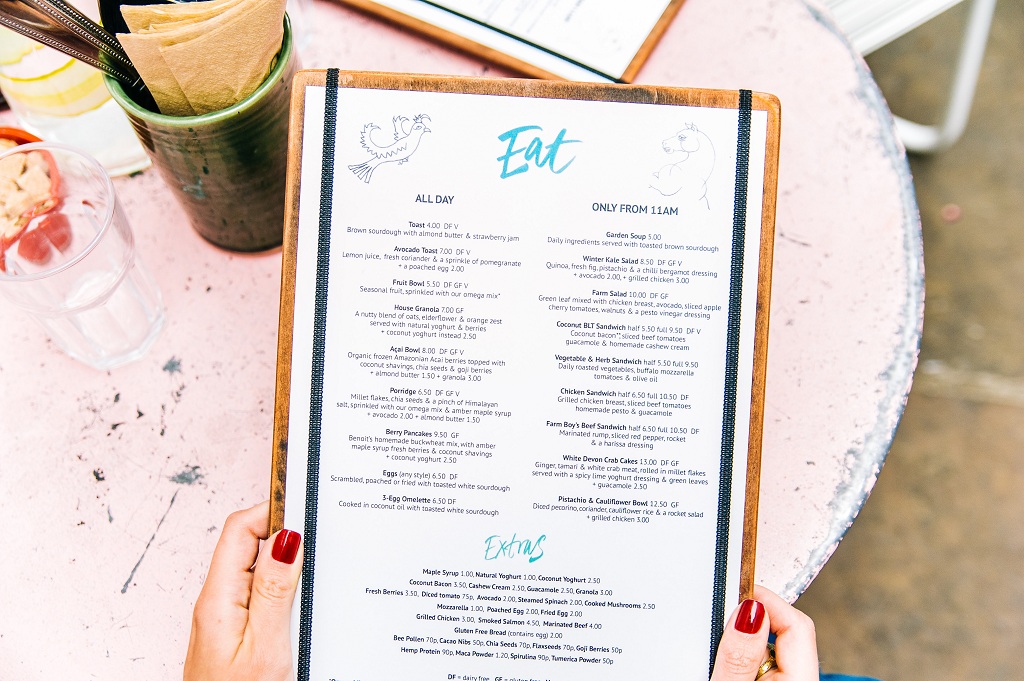
The design of your menu can enhance the diner’s experience substantially. Although menus come in different shapes, sizes, and number of pages, you don’t have to over-complicate the menu. Follow these tips to design menu for your restaurant:

small but delicious menu

  • Create a simple, small, mouth-watering, and fuss-free menu with vintage drawings and quirky headers that compliments your restaurant table tops.
  • A simple one-sheet design with minimal design creates a menu that is appealing as well as functional.
  • Since food is the center-piece of any restaurant, your menu must reflect that as well.
  • Use bright colors and bold styles to highlight food on your menu.
  • If you have a fixed menu, use high resolution photos of your best dishes to whet customers’ appetites.

5. Fix Problems Immediately:

In a restaurant business, no matter how well you plan and comprehend, there will be last-minute hitches. In such times, if you can fix any problems immediately, you will deliver excellent service to your customers. Here are a few tips:

  • Listen to the customer intently to understand how they would like you to fix the situation.
  • Even if you disagree with the customer, try to fix the situation as if it were your fault.
  • Stay calm and try to negotiate with the customer on how you can fix the problem quickly without any drama. Remember one thing, if customers stay, customers pay.

6. Don’t Make Your Customers Wait:

In a restaurant business, the customer is the king. If he has to wait too long for his order, it hampers his dining experience. It doesn’t matter if you have the best bartender if he takes too long to make a drink. It’s difficult to win a disgruntled customer back to your restaurant.

Ensure that you have sufficient staff to attend to every customer at any given time. Usually, customers have expectations for waiting time on their orders. For example, while ordering simple starters, they might expect them soon, but in the case of main course like steaks, they might give you time to prepare it. If they order a dish that takes longer to cook, let them know in advance.

7. Train Your Staff Appropriately:

Being a service industry, you probably understand the importance of a courteous staff for keeping your customers happy. By investing in training your staff, you teach them the etiquette for serving and talking to the customers. Here are a few tips:

train your staff

  • Greet your guests as they walk into your restaurant with a smiling face.
  • While taking their orders, be thorough with your menu, and don’t interrupt.
  • If you have any questions, ask them after they finish ordering.
  • No matter how crowded your restaurant, try to make all your guests feel welcome and not rushed.

8. Acquire the Most Comfortable & Specious Furniture:

Your restaurant’s furniture gets a lot of weary on a busy day. When you purchase tables and chairs for your restaurant, consider their sturdiness, design and comfort. At the same time, it should be easily movable so that you can accommodate different group sizes effortlessly. Use the following buying tips:

comfortable and specious furniture

  • Buy furniture with clean lines and practical seats that are easier to clean and maintain.
  • Seating with vinyl or wood seats offer a lot of practicality with a great variety of style and color options in all budget ranges.
  • Go for commercially-rated furniture as it is durable and cost-effective.

The Bottom-line:

For succeeding in a restaurant business, customer satisfaction is paramount. Apart from mouth-watering dishes and prompt service, attractive neatly set tables reflect the quality of the restaurant. This article highlights some crucial aspect to assist you to set up the restaurant and in providing an exceptional dining experience to your guests. Hopefully, by following these tips, you will be able to generate more revenue with satisfied customers.

Wood tables in restaurant

Wood Restaurant Table Tops from Missouri Table & Chair

With the increasing craze for rustic and industrial designs, natural wood has become the trend everywhere. Solid wood table tops have become a top design choice for most  restaurants. Missouri Table & Chair provides a selection of wood restaurant table tops that come in a variety of beautiful and durable natural woods that include solid white ash, oak, maple, walnut, and authentic teak. In addition to the various wood varieties, we also offer numerous wood stains in our collection. It includes wood tables having complete polishing and protective finish of the surface having mahogany to walnut as source material.

What Makes Wood Restaurant Table Tops so Popular?

1. Food Safe Surface

The first and foremost reason is provision of food safe surfaces due to complete finishing and sealing of wooden tables. Where, for every restaurant the food safety is a way of life. For the provision of risk free products, responsible businesses must have to take every possible measure for the food safety. Washing hands, scrubbing dishes and sanitizing surfaces can be done easily.  Maintenance of your wood tables starts by promptly cleaning up food stains and spills is a great start. A routine maintenance inspection is must for the prevention of accumulation of oil, dirt, and food on wood tables. A regular repair to minor scratches or damage will keep them looking great and food safe for a long-lasting period.

wood tables

Also, we at Missouri Table & Chair understand that a vital aspect of any commercial dining space involves using surface materials that can bear up to spilled drinks, dropped food and continuous customer use. Therefore, our tables are crafted with the utmost of care to ensure a beautiful, long-lasting and durable dining solution.

2. Easy to Maintain

Secondly, wooden table tops are easy to maintain. Cleanliness is thoroughly associated with food services. Customers take the cleanliness of restaurant spaces quite seriously. Therefore, it becomes necessary job for the restaurant management to facilitate cleaning and provide a positive and welcoming space. Minor stains on the surface or crumbs all over the surface make the highest quality tables look messy. In addition, trying to remove these marks or debris with harsh cleaning products can worsen the finish of the surface. A damp cloth with mild soap for cleaning and promptly drying the surface is the easiest way to maintain tables.

cleaning of wood restaurant table tops

But the restaurant management must have to ensure the repetition this process after each customer. Another great tip is to practice for not placing other furniture against or on the surface of your wood tables. It can scratch the finish and lessen the longevity of your tables.

3. Wide Range of Options to Choose From

Thirdly, just like any other business, the restaurant business is having its rating on the basis of its appearance. Different types of natural woods can be utilize to craft a restaurant table top. It creates a vast array of colors, textures, shades, and grains. As wood is an organic material, it needs proper treatment to avoid degradation and aging. Of course, the vintage looking wood is trendy for the restaurant tables. But if your table is warping or having splinters, this is not the appearance you are trying to present. This can ruin the entire ambiance of the restaurant. Therefore, proper maintenance and cleaning is the best way to preserve the best version of your restaurant tables.

Conclusion

We aim to offer only the wood restaurant table tops that are highest in quality and dependability. Along with the highest quality we provide the most affordable prices ensuring that you always get exactly what you need. Buying a quality wood table from an experienced vendor for the first time is very important. It will greatly impact on how long the tables will last. For more details contact us at 816-246-4040 or email us at [email protected]. Our friendly and knowledgeable staff will always be happy to assist you in the selection of the perfect furniture.