Author Archives: Gayla

restaurant table top

How to Decide Number of Table Tops for Your Restaurant?

Restaurant tables are the highlight of any dining area, and you must choose them wisely. Whether you are an aspiring restaurateur or an established restaurant design company, every new project brings a few complications that can impede or delay your restaurant’s opening.

Irrespective of the scale and size of your business, your customers always need comfortable tables to enjoy their food.

Hence, you need to select the best restaurant table tops that suit the layout. Read on to know about crucial factors that you must consider while selecting the right number of restaurant table tops:

Top 9 Factors to Decide the Right Number of Table Tops for Restaurant

1. Understand the Business Regulations

Before allocating the available space, the first thing you need to figure out is the local guidelines.

  • How much space do you need per customer?
  • How wide should the aisles be?
  • Where and how many exits do you need?

Local guidelines dictate all these issues. Contact the local authorities to enquire about the dimensions and get your restaurant layout approved. Although every restaurant has a unique layout and ambiance, here are a few general design rules you can follow:

  • Ideally, all your staff should move only in one direction to increase efficiency and avoid any cross traffic.
  • Include one server station containing tableware, a POS terminal, dustbins, etc., for every fifty seats in your dining room.
  • Restrooms should be easy to locate and access.

2. Calculate the Square Footage of Your Dining Area
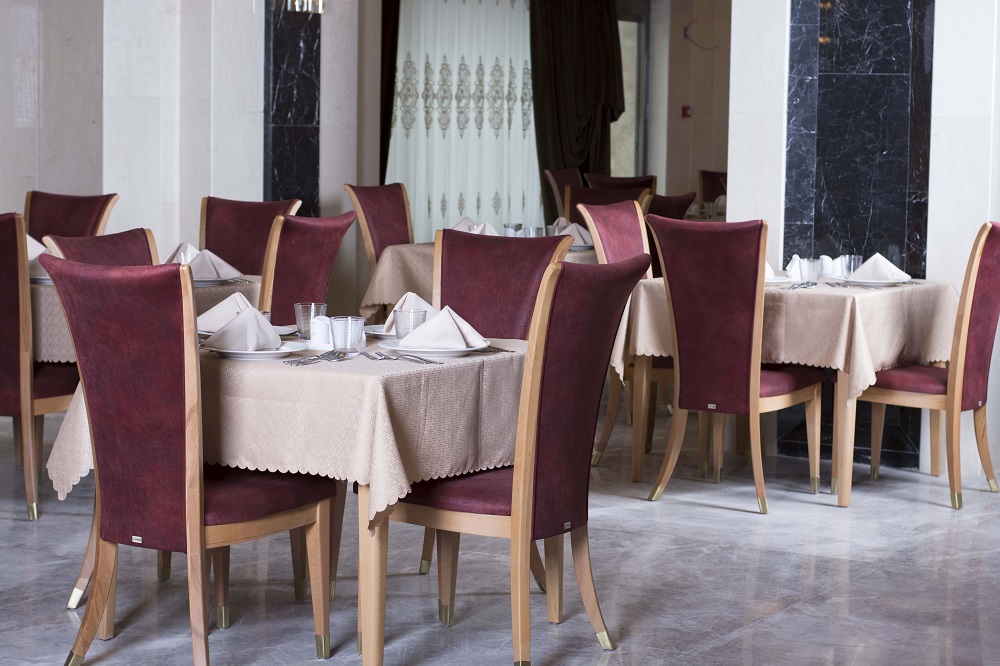
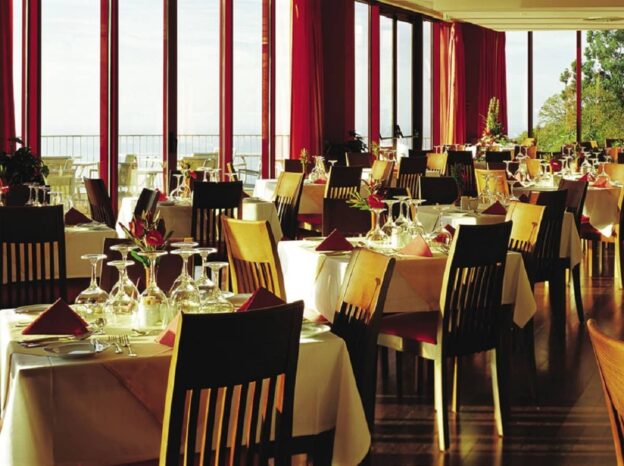
dining area

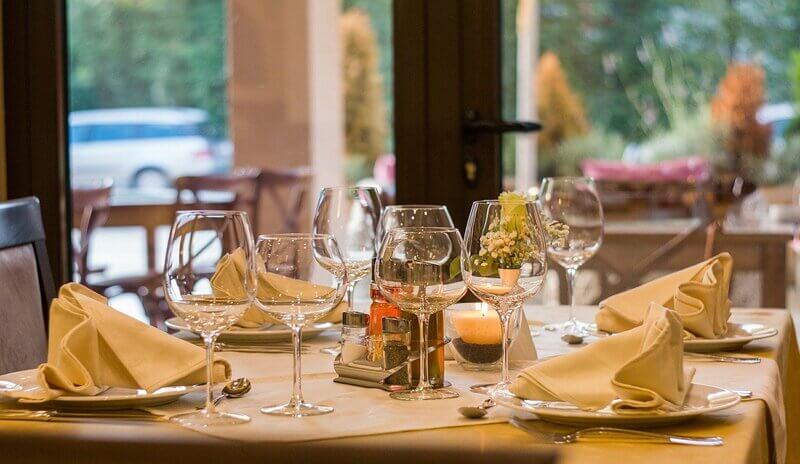
The floor area of any restaurant has several segments like kitchen, waiting area, dining room, restroom, storage, etc. Before you proceed to buy restaurant furniture, measure the available spaces and calculate the square footage that’s available for seating purposes.

Usually, dining rooms cover as much as 60% of the total floor area in a restaurant. Even within the dining room, you must leave adequate buffer areas depending upon your venue. For example, fine-dining restaurants require meal carts to serve at tableside.

Similarly, family restaurants might have bussing carts, and you need additional space to makeover them. The spatial planning of the floor space should depend on the anticipated traffic flow and restaurant-style.

3. Calculate the Seating Capacity

To select the correct number of table tops, you must first determine the number of people that can be accommodated comfortably in the total square footage of your restaurant.

Again, it depends on the type of your restaurant. Fine-dining restaurants, understandably, would require more square feet per customer than a banquet or fast food restaurant. Now, restaurant owners might have questions.

How Many Tables Should a Restaurant Have?

A restaurant should ideally have 12–20 tables for small spaces, 20–40 for medium-sized, and 40+ for large restaurants, depending on square footage, layout, seating style, and target customer volume.

The exact number of tables a restaurant needs depends on available space, local demand, and dining style. Fine dining restaurants often use fewer tables for comfort and ambiance, while casual or fast-casual restaurants maximize seating.

How Many People Can Seat in a Restaurant?

Industry standards recommend allocating 15–20 square feet per guest to balance comfort, capacity, and profitability.

The North American Association of Food Equipment Manufacturers (NAFEM) lays out the guidelines for space allowance per seat according to different service types as given below:

Type of Restaurant

Average spacing per customer (Square Foot)

Banquet Service

10-11

Fast Food Restaurant

11-14

Industry Cafeteria

12-15

Family Restaurant

15-18

Fine-Dining Restaurant

18-20

4. Identify What Size Restaurant Tables Will Work Best
size of table

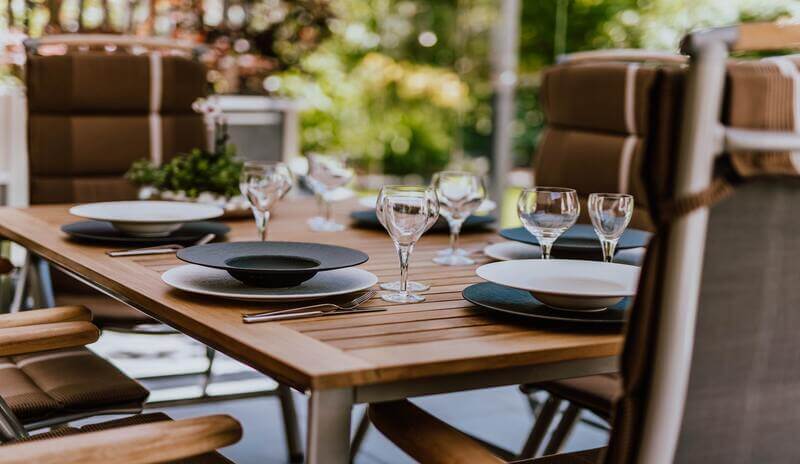
Before purchasing tabletops and accompanied restaurant seating, you need to know which restaurant table sizes work the best for this space. When choosing the correct size of restaurant table tops, consider factors like plate size, restaurant theme, dining style, and types of events hosted at your place.

There are many restaurant layout seating charts available by searching the internet to guide you visually in designing your floor space. As a rule of thumb, divide the dining area with at least three table sizes to accommodate small, medium, and large groups.

For example, use small tables at the window area space near the entrance to seat two persons. Similarly, place medium and large tables in the middle section of the dining room to accommodate families and larger groups.

To make it easy for you, please consider a below table size chart to help you choose the right size table top for your restaurant.

For Square Restaurant Tables:

Shape Size Typical seats
Square 24″×24″
Square 30″×30″ 2–4 
Square 36″×36″
Square 42″×42″ 4–6 
Square 48″×48″ 8

For Circular or Round Tables:

Round 24″ diameter
Round 30″ diameter 3–4 
Round 36″ diameter 3–4 
Round 42″ diameter 4–5 
Round 48″ diameter 5–6 
Round 60″ diameter 8–10 
Round 72″ diameter 10

For Rectangular Restaurant Table:

Rectangular 24″×30″
Rectangular 24″×42″
Rectangular 24″×48″
Rectangular 30″×42″
Rectangular 30″×60″
Rectangular 30″×72″ 6–8

5. Consider the Impact of Theme on the Sizing of Table Tops

Another crucial consideration for choosing the table top for a restaurant is how its size will impact the theme.

The layout, design, and theme significantly govern the number and size of tables that you need.

For example, a fine dining restaurant needs large table tops to accommodate dinnerware and table pieces. On the other hand, you can settle for a smaller table top to serve small groups in fast dining restaurants.

6. Choose Adjustable Sizing In Table Tops
sizing in table tops

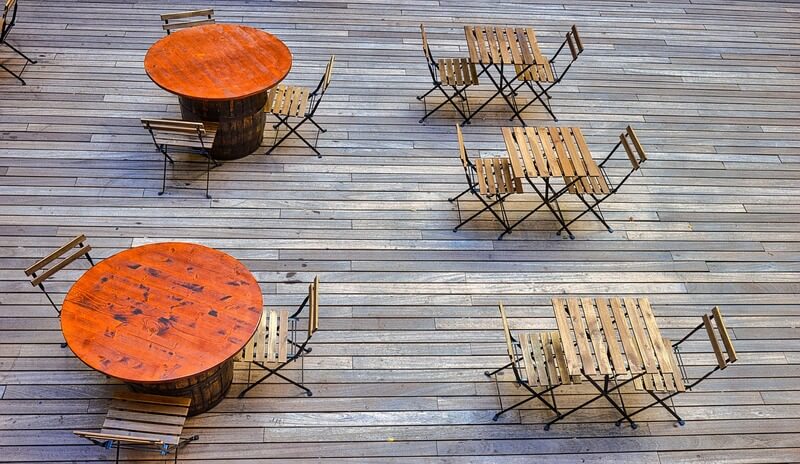
Over the last few years, restaurant owners have come to realize the benefits of adjustable sizing in table tops. Investing in adjustable tables helps you to accommodate different groups and occasions.

For example, you can join small square or rectangular tables to seat large groups. Similarly, you can consider flip-top tables, in which you can flip the four edges of the table to create a larger table area.

In short, adjustable table tops are excellent to augment your seating capacity according to changing business requirements. However, while choosing such table tops, consider the spacing required between tables to allow convenient movement during the transition.

7. Determine How Many ADA-Compliant Restaurant Tables You Will Need

Restaurants, being a part of the hospitability industry, must follow the Americans with Disabilities Act (ADA). Before completing the layout of your restaurant, you should determine the number of ADA-compliant table tops that you need.

In this regard, you can check the specifications of the local building inspector for federal and state requirements. Your facility should be easily accessible for a person with a physical disability.

Check with your local codes or an experienced restaurant furniture vendor familiar with ADA-compliant restaurant table tops to determine the correct table base design and height required.

Also, check your local authority to determine the minimum number of ADA-compliant tables you must have in your restaurant.

While restaurants usually leave an 18-inch gap between tables for the passage area, ADA requires you to provide at least 36-inch wide aisles to accommodate wheelchairs.

8. Mark the Layout of Table Selection on the Floor With Tape
floor and table top combination

Sometimes, a floor plan looks exceptionally well on paper but turns out to be a disaster when executed. One way to avoid such mishaps is by laying out the table selection on the floor with tape and examining the configuration to confirm your choice. In particular, check the following points:

  • Are there chances of your staff bumping into each other or with customers?
  • Are your tables adhering to social distancing guidelines?
  • Will your customers be able to find the restrooms without wandering?

9. Contact Us!

Buying the right restaurant furniture is significant investment and can be a daunting task if it’s your first purchase. Don’t be afraid to call on an expert restaurant furniture vendor to ask questions. A reputable vendor will want to help you with advice so that you make the right purchase.

At Missouri Table & Chair, we build restaurant table tops that offer durability and quality at some of the most competitive prices in the commercial furniture industry. Our modern restaurant table tops come with one-of-a-kind customer service tailored to each client.

When you build the restaurant of your dreams, we understand that it requires creativity and innovative thinking. With our 40+ years of experience, trust us to freshen your dining space with the perfect furniture for your restaurant.

Summing it up

Intelligently managing your restaurant’s dining area goes beyond the placement of chairs and tables. An ultimate layout design of a restaurant enhances its visual appeal and optimizes the efficiency of your staff as well. It facilitates the proper flow of:

  • Utilities: Water, electricity, air
  • People: Restaurant staff, customers
  • Products: Food, beverages, take-away orders
  • Information: Table or order information, bills or payments

As you might have noticed by now, deciding the number of table tops in your restaurant is not straightforward. It depends on your restaurant’s style, theme, floor area, clientele, etc. Accordingly, you can measure up the floor space in your restaurant and narrow down your options.

This short guide aims to help you make the best use of the space available for your restaurant. Hopefully, by learning from the points mentioned above, you will be able to decide the correct number of table tops in your restaurant for a profitable business.

How to Find the Center of Round Restaurant Table Tops

Why would a person need to determine the center of a round table? Many times restaurant table tops and bases are not made by the same manufacturer, so there are no markings on the bottom of the table identifying where to center and attach the base.

Since there are no markings on the bottom of the table, the people responsible for attaching the base to the table need to know where the center of the round table is, so the metal table base can be attached in the correct spot.

Simplest Way To Find the Center of the Round Restaurant Table Top

circumference diagram

To find the center of a round table you will need:

A tape measure

Some string

A pencil

Place the table top face down on the floor on a padded surface, using something like a moving blanket, to protect the table top. Measure from one side of the table to the other to determine the diameter. For example, 36” is a typical diameter.  The determine the radius by dividing diameter by 2. So the radius for a 36” round table divided by 2 is 18”.

Tie the string to the pencil, one inch above the pencil tip.  Tie a knot in the string the distance of the radius from the tip of the pencil, for this example is 18”.  So now the string is tied to the pencil, and is 18” long from the tip of the pencil to the small knot in the string.

Hold the knot in one spot anywhere on the edge of the table and draw an arc about 5” long.  Repeat this step about 6 times holding the knot at different points on the edge of the table, and making a 5” arc with the pencil.  The string should not bend, and should always 18” from the edge to the arc.  The pencil needs to be held perpendicular to the table top.

After making several arcs, there should be a common point where the arcs intersect.  This is the middle of the table.  The arcs may not intersect exactly, but for the purpose of attaching a base, all the arcs should intersect fairly closely. The assembled metal restaurant table bases can now be attached to center of the table location.

How to Measure the Distance From the Center of a Round Table Top?

Here’s the simplest way to measure distance from the center of a round table top:

  1. Find the center – Measure the table’s diameter (edge to edge through the middle) and mark the halfway point. That’s the center. We have already derived the center of round table top.

  2. Use a tape measure – Place the tape’s end at the center mark.

  3. Measure outward – Extend the tape straight to the edge or to any point you need.

The distance from the center to the edge is always the radius (half the diameter).

Finding the center of a round restaurant table top is easier than it looks. You need a tape measure, some string, and a pencil. That’s it.

Once you mark the center, measuring outward is just basic radius work. Follow these steps and your table base will sit exactly where it should, centered, stable, and not wobbling every time someone leans on it.

restaurant furniture types

5 Popular Restaurant Furniture Styles to Create a Welcoming Ambiance that Customers Love

In a food service business, restaurant tables and chairs are more than just furniture. Furniture also adds to the style of any restaurant and plays a crucial role in setting up its ambiance. Researching the right furniture selection initially can positively affect your restaurant style and therefore its success. Restaurant furniture should be durable, visually appealing, functional, and easy to maintain.

Additionally, it must be in sync with the atmosphere you wish to create in your restaurant. Needless to say, furniture that is out of place in your style and ambiance can negatively affect the overall experience of your customers. From food courts to casual dining restaurants, from cafes to fine dining restaurants, the style of restaurants requires a different approach to the type of furniture.

5 Popular Types of Restaurant Furniture Styles

Now, let’s discuss different restaurant styles and concepts to match the customer’s expectations.

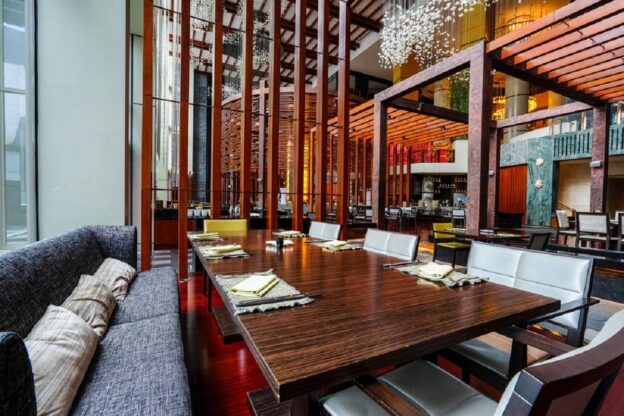
1. Industrial Style Restaurant Furniture:

Industrial-style restaurant furniture expresses the feel of a factory or workplace in its ambiance. Wide-open spaces with large dining areas are the highlight of such a restaurant.

As the dining area is conventionally open and has comfortable undertones, wooden-shaped furniture having metal with warm and bold accents is crucial to this style.

For example, a dark wood table top with a metal table base will accent and complement white modern walls.

industrial-restaurant-furniture

Metallic restaurant tables and chairs are another frequently encountered trend in industrial-style restaurant furniture. Welded metal fused with the natural beauty of wooden furniture provides utility and strength to the furniture. By combining different patterns, designs, and styles, industrial-style furniture creates a design that is casual yet informal, elegant yet playful.

2. Vintage Style Restaurant Furniture

Vintage-style restaurant furniture adds a rustic feel and old-world charm to a restaurant. The vintage furniture style is welcoming, charming, classic, and familiar. The use of custom upholstery creates a high-end ambiance for your guests. This style can also incorporate antiques, country touches, and printed wall decor, and art.

vintage-furniture

Although this versatile style perfectly fits any vintage restaurant, recent trends also combine vintage furniture with modern selections. Nowadays, vintage-style restaurant furniture combines rustic tables with modern hanging lights over country tables. Enhance the vintage décor with glass art to create an elegant, unique, and comfortable dining experience for your guests.

3. Modern Style Furniture

Modern-style restaurant furniture relies on minimalism and features functional furniture that is visually appealing. Modern restaurant furniture often uses metallic or molded plastic in bright colors with unique shapes. Modern furniture often appears elegant yet bold, minimalistic yet sophisticated.

modern-restaurant-furniture-style

Modern style furniture has clean straight lines without additional details. Most modern outdoor restaurant furniture uses resin table tops with molded plastic chairs to enhance their ambiance. In this style, the restaurant ambiance reflects airy and lightness in the dining area by using open furniture and elevated flooring can highlight the style.

4. Retro Style Furniture

Similar to the vintage style, the retro furniture style is another intriguing design aspect. This style is quite popular for recreating the themes from the 50s or 60’s era. Customized restaurant booths, matching laminate tables, and backless swivel stools with vinyl seats in bright colors create an entertaining ambiance for your guests.

retro-style-furniture

5. Country Style Traditional Furniture

Country-style restaurant tables and chairs provide a warm and cozy feeling to your guests. Traditional English decor, wooden furniture, and ambiance are crucial to this style. Country-style furniture often uses rusty strong tables and high-back chairs with cozy cushions.

traditional-furniture

Another popular style for seating is warm wood frame chairs or bar stools in a variety of stain colors. Match them with butcher block tables to finish the look.

Summing it up

While selecting the furniture for your restaurant, you must be aware of your target customer base, their expectations, your budget, and the theme you wish to create in your restaurant. Once you know these requirements, selecting the right furniture for your restaurant will be a piece of cake.

The styles and tips mentioned above serve as a handy guide for selecting the best restaurant furniture styles for your restaurant. By focusing on durability, ease of maintenance, and your restaurant’s concept, you can build your brand successfully. Hopefully, by following the points above, you will be able to select the perfect furniture for your restaurant that attracts customers and grows your business.

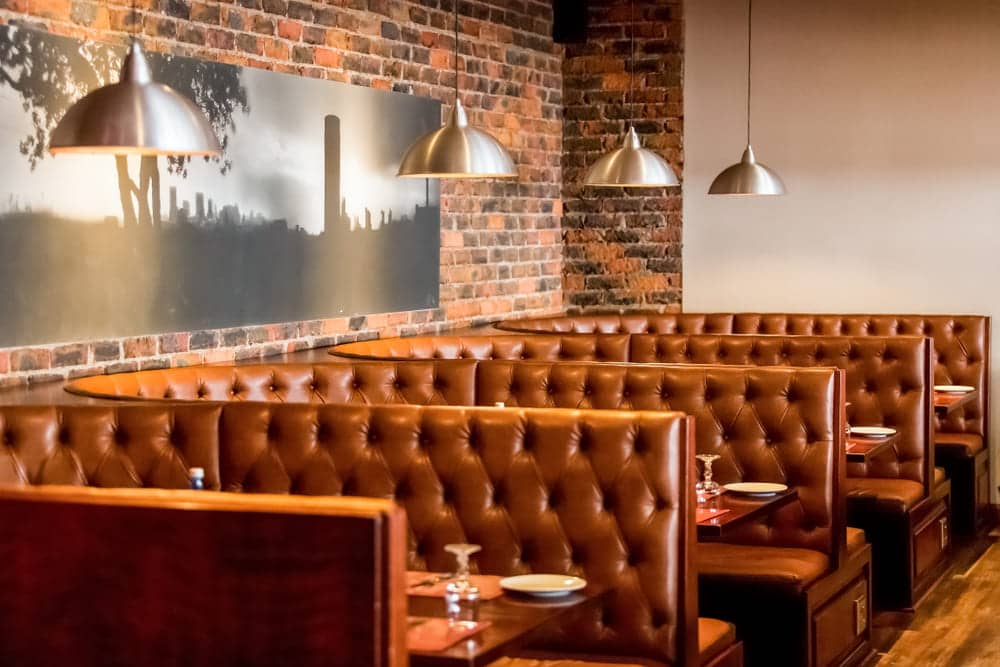
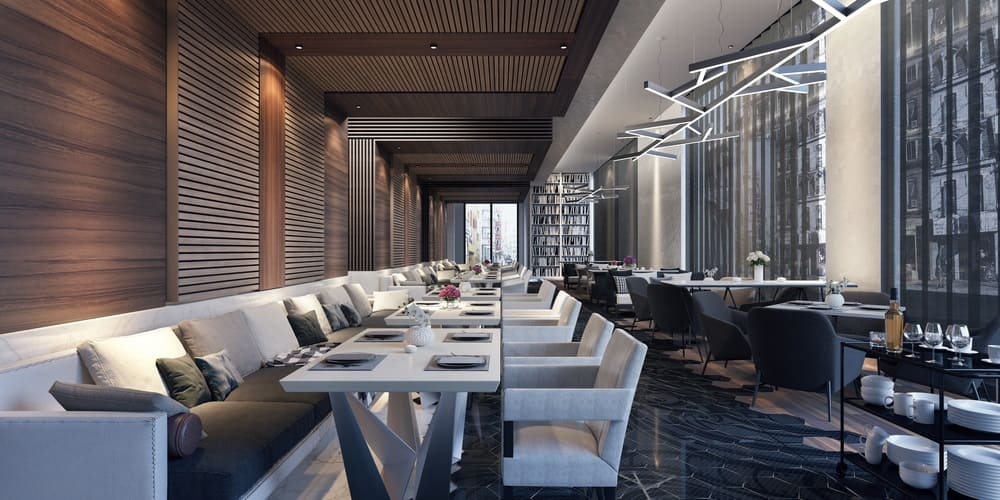
modern restaurant booths

What is the History Of Restaurant Booths?

Step into the world of restaurant booths, where comfort and cuisine intertwine. This article delves into the captivating history of restaurant booths. From their origins in ancient civilizations to their heyday in mid-20th century America, discover how restaurant dining booths evolved beyond mere seating arrangements.

Uncover their role in creating intimate dining experiences and maximizing space utilization. Explore the influence of cultural shifts and design innovations on booth aesthetics and popularity.

Let’s start a journey through time to appreciate the past, present, and future of restaurant booths and their enduring charm.

Why Are Restaurant Booths Really Invented? : An Origin of Restaurant Booth

The restaurant booth’s origins can be traced back to ancient civilizations. Inns and taverns of ancient Rome and Greece offered semi-private spaces for dining. These early booths provided a mix of comfort and privacy.

During the Middle Ages, communal dining halls featured bench-like structures with dividers. In the 18th century, booth-like arrangements gained popularity in English taverns and coffeehouses.

By the 19th century, American eateries adopted segregated seating with fixed benches. The 20th century saw the rise of diners and drive-ins. This solidified the booth’s iconic status. The booth’s history reflects a timeless desire for intimacy and relaxation while enjoying a meal.

Why Are They Called Booths?

It’s called a booth because the word first meant a small space or stall that gave people privacy.

The word “booth” originally meant a small enclosed space, hut, or stall that provided privacy and separation.

The term goes back to Old English and Scandinavian roots, where “booth” described a temporary shelter or a market stall. Over time, it came to represent any partitioned area set aside for a person or group. Restaurants adopted the word to describe seating that offered a similar sense of enclosure.

The design gave diners a more private and comfortable space compared to open tables. By the early 20th century, booths had become a staple in American diners and cafés, valued for both efficiency and atmosphere.

A restaurant dining booth is not just a seat, but a defined space that makes dining feel more personal, structured, and familiar.

Popularity & Evolution of Restaurant Booth

Restaurant booths surged in popularity due to their cozy appeal and space efficiency. In the mid-20th century, they became synonymous with diners and fast-food joints. The 1950s diner culture introduced retro restaurant booths.

Booth designs are diversified, adapting to different themes and comfort levels. In upscale restaurants, plush booths are offered as well as traditional seating. They are used to offer an intimate dining experience. Modern restaurant booths incorporate technology with built-in charging outlets and interactive menus.

From humble origins to today’s innovations, the evolution of restaurant booths showcases their enduring ability to cater to both comfort and style preferences.

retro restaurant booths

Use of Restaurant Booths in Popular Culture

Restaurant booths have woven themselves into the fabric of popular culture. They have found their place in various forms of media and daily life. Some people choose restaurant booths to enjoy privacy. They prefer having a romantic date or a clandestine meeting in these booths.

For some, restaurant booths represent grandeur and refinement. Those who look for a fine dining experience can easily choose restaurant booths. And for others, a booth is a perfect place where one can relax without being part of the hubbub of a busy restaurant. In a nutshell, restaurant booths may signify different things to different people. But they are certainly an important part of our culture.

Want to read more a detailed information on restaurant booths? Checkout our complete guide on restaurant booth, where we have explained everything related to the booth at one place.  

An Overview of Modern-day Restaurant Booths

Modern-day restaurant booths continue to evolve. They offer both functionality and style. These booths are characterized by:

1. Versatile Designs:

Modern booths come in various shapes, sizes, and configurations to suit different restaurant themes and layouts. 

2. Comfort and Privacy:

Upholstered with plush materials, modern booths prioritize customer comfort. They also provide a degree of privacy for intimate conversations. 

3. Technology Integration:

Many modern booths are equipped with charging outlets, built-in screens for ordering, or interactive menus. This way, the booths enhance the dining experience.

4. Aesthetic Diversity:

From sleek and minimalist to retro and eclectic, booths are designed to match the overall interior design and ambiance of the restaurant.

5. Customization:

Restaurants often personalize booth designs with unique upholstery, colors, and patterns. Custom booths for restaurants easily align with the restaurant’s brand identity.

6. Space Optimization:

Modern booths are designed to make the most of limited space. They allow restaurants to accommodate more diners without sacrificing comfort.

7. Social Media Appeal:

Stylish and Instagrammable booth designs contribute to the visual allure of a restaurant. They entice patrons to share their experiences online. 

8. Family-Friendly:

Some modern booths are designed to accommodate larger groups. These are suitable for families and gatherings.

Modern restaurant booths continue to blend comfort, aesthetics, and technology. They cater to contemporary dining preferences while honoring the nostalgic charm of their predecessors.

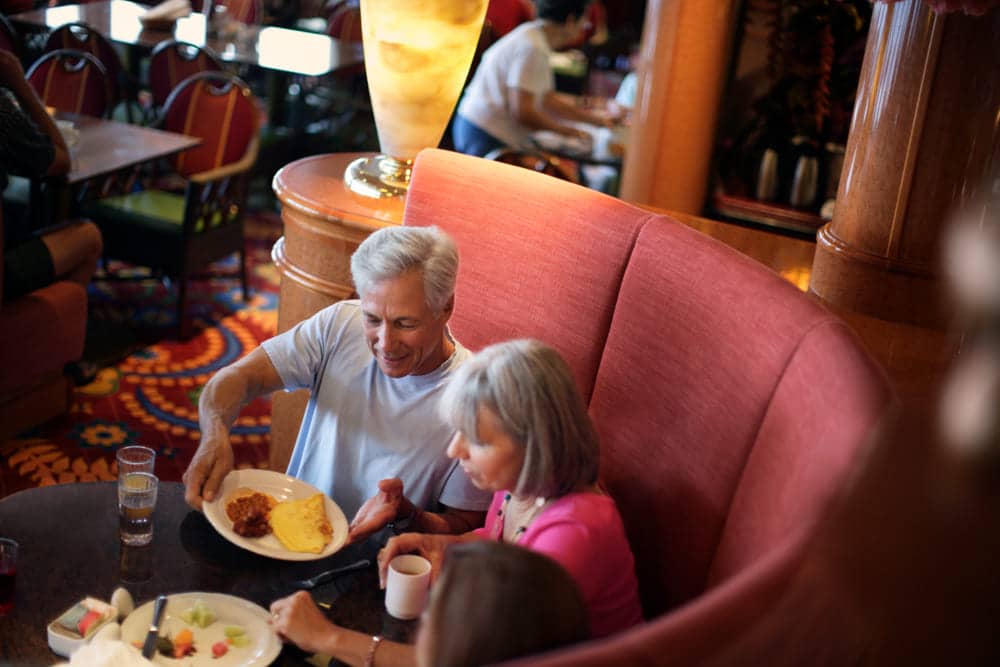
couple on restauran booths

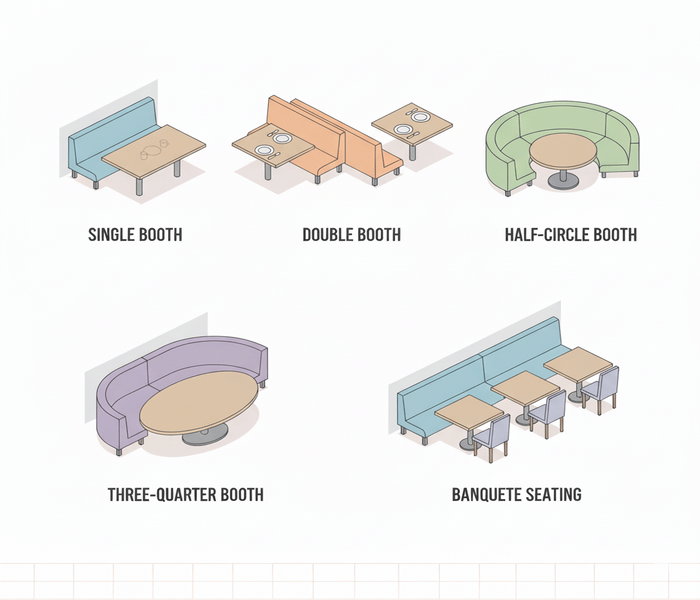
What Are the Restaurant Booth Seating Designs Invented?

Booth seating has been part of restaurant culture for decades, and over time, different designs have taken shape to match changing dining needs. Some booths are made for privacy, while others are designed to save space or handle more guests. Each design has its own purpose and style. There are multiple types of booth have been invented after that, mentioned below:

  1. Single Booths
  2. Double Booths
  3. Half-circle Booths
  4. Three-quarter Booths
  5. Banquette seating

Today, many restaurants mix these designs to balance comfort, efficiency, and aesthetics. The choice often depends on the type of dining experience the restaurant wants to create fast-paced and casual, or relaxed and private.

What Are The Advantages of Restaurant Booths?

Here are the key advantages of restaurant booths:

Privacy:

Booths offer a degree of separation. They are ideal for intimate conversations and private dining experiences.

Comfort:

With cushioned seating and backrests, booths provide a comfortable and relaxed dining experience. They encourage patrons to stay longer.

Space Efficiency:

Booths optimize seating arrangements. They allow more customers to be accommodated in a given space compared to individual restaurant chairs.

Aesthetics:

Well-designed booths contribute to the restaurant’s overall ambiance. They enhance its visual appeal and theme.

Noise Reduction:

Booths can help dampen noise levels. They create a quieter dining atmosphere and improve conversation quality.

Consistency:

Booths provide uniformity in seating. They ensure a consistent look and feel throughout the restaurant.

Branding:

Customizable booth designs allow restaurants to reinforce their brand identity through color schemes, patterns, and materials.

restaurant booths

What Are The Disadvantages of Restaurant Booths?

Restaurant booths have some drawbacks as well. Here these are: 

Limited Flexibility:

Booths are less versatile than individual chairs. It’s harder to rearrange seating for larger parties or special events.

Accessibility:

Booths might not be accessible for all customers, including those with mobility challenges or larger body sizes.

Cleaning and Maintenance:

Cleaning and maintaining booths can be more challenging due to their enclosed nature and upholstery.

Space Utilization:

While they optimize space in some cases, booths can also take up more space compared to compact chair arrangements.

Cost:

Installing and maintaining booth seating can be more expensive than traditional chair seating.

Isolation:

In overly private booths, diners might feel disconnected from the restaurant’s atmosphere and miss out on interactions.

Diverse Group Accommodation:

Booths might not be ideal for accommodating larger groups. They limit the restaurant’s ability to cater to varied party sizes.

Choosing whether to incorporate booths in a restaurant depends on your establishment’s specific needs, layout, target audience, and design preferences.

Diversity &Accessibility

Restaurant booths vary in terms of accessibility and diversity. Certainly, they offer privacy and comfort. However, they might not cater well to all patrons. People with mobility challenges might find them less accessible. Moreover, larger booths may lack inclusivity for diverse body sizes. However, modern designs are evolving to accommodate accessibility standards. Modern restaurant booths offer options for various group sizes. These are aiming to strike a balance between comfort, aesthetics, and inclusivity.

The bottom line,

In tracing the journey of restaurant booths through time, it becomes evident that their evolution reflects both cultural shifts and design innovations. From ancient origins to their iconic presence in modern eateries, restaurant booths remain a testament to people’s desire for comfort, connection, and culinary experiences.

FAQs

Q. When did restaurants start using booths?

Restaurants began using booths in the late 19th century, with early examples appearing in American taverns. By the mid-20th century, booths became central to diner culture. They started to offer comfort and privacy that resonated with patrons.

Q. Why booths are called booths?

The term “booth” originates from the Old English word “both”. It means “a structure for shelter or support.” It later evolved to refer to enclosed seating areas in restaurants, providing a sense of privacy and coziness.

Q. Why are Booths so popular?

Booths are popular due to their blend of comfort, intimacy, and space efficiency. They cater to social interactions while offering a sense of seclusion. Additionally, booths’ iconic association with diners and pop culture contributes to their popularity.

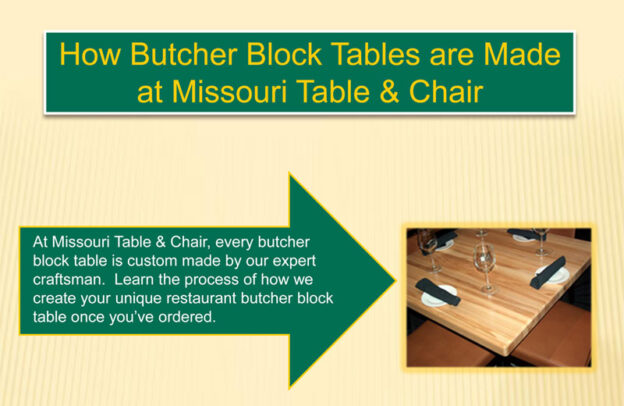
How Butcher Block Table Made at Missouri Table & Chair

How Butcher Block Restaurant Tables are Made

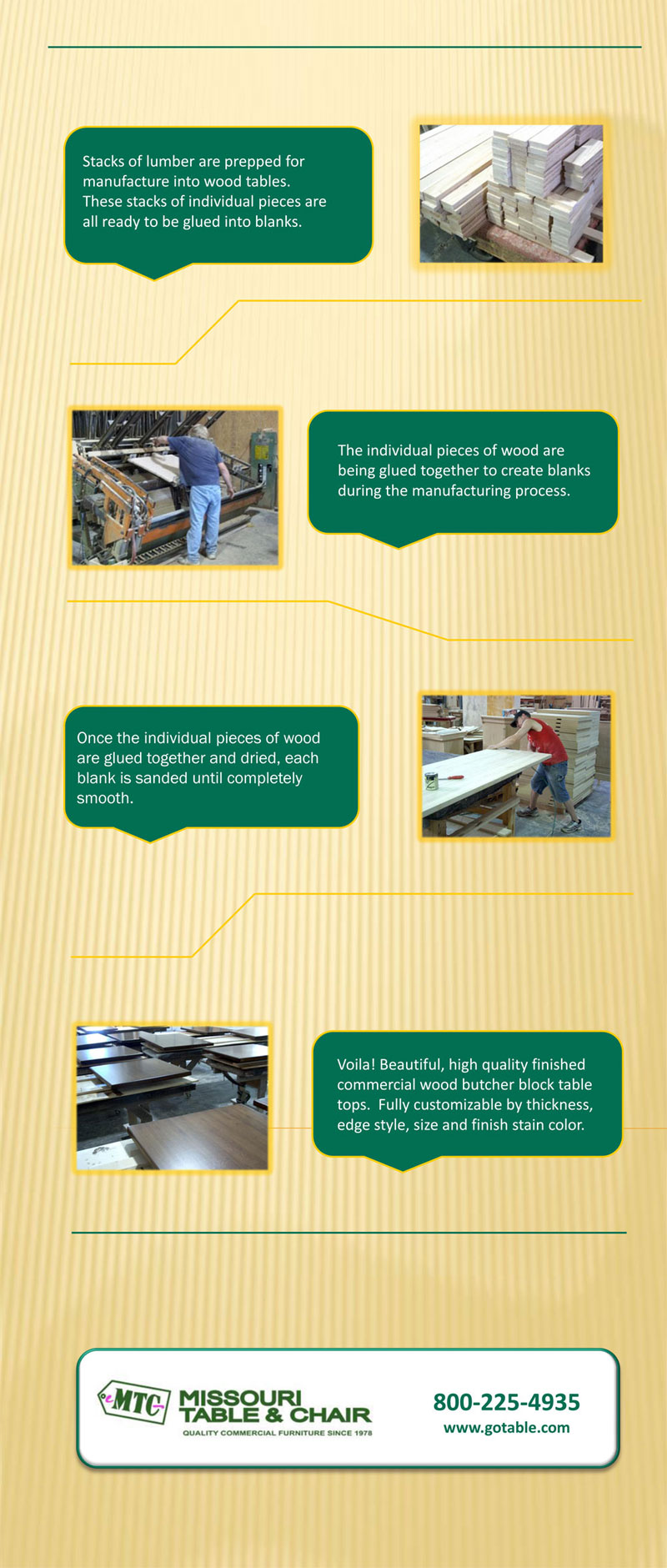
Have you ever wondered how restaurant butcher block tables achieve that unique look?  Butcher block tables constructed of quality wood pieced together add a warmth to any dining space they are placed in. This infographic shows how we make our outstanding butcher block restaurant tables here at Missouri Table & Chair.

Butcher block tables look simple, but a lot of work goes into making them. Each top starts as rough lumber and goes through a careful process of cutting, gluing, sanding, and finishing before it becomes the kind of table you’d see in a restaurant or home.

Here’s a step-by-step look at how they’re made.

Step 1: Preparing the Lumber

The process begins with raw lumber. Large stacks of hardwood boards are selected, often maple, oak, walnut, or beech. These woods are chosen because they are dense, stable, and can handle years of daily use.

People choosing the wood very wisely when it comes to butcher block table top. In one of the reddit thread, a reddit user commented:

White oak butcher block is a great choice—it’s pre-milled, stable, and has an attractive grain, which is perfect when you don’t have a joiner or planer.

White oak is widely use in butcher block, we use material according to the specific requirement from the restaurant owners.

Before anything else, the boards need to be prepped:

  • They are checked for knots, cracks, or defects.

  • Each board is milled down to a uniform thickness.

  • The wood is allowed to adjust to the shop’s environment so it won’t warp later.

Once prepped, the boards are ready to be joined together.

Step 2: Gluing the Boards

This is where butcher block gets its strength. Individual strips of wood are glued edge to edge to create solid blanks.

The boards are arranged so the grain patterns work well together. Then adhesive is applied, and clamps are used to press the pieces tightly. This step is crucial. If the glue lines aren’t tight, the blank won’t hold up under daily wear.

Depending on the size of the top, several blanks may be made and later joined into a larger surface. The glued blanks are then left to dry until they are fully set.

Step 3: Sanding and Smoothing

Once the glue has cured, the blanks move on to sanding. First, they are planed to make sure the surface is flat. Then they are sanded through several grits until the top is completely smooth.

This step takes time. Any uneven spots or rough edges would show up later under stain or finish. By the end of sanding, the blank feels even and ready for detailing.

Step 4: Shaping and Cutting

After sanding, the blank can be cut to the right size. At this stage, the edges are also shaped. Customers often have choices here, such as square edges, rounded corners, or decorative profiles.

Larger tables may require seaming multiple blanks together. Holes or slots may also be added for hardware or bases, depending on how the finished table will be used.

Step 5: Finishing and Staining

The final stage is finishing. This protects the wood and gives the top its color and sheen.

For commercial use, many tops are finished with durable coatings that resist spills and daily cleaning. For residential kitchens, food-safe oil finishes may be used. Some customers want a natural look, while others prefer a stained finish that matches their décor.

During finishing, the surface is sealed, the stain is applied if requested, and a topcoat is added. Once dry, the butcher block has the warm, polished look that makes it so popular.

More Read: A Guide to Butcher Block Tables

Customization Options

Not every butcher block table is the same. Shops like Missouri Table & Chair allow customers to choose details that fit their needs:

  • Thickness of the top

  • Edge style

  • Table size and shape

  • Stain or finish color

These choices make it possible for a restaurant or homeowner to get a top that matches their space exactly.

Quality Control

Before leaving the shop, each top is inspected. The goal is to make sure the surface is smooth, the finish is even, and the table meets the order specifications. Any defects are corrected before shipping.

Why Butcher Block Works So Well

There are good reasons why butcher block has become a staple for restaurants and homes:

  • It’s strong. The glue-up method creates a stable, durable surface.

  • It’s attractive. Natural wood adds warmth to any space.

  • It’s versatile. With different stains, finishes, and edge styles, it works in many settings.

  • It’s repairable. Scratches or dings can often be sanded out and refinished.

Care and Maintenance

A butcher block table will last for years if cared for properly. Maintenance depends on the type of finish:

  • Oil finish: Reapply oil regularly to keep the wood sealed. Avoid soaking the surface with water.

  • Polyurethane or commercial finish: Wipe clean with a damp cloth. Avoid harsh chemicals that could dull the finish.

Regular cleaning and quick attention to spills help protect the surface and keep the table looking new. Check out our wood table cleaning guide for more details.

A Craft Process

From raw lumber to finished table, making butcher block is about patience and detail. Each stage—prepping, gluing, sanding, shaping, and finishing, builds on the last. The result is a table top that is sturdy, attractive, and made to order.

Butcher block tables are not mass-produced pieces stamped out of a machine. They are built step by step, often by craftsmen who know how to work with wood. And that’s why they continue to be a popular choice for both restaurants and homes.

butcher block infographic