Author Archives: Gayla

Restaurant table

Complete Guide on Selecting Woven Outdoor Furniture for Restaurant

Whether it is indoor or outdoor furniture, Wicker has been a popular material for centuries. Traditionally, Wicker furniture uses woven plant materials like Willow, Bamboo, Cane, Rattan, Sea grass, Banana leaf, or even synthetic fibers. The earliest documented use of Wicker dates back to ancient Egypt, where they built small tables from reed and swamp grasses. Over time, Egyptian soldiers and merchants passed on the technique to Rome. As the Roman conquests expanded throughout Europe, woven outdoor furniture made its way to Portugal, England, and Spain. Being a light-weight, inexpensive, durable material, Wicker soon became the preferred material for indoor and outdoor furniture. Wicker furniture has been a centerpiece of the Victorian Era due to its vintage style.

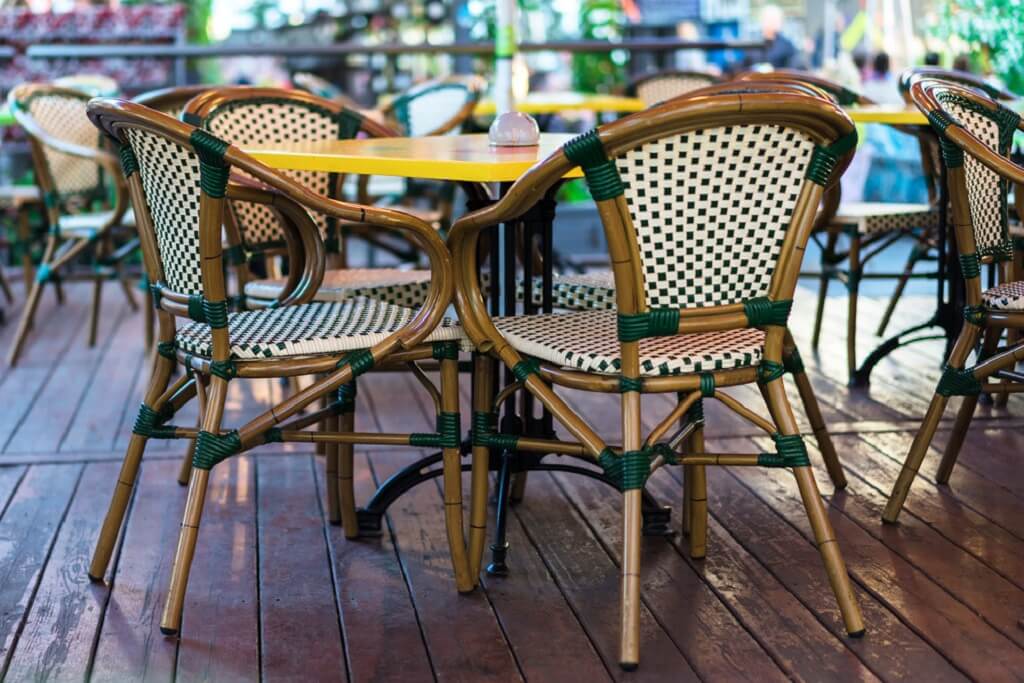
Outdoor woven wicker furniture

Importance of Woven Restaurant Furniture

Apart from the ages-old history, woven restaurant furniture is still relevant today. In today’s usage, the term Wicker refers to the act of weaving and woven furniture in general. Woven Wicker furniture is readily available in vintage as well as contemporary styles with eye-catching shapes and colors to match every ambiance. A perfect blend of practicality, functionality, durability, appearance, and cost-effectiveness, Wicker remains an excellent material for restaurant furniture. Whether it is woven bar stools or woven wicker chairs, using woven Wicker furniture boosts the style and decor in your restaurant.

Types of Woven Furniture Materials

Modern woven furniture is available from the following naturally occurring and synthetic materials:

  • Rattan Material: Made from the Calamus tree, a type of palm tree, Rattan is the most common Wicker material.
  • Cane Wicker Furniture: Known for its glossy finish, Cane is a thin strip obtained by removing the outer layer of Rattan.
  • Banana Leaf: After drying, twisting, and braiding, Banana leaves become ropes to be woven over a frame.
  • Bamboo Woven Wicker Furniture: Often mistaken for Rattan, Bamboo is an excellent choice for woven bar stools and baskets.
  • Synthetic Wicker Furniture: All-weather wicker furniture uses weather-resistant fibers treated with UV for a glossy finish and natural look.

Additionally, they consist of reinforced aluminum frames to provide strength and make them durable.

5 Reasons to Go for Woven Restaurant Furniture

Pick any design magazine, and you might notice woven restaurant furniture in one form or the other. There are plenty of reasons to use this material for your restaurant tables and chairs.

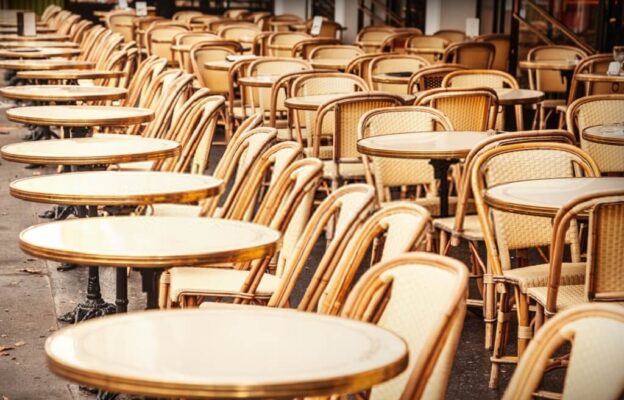
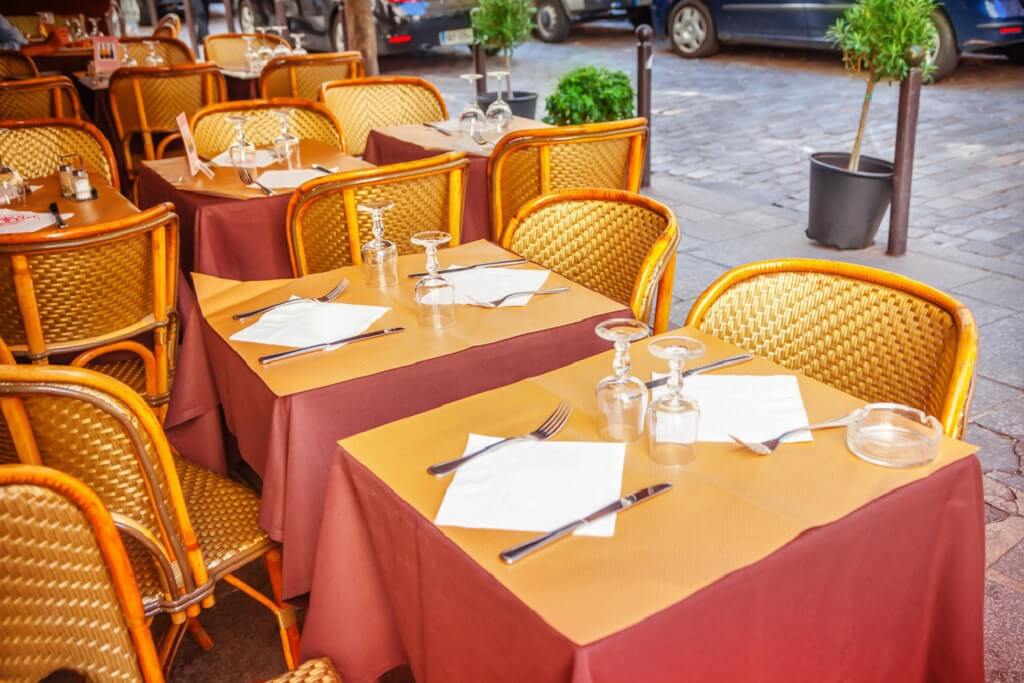
Street cafe woven wicker furniture

1. Lightweight

In any restaurant, you often need to change the dining layout or rearrange the table sets to accommodate different groups of customers or occasions. Selecting lightweight restaurant tables and chairs can be a huge relief for your staff. Woven Wicker furniture is convenient to shift and relocate due to its light weight. Despite being inherently lightweight, Wicker furniture is sturdy and has sufficient strength.

2. Durable

Although traditional Wicker furniture made from plant materials were prone to damage from moisture, chipping, sunlight, etc., modern technology has made them quite durable and long-lasting. For example, UV-treated resin molded woven Wicker is an all-weather material, which keeps the aesthetic charm of the natural Wicker. Whether it is an unexpected cloud-burst or a stubborn stain, with modern woven outdoor furniture, you don’t have to worry about anything as they are quite easy to clean and maintain.

3. Customizable

The popularity of woven Wicker for furniture material stems from its versatile and customizable nature. The availability of woven furniture in different shapes, sizes, colors, configurations, etc. makes it ideal to suit your restaurant’s theme. From elegant to casual, from contemporary to vintage, from chic to classy, you can use woven outdoor furniture to recreate any look and decorative style. The natural, organic look and feel of the material makes it ideal for cozy dining in warm climates, both indoors and outdoors. The ageless appeal of the Wicker furniture blends seamlessly with the other furnishing elements of your restaurant.

4. Affordable

Another reason to select woven Wicker for your restaurant furniture is its affordability. Natural Wicker comparatively costs less than wood and preserves the same vintage look. So, by opting for the woven Wicker material, you not only save the costs upfront, but its low maintenance cost enhance your savings further as well. Overall, Wicker patio furniture is a smart investment that lasts for years.

5. High-Quality

The high-quality furniture from Wicker is relatively maintenance-free as compared to the other materials. You can wipe them clean every week using a damp cloth or sponge to retain its shine. Moreover, UV treatment and resin molding processes make them washable. Ease of maintenance can be a considerable asset if yours is a busy restaurant with limited staff.

Taking Care of Woven Outdoor Furniture

Although Wicker is a highly resilient material that withstands extreme weather conditions, regular upkeep & periodic maintenance can increase its lifespan significantly. Here are a few tips to take care of your woven outdoor furniture so that it lasts long:

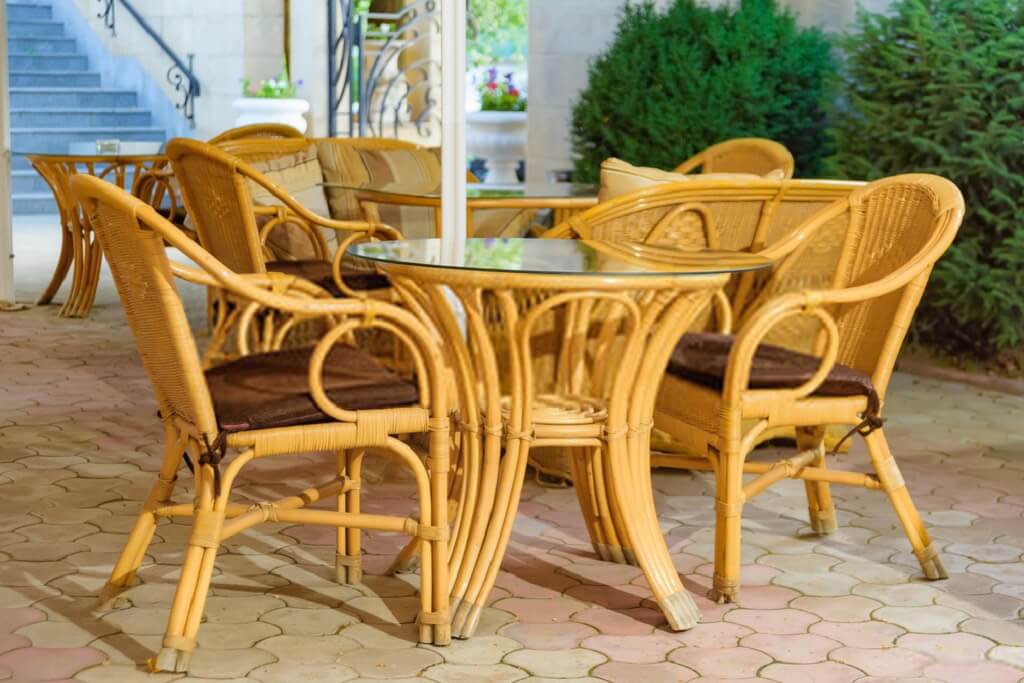
woven wicker restaurant furniture

  • Wipe any stains or spills immediately with a dry, clean cloth to remove moisture.
  • Use a brush with soft bristles to remove the dirt from woven patio chairs and stools.
  • If you notice any tougher stains or dried-up spills, wash the Wicker furniture gently with a mild soap solution and sponge. Make sure to rinse it clean with water and dry it thoroughly.
  • Avoid using strong chemicals or harsh cleaners on your Wicker furniture, as they might remove the protective finish layer and discolor your furniture.
  • While testing new solutions or reagents, it’s best to apply them in hidden areas to avoid any apparent damage.
  • Wash and store the cushions separately.
  • During cold weather, you can either store the woven outdoor chairs and tables in a storage space or use a protective cover.

Conclusion

More than just a practical and functional furniture material, Wicker is a style statement. Whether you use them indoors or outdoors, the timeless beauty of Wicker furniture makes it a head-turner in your restaurant. Their durability, versatility, affordability, and flexibility, among other things, make them a value-addition in your restaurant.

This article highlights the origin, types, importance, and benefits of using Wicker furniture for all-weather conditions.Hopefully, the points mentioned in this article help you in selecting the perfect furniture for your restaurant that requires minimum care and lasts long.

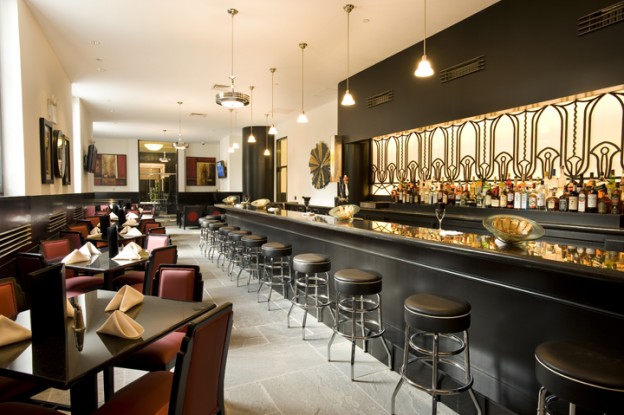
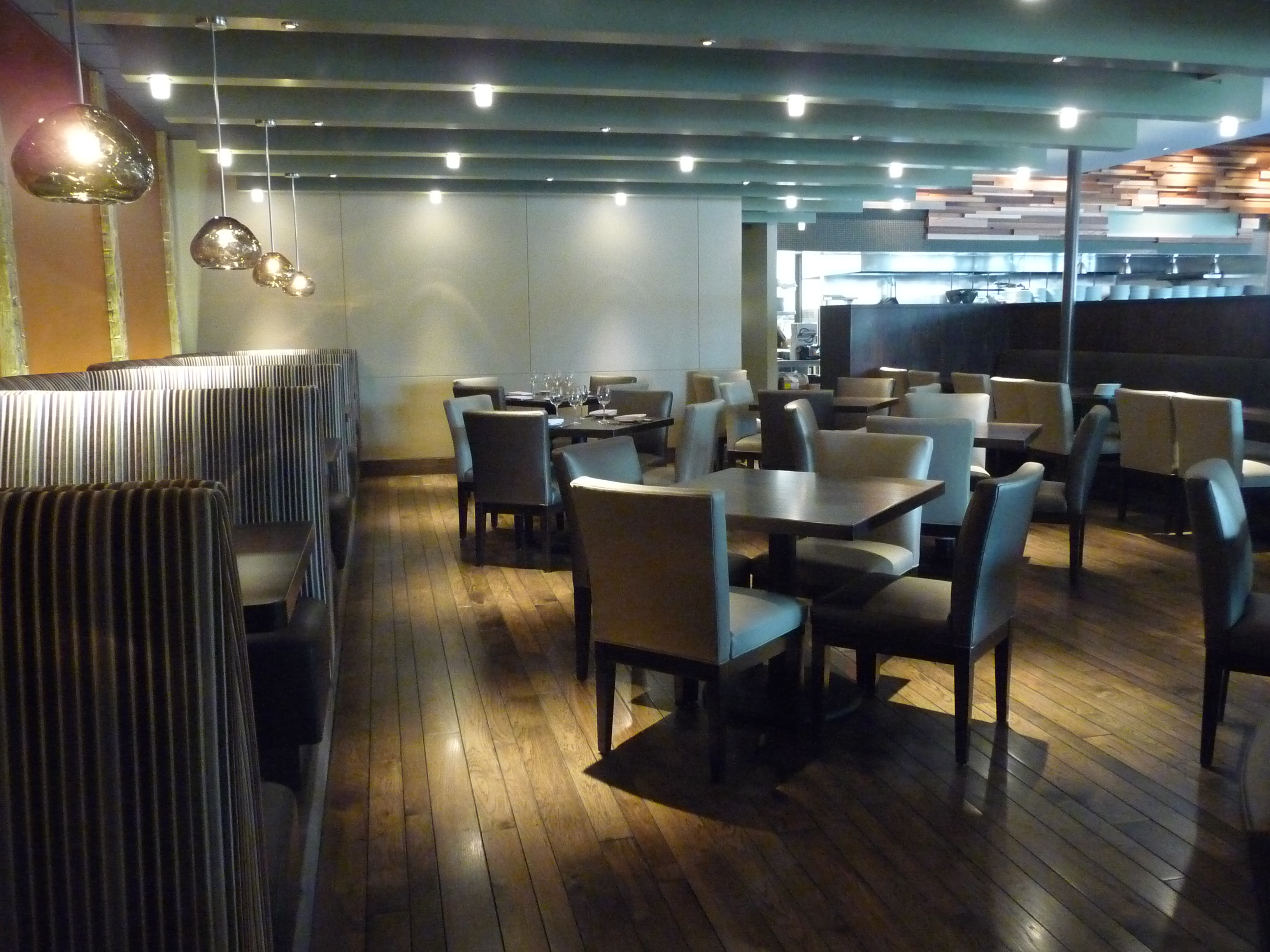
restaurant dining room

Why Granite and Wood Are The Best Materials For Restaurant Tables

Restaurant owners, managers and chefs need easy-to-use tabletops that are functional and affordable. Material type has a huge impact on these factors, which is the reason why restaurant professionals choose natural tabletop materials, such as granite and wood restaurant tables for dining customers and kitchen staff.

Why Granite & Woods are Best Materials?

Here is what any restaurant professional needs to know about why granite and wood tabletops are superior to other materials for restaurant use.

1. Granite and Wood Offer Durability

Granite and wood table tops offer many benefits. Both are extremely durable, allowing the tabletop to endure a lifetime without diminished quality. Granite is difficult to scratch, chip, or stain, and it is virtually impervious to burns from toasters or griddles, all important factors in a restaurant environment.

wood restaurant tables

Wood can take a real beating over the years, but even when it shows some wear, a simple sanding and polishing makes it look as good as new. Wood is an ideal material inside kitchens. Chefs across the world use wood butcher block table tops.

2. Beautiful and Timeless

Granite is a form of hardened magma found in different environments throughout the world, so each piece is unique. It comes in hundreds of colors and contains various swirls and other patterns, allowing customization to fit in any restaurant. Granite is also versatile — it’s suited for both indoor and outdoor use, which means more options to expand restaurant seating.

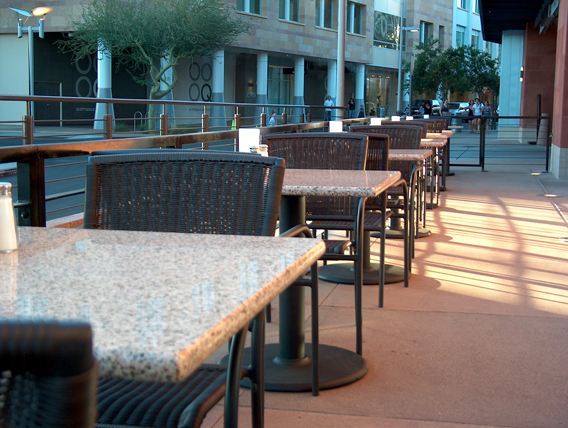
outdoor granite restaurant tables

Wood is one of the most aesthetically pleasing materials available for restaurant table tops. It also allows customization options from the thickness, shape, and hue. Although wood doesn’t perform as well outdoors as granite does, it’s an excellent choice for indoor use. Certain types of wood such as teak can survive outdoor use.

3. Sanitary and Easy Cleaning

Granite and wood help create a sanitary environment for customers and staff. The surface of granite serves as an unfavorable environment for bacteria growth; there is less maintenance required and less chance of contaminated food.

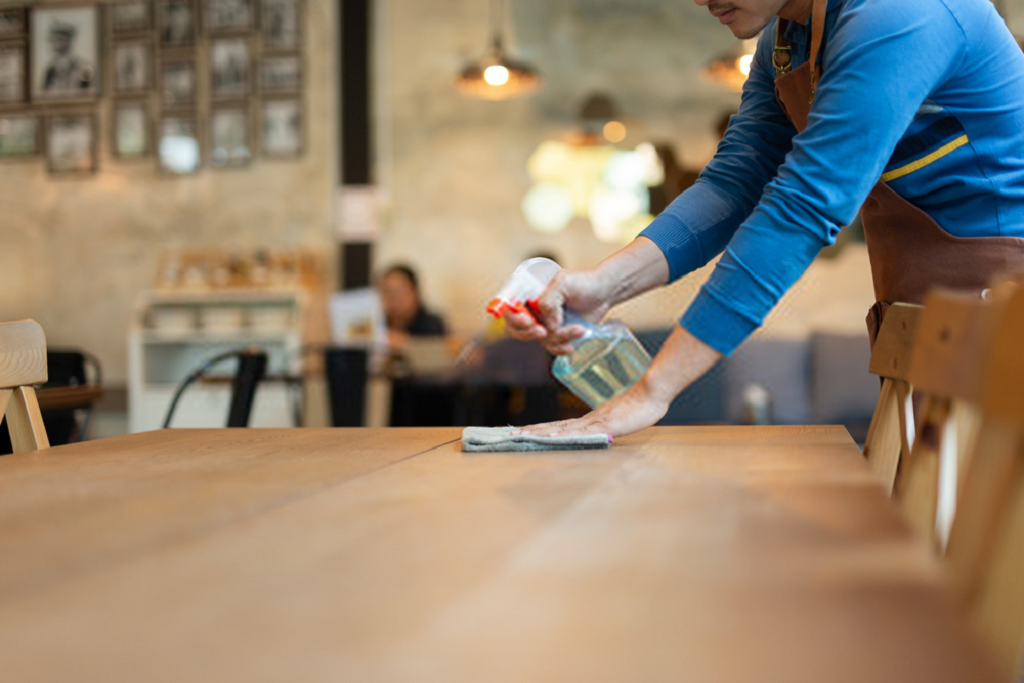
take care of restaurant furniture

Wood that is properly finished and maintained is highly resistant to staining and bacteria as well. Both materials are easy to clean, allowing staff to quickly clear tables to ensure fast turnover of customers.

4. Affordability Is Key

Wood and granite restaurant tables are affordable options, especially considering the long-term value these materials offer. Both materials require very little maintenance, meaning you won’t have to invest inordinate amounts of time and money into their upkeep. Granite restaurant tables may need only occasional resealing, but it is much more durable and less porous than other tabletop materials like marble, soapstone and limestone.

Why Marble Isn’t Good In Restaurants?

Some restaurant owners express interest in marble, but there are plenty of reasons this material is not suitable for restaurants. Marble is prone to staining from glass rings when a coaster isn’t used and from food and wine spills. If you spill citrus juice from a lemon or orange on marble, it will also quickly diminish marble’s polish, meaning this material is simply not as well suited for a restaurant’s dining environment.

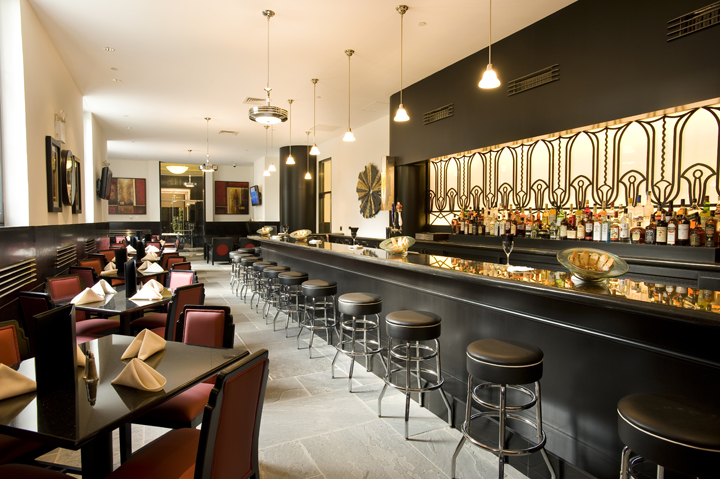
resaturant seating

The edges of marble can chip easily, and the material can crack when exposed to high fluctuations in temperature, which is often the case inside restaurants. Marble can cause broken dishes, due to its surface texture, which can quickly add up to big losses. Because marble is expensive, many restaurant owners view it as a bad investment.

Conclusion

There are many natural material restaurant tables, but granite and wood come out on top. Consider the unique needs of the restaurant to determine which material will work best.

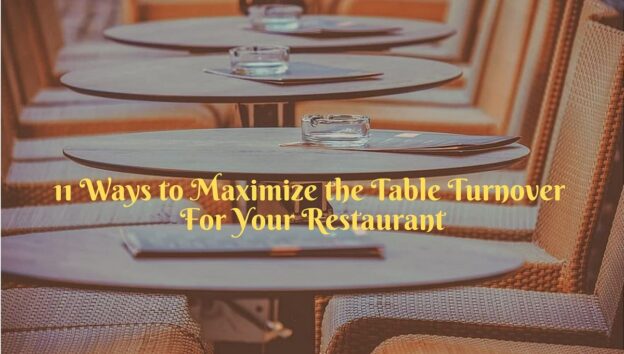
Maximize the Table Turnover For Your Restaurant

11 Ways to Maximize the Restaurant Table Turnover

As a restaurant owner, you thrive to achieve the perfect balance of providing a satisfying dining experience to your guests, making a happy workplace for your staff, and maximizing your revenue & profits. Making the most of available resources requires you to ensure that your restaurant serves as many guests as possible. In the hospitality industry, table turnover refers to the effective utilization of the tables in a restaurant. Although you want to accommodate as many guests per meal service as you can, you don’t want your guests to feel unwanted or unappreciated.

11 Ways / Tips to Improve or Increase Restaurant Table Turnover

The restaurant table turnover rate is a tough nut to crack. Now that you are aware of the importance of table turnover in a restaurant business; here are some of the ways to increase table turnover.

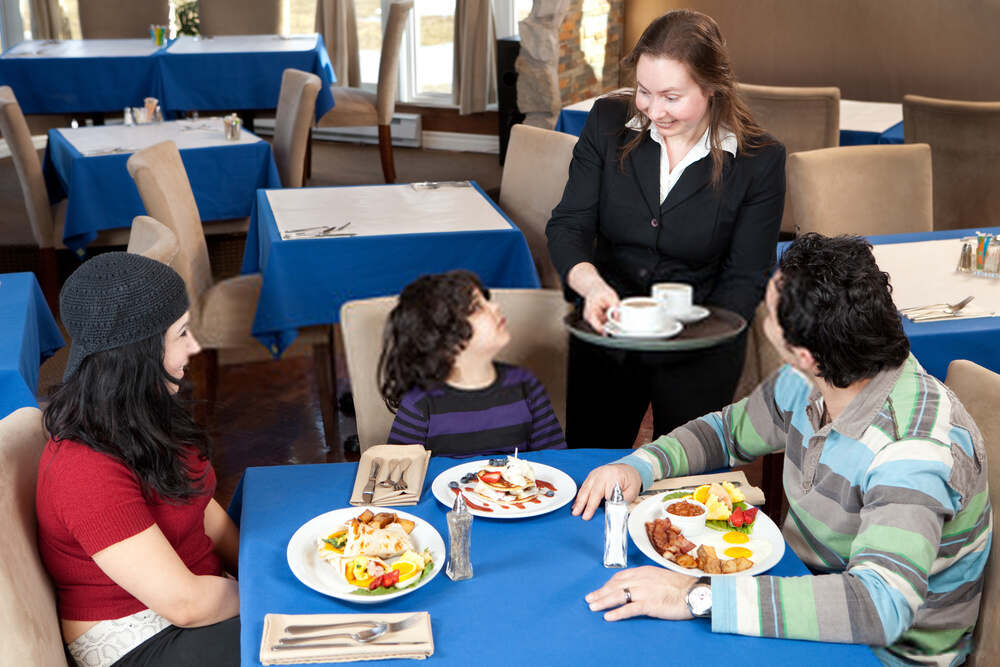
1. Train servers to Greet the Tables Immediately

As soon as your guests arrive at your restaurant, your servers must greet them and offer a table. After all, no customer would want to wait at the reception desk, especially when there are open tables in front of them. As a rule of thumb, you should train waiters to greet the customers and get the drinks order within 5 minutes of being seated. Similarly, a server should get the food orders within ten minutes of ordering the drinks.

greet table immediately

By immediately attending to your customers, you can save some valuable time at each table. Moreover, since your guests might indulge in chatting before ordering, a subtle push from your server will increase the table turnover.

2. Have an Organized Seating System

An organized and efficient restaurant seating system requires perfect communication between your hosts and servers. For example, when guests leave and the busier cleans a particular table, the server can signal the host in advance to signal an opening at the table shortly.

restaurant seating

This way, the host has sufficient time to fetch the next guests in the queue to get them seated immediately. Similarly, having a dedicated waiting area in your restaurant makes it easy for hosts to find customers.

3. Take the Wait Away and Provide Quick Services

In any restaurant, a customer spends significant time waiting. Waiting for the table, waiting to order, waiting to get the dishes, waiting to get the check, waiting for paying the bill, and so on, the list is endless. All these instances pose a challenge to the restaurant staff and room for improvement.

You can increase the table turnout in your restaurant by embracing technology and cutting down wait times. For example, POS devices at the restaurant tables send the order straight to the kitchen. This information helps your kitchen staff in understanding your requirements to deliver the dishes quickly.

4. Don’t Explain the Menu to Repeat Customers

The concept of the restaurant menu is to make your guests aware of the best dishes and try to up-sell the specialties. However, if a particular customer has been to your restaurant before, he has already seen the menu, and retelling the menu is not necessary. Moreover, the entire process of repeating the menu might be annoying to your guests as well.

Don't Explain Menu to repeat customer

A simple way is to train your staff to ask if the customers have visited your restaurant before. This way, you can save precious time by straight away going for the order.

5. Test Out the New and Latest Technology

Investing in technology not only expedites different processes, but it also gives better returns in no time. For example, a mobile app and self-serving kiosks can be a time-saving approach for takeout orders. Similarly, you can introduce table side tablets for quick ordering.

6. Don’t Accept Reservation on Busy Time

If your restaurant gets busy in the evening or during weekends, it’s best to hold the reservations. By reserving tables during rush-hours, you are wasting resources as well as revenue. So rather than keeping tables for customers who might not even show up in time, it makes sense to keep your restaurant walk-in during peak hours. This way, you can increase the restaurant table turnover.

7. Update Your Dining Room

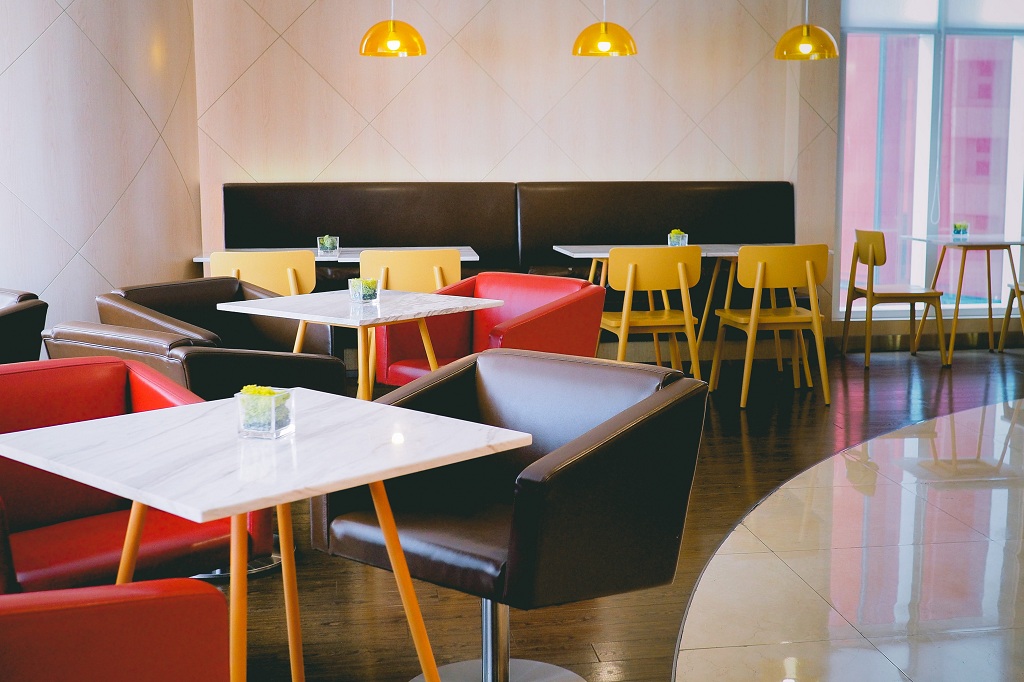
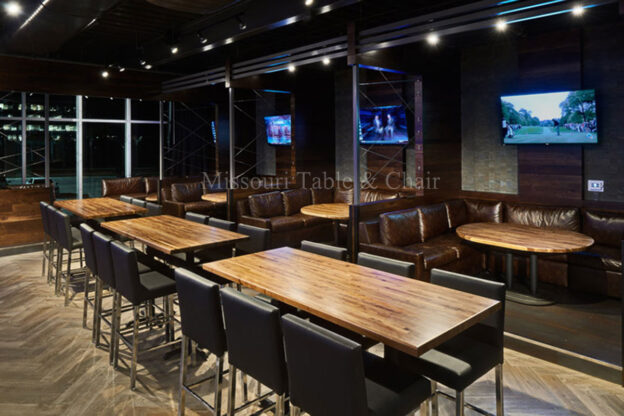
If you are struggling with slow turnover rates, you can consider changing your restaurant layout and interiors. For example, moving the restaurant chairs and tables in the central area of the dining area encourages your guests to finish their meals quickly. Since the central part of the dining area is buzzing with activity and often the busiest, it instills a sense of urgency in your customers. Similarly, the choice of your restaurant furniture can also be responsible for slowing down the table turnover. While anchored booths or corner tables make the customers linger for longer times, movable & foldable tables and chairs in fast food restaurants make customers finish their food quickly.

update restaurant design to improve table turnover

Apart from restaurant layout and furniture, its ambiance can also impact the table turnover rates. For example, exciting bright colors like red, orange, yellow, etc. encourage your guests to eat quickly. Similarly, bold upholstery, bright dinnerware, vibrant art-works, etc. result in quicker turnover rates.

8. Assign Multiple Servers to Large Tables

Customers in a big group can be a lot of work for a single server. Managing such a big group often results in poor customer experience and slow service. You can eliminate this issue by assigning multiple servers for such groups. Distributing workload makes the servers attend customers better, respond quickly to their demands, and quicken the dining process.

While one server is taking the food order, the other one can clear the finished glasses and dishes. Such an approach makes it quicker for cleaning up and accommodating waiting guests sooner, thereby increasing the table turnover.

9. Make the Payment Mode Easier, Quick, and Customer Friendly

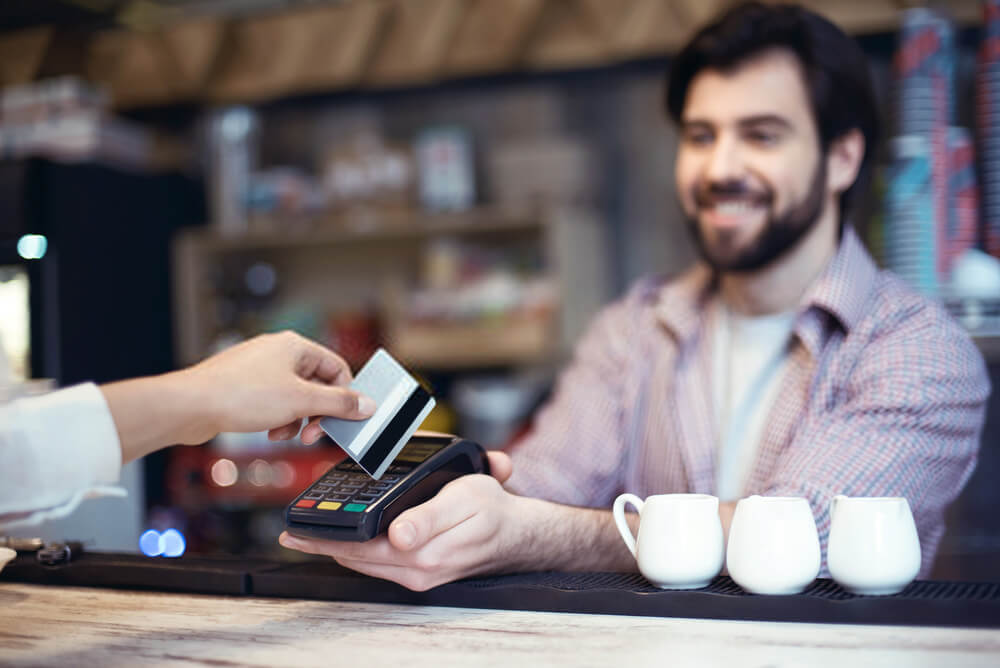
Quite often, clearing the check at the end of the meal can be a tedious and time-consuming process in a restaurant. For example, your servers would collect credit cards or cash, run to the register, print the receipts, return with the change, receipt, etc. back to the table.

Easy Payment Mode

If the customers want to split the bill or pay with gift cards, the time gets even more compounded. You can avoid all this hassle by opting for a mobile POS system for completing the payments at the table.

10. Reward Customers via the Loyalty Program

Reward Customers to increase table turnover

Rewarding your regular customers with a loyalty program is a good incentive to increase the number of guests. You can use these programs to utilize the restaurant tables during non-peak hours. For example, offering discount coupons or complimentary drinks on weekdays is a smart way to generate revenue during otherwise dull evenings.

11. Automate Table Reservation

Manually assigning seats to your customers often leaves room for improper seating layout. On an average day with few customers, this process works fine, but if you are having a busy night at your restaurant, you won’t be able to seat the guests with full potential and efficiency. For example, if you assign a big table to a small group, it might slow down the entire evening and affect your revenues.

Automate reservation

Similarly, using an automatic table reservation system or software will increase your restaurant table turnout by ensuring maximum efficiency and reducing the manual work. You can also use this system to schedule tables and allocate staff dynamically depending upon the flow of guests.

Conclusion:

Maximizing the table turnout requires all-round and efficient processing of every aspect in your restaurant. By taking note of the tips mentioned in this article, your guests can seat, order, eat, pay, and leave quickly without feeling rushed. Hopefully, by adopting technology, rearranging layout & furniture, optimizing the resources, and making these simple service changes in your restaurant, you will be able to maximize table turnout for a profitable business without compromising on the dining experience.

Restaurant Butcher Block tables

5 Important Tips for Choosing Quality Restaurant Table Tops

Choosing a high quality restaurant tables is an important task because the overall décor of your restaurant will create the mood and ambience of your space. The style of restaurant table tops can impact whether your restaurant feels like a high end steakhouse, a mom and pop pizzeria or chic bistro. Your main goal is to determine the type of customer you want to attract, and cater your food, staff, décor and restaurant furniture towards that goal.

Tips to Choose the Best Restaurant Table Tops

If you aren’t sure of your perfect style, visit some local restaurants and find out what appeals the most to you and what you feel you can achieve. Here we will provide a few tips on how to choose restaurant table tops for your place so that you have customers flocking back to your place without carving a big hole in your pocket.

1. Material of Restaurant Table Tops

butcher block restaurant table tops

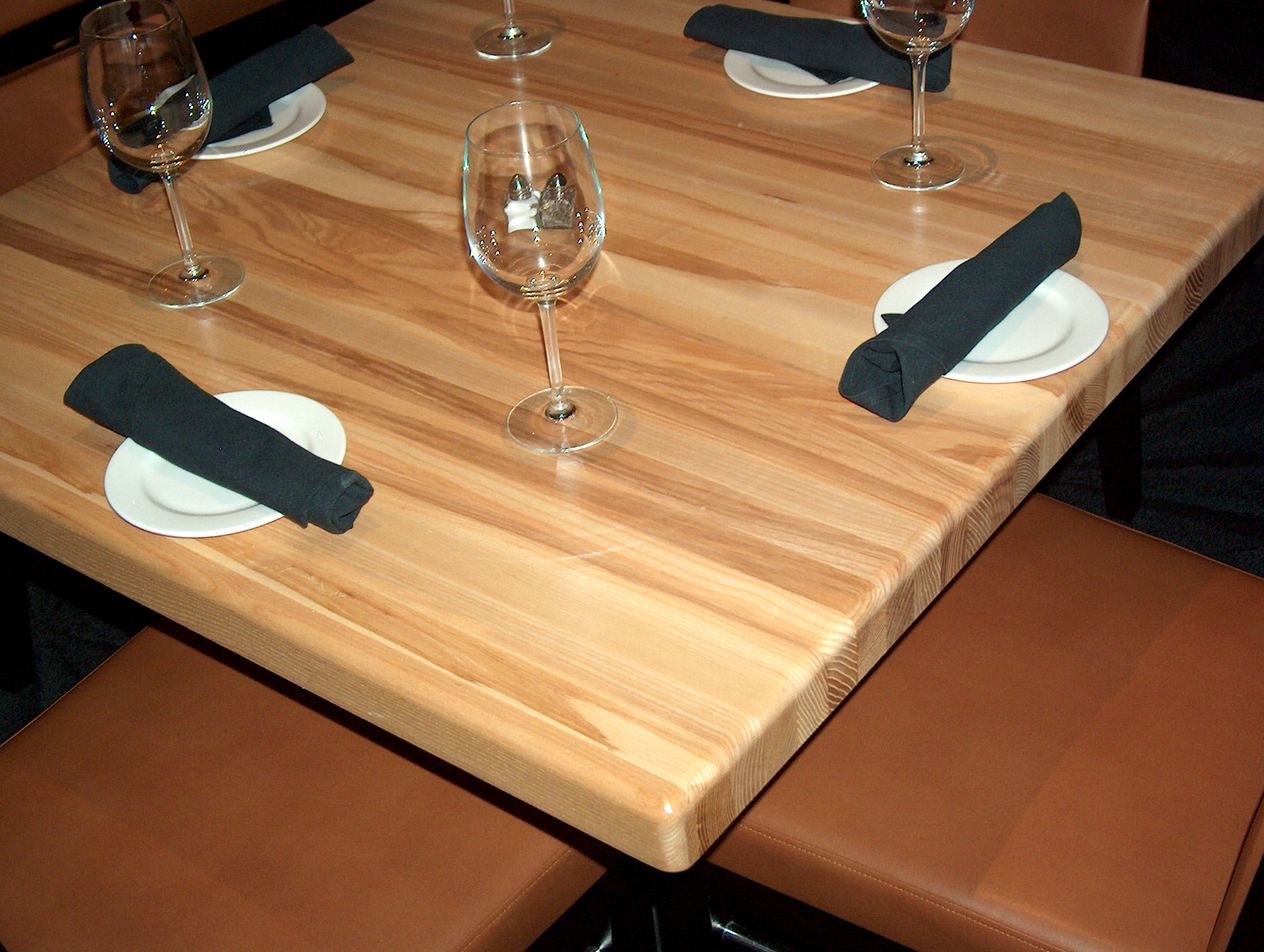
There are a number of materials available for constructing a high quality restaurant table top like granite, butcher block, resin and stainless steel, just to name a few. While all these materials have their own pros and cons, you have to decide which material will go with your restaurant setting. Butcher block table tops bring a piece of nature inside your restaurant and create an inviting warm wood tone. Laminate and resin table tops offer a rainbow of colors and patterns to choose from, are affordable and easy to clean and maintain. Metal table tops give a contemporary and modern touch to your décor and are lightweight making them ideal for outdoor use as well. These are just a few of the many table materials that can be found for perfect restaurant table.

2. Quality and Durability of Restaurant Table Tops

Other factors that you should consider while choosing restaurant table tops are quality and durability of the construction material and resulting table top. Durability is one of the most important aspects of a good restaurant table, and impacts the quality of the table. Buying a table made for home use doesn’t include commercial quality and durability and will not be rugged enough to withstand the heavy use of a restaurant setting. Unless you are going to keep up with the latest trends and replace your restaurant furniture every few years, you should invest in a durable table with a classic style that will last you the longest for a You should never invest in a material that is not durable or lacks quality. Choose something that will not go out of style for many years, is durable and of excellent quality.

3. Shape of Restaurant Tables

restaurant table

Shape of a table top helps in determining the proportions of dining area. Amount of space available after setting the tables will help in giving a clean and organized view of your place. Some of the commonly used shapes include square, rectangular and round. The shape of table also heavily impacts how much space there is to move through among the restaurant tables & seating. This has a great impact on the overall comfort for customers in your dining area.

4. Accurately Matched Table Tops and Base

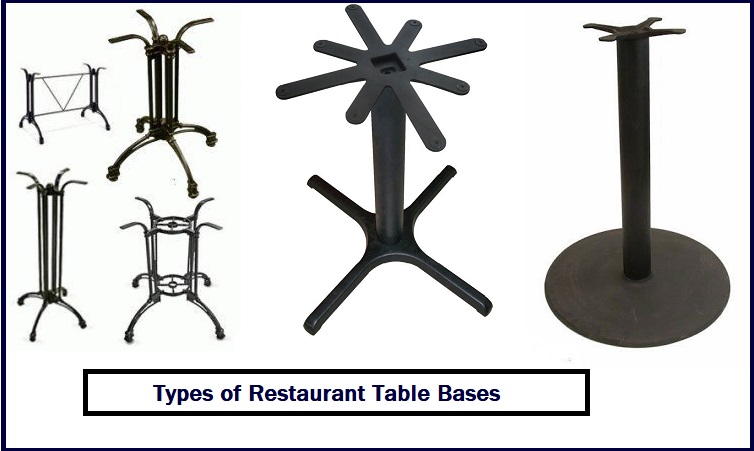
Types of Table Bases

You cannot have a perfect table without matching the table tops with their bases. The table base provides firmness and stability to the table and should never be ignored. The beauty of a restaurant table top will be enhanced by a complimentary table base. The table bases will not allow the table to wobble or fall over. Different sizes of tables work best with round/x-style bases, while larger tables require multiple bases to properly support the table. Work with an experienced table vendor to ensure you purchase bases that will work with the tables you choose.

5. Aesthetics of The Restaurant

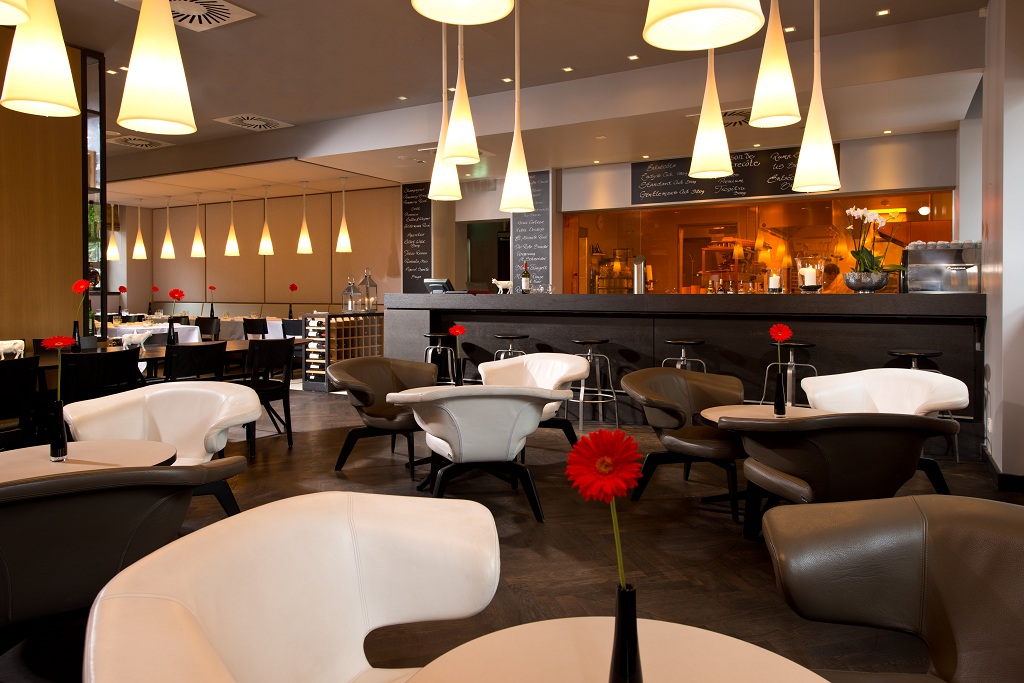
commercial restaurant table tops and chairs

It is equally important to choose a table top that matches with the general theme of your restaurant. A lot of care and precision goes into matching the table tops with the general setting of the restaurant. Don’t ignore the aesthetics of the place, if you want to create an attractive & non-ignorable environment. It is extremely crucial to give a positive experience to your customers so that they return to your place.

Conclusion:

At last, we hope that these tips will help you in choosing the perfect table top for your restaurant. Which will draw the customers to itself like moth to flame. Although the table tops do not get a lot of attention, it important to choose them wisely. They are like adding the perfect spices to accompany your menu items, they silently enhance the value of a place.

Make out of Small Dining Room

How to Make the Most of a Small Restaurant Dining Room?

The ongoing COVID-19 pandemic continues to disrupt the way we carry about our daily activities. We have seen a radical shift in the operation of restaurant businesses all over the world. With the social distancing norms kicking in, managing space in a restaurant’s dining area can be intimidating. The latest guidelines from the Centers for Disease Control & Prevention (CDC) direct you to maintain at least 6 feet distance between the guests in your restaurant.

Whether you are opening a new restaurant or remodeling your existing one, finalizing your restaurant’s layout requires you to consider several aspects before making up your mind. Read on to know how you can make the most of the dining space available in your restaurant.

1. Maximize the Space Without Sacrificing Comfort:

As a restaurant owner, you want to create a comfortable dining area for your guests where they can sit and enjoy their meal. To meet the social distancing norms, you must place two seating tables at least 72 inches apart in every direction. You can utilize this buffer area between the dining chairs and tables for storage, decorative elements, wait-stations, etc. To maximize the space in your restaurant’s dining area, you can consider small tables that can accommodate up to four guests. You can try shifting and placing tables that suits the floor plan of your dining room.

2. Select the Right and Stylish Seating:

modern restaurant seating in small dining room

Rather than treating them as a separate element, think of the restaurant furniture as an extension of ambiance. Your restaurant tables and chairs must be visually appealing, durable, functional, light-weight, affordable, and easy to use and maintain. Restaurant booths are cozy, space-saving, and convenient options to utilize the limited space for the corner areas of the dining room touching walls. As an additional safety feature, you can consider installing partitions or sneeze guards in your restaurant. In the middle of the dining room, light-weight and floating tables are an excellent option to add flexibility. You can use them separately or combine them for parties and large gatherings.

3. Plan Reservations Per the Capacity:

accept reservations

Staggering and allotting restaurant reservations with prior planning can help you in utilizing the dining area more effectively and efficiently. One way to achieve this is by offering restaurant tables at designated times.  This practice allows you to make the most of your dining space and available resources. More importantly, it enables you to schedule the cleaning chores to keep your restaurant spotless and hygienic. Investing in a state-of-the-art reservation system is a smart way to keep track of all your bookings and schedules with minimum staff involvement.

4. There Should Be a Clear Path In & Out of the Dining Room:

To avoid crowding and confusion, hallways in your restaurant must bear appropriate signs to direct your guests. Generally, the hallway must have sufficient space to accommodate the comfortable movement of two people.  Since your guests will pull the restaurant chairs while sitting and getting up, you must leave ample space to allow unrestricted movement in such cases. Under the present COVID-19 times, you can plan separate entry and exit paths to minimize interaction between your guests. While you can keep the front door of your restaurant for entry to the dining room, your guests can use the side or back door for leaving the restaurant. Additionally, this practice reduces crowding at the front door or entrance of your restaurant.

5. Create a Safe yet Inviting Entry:

The entrance to your restaurant gives an overview of your restaurant and usually gives the first impression to your customers. Even if you don’t have the luxury of space in your restaurant, you can use the following tactics to utilize the dining area more efficiently without compromising safety and hygiene:

A. Eliminate the Old-Fashioned Waiting Area:

Traditionally, the waiting area in a restaurant used to be a happening place for catching up and meeting with your pals. However, to comply with the safe distancing guidelines and to avoid crowding, you can eliminate the waiting area al-together and utilize the space to accommodate more guests in the dining room. Moreover, by reducing expenditure on furniture for the waiting area, you can invest in touchless technologies, contactless payments, and app-based reservation systems, etc.

B. Minimize the Traffic:

Restructure the movement of patrons in your restaurant by providing separate entry and exit points. As the demand for take-out order increases, you can set-up a pick-up counter to avoid crowding near the front gate and reservation desk.

C. Create a Sanitizer Station Near the Door:

Create sanitizer stations at all accessible areas like entrance, pick-up counters, reception desk, cash registers, etc. Ensure that your staff and guests sanitize their hands.

D. Install Clear Partition:

partition between table

To isolate and limit the contact between your staff and guests, install partitions on the top surfaces of reception/reservation desk, pick-up counter, cashier, etc. Ensure that these partitions are at least 20 inches high and have small opening for receiving cash and handling parcels.

E. Decorate for Atmosphere:

Wall paintings, furniture, light-fittings, table-layout, colors, etc. are crucial aspects of restaurant design. Whether you wish to create a carefree cafe or an intimate fine-dine ambiance, you can use these elements for the perfect atmosphere. While dark colors like red, brown, etc. create cozy set-up, light colors like green, orange, yellow, etc. create open space.

Similarly, you can use mirrors to give the impression of a longer and wider dining area.

Conclusion:

Getting the best from a small dining room in a restaurant requires careful planning and detailing. From the design of restaurant tables to their placements, from lighting arrangements to decorative items, from reservations to movements of your guests, all these elements can help you in the efficient utilization of the dining area. In the post-COVID-19 scenario, working in a small dining area might appear even more challenging, but the points discussed in the article will be a good starting point. Hopefully, you can use these tips to overcome this daunting task and make the most of small restaurant dining room.