
Author Archives: Gayla

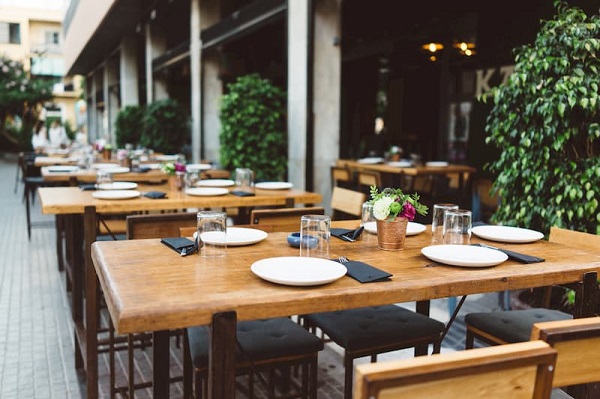
round laminate table

Why Laminate Tables are Perfect for Restaurants

An increasing number of restaurants and corporate office cafeterias are opting to buy laminate tables for use in their businesses’ dining space. Why are laminate tables a classic choice for commercial establishments? In this blog, we will delve into the reasons behind the popularity of laminate table options. Read on to discover the many perks of buying laminate table tops for your own restaurant or hospitality space.

Laminate Tables are Easy to Clean and Maintain

restaurant table tops

One of the top reasons why people opt to buy laminate table tops is their ease of maintenance. A simple wipe down can rid the tables of grime, which is why laminates are favored in commercial establishments. They are also preferred in office cafeterias many different people use the space, and there may be limited staff who can’t afford to spend a lot of time on cleaning restaurant furniture after the lunch or dinner rush.

Laminate Tables are Durable

Most restaurants, kitchens and even cafeterias wish to ensure that they won’t need to be replacing their tables and seating very often. Business owners want to make their restaurant furniture last for as long as possible. Laminate tables are a very durable restaurant table choice, which is why they have been a popular choice for restaurants for so long. The resilient composite and finish surface ensure that they are easy to clean, making sure they stay looking great with minimal work. The finish makes it extremely difficult for water or soap lather to seep into the surface which could cause lasting damage. Just a simple thorough wipe down will keep laminate looking nice.

There’s a Laminate Table for Every Dining Space

laminate tables

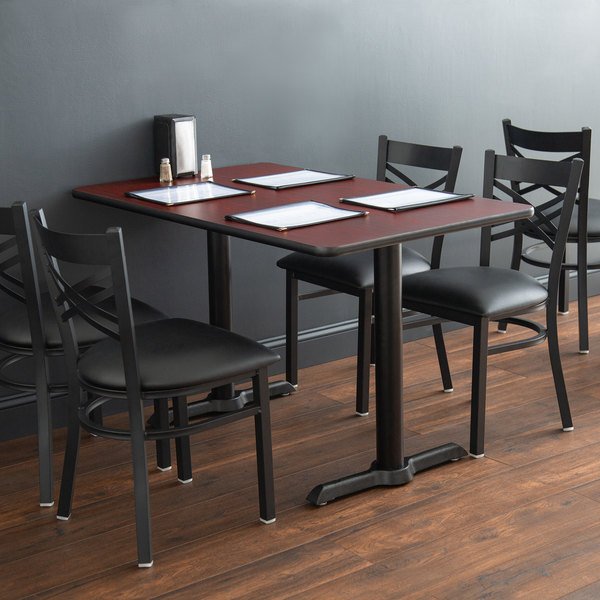
Laminate tables are available in a wide variety of styles, colors and Sizes. The availability of intriguing shades, hues and textures ensures that you can select the exact laminate which makes your dining space looks stunning. There are a variety of laminate design options, including self-edge, wood-edge and T-mold. All of these options make great commercial dining tables. The variety of sizes you can get is also amazing, and means you can use laminate in the specific amount and sizes to perfectly match your layout. Laminate is also easy to match to other tables, granite for example, to give your dining space a visual highlight. Laminate tables are also easy to match to a variety of styles of commercial seating, such as barstools, chairs and even booths.

Laminate Tables are Budget Friendly

Far from being expensive, laminate table tops are one of the most economical options you will find.  Because they are so durable for the price, the value is unmatched, and why laminate is such a popular classic restaurant table choice. As mentioned above, a business owner can select a few granite tables which can become the focal point of a restaurant, and then match a granite finish design on laminate tables to complete the restaurant layout. This can be a more affordable option than purchasing all granite tables. The same would work well with butcher block table tops matched with a wood looking laminate. Or a business owner could go with a large community table which seats 10 people or more in the center of the dining room, with many contrasting laminate tables around it.

Laminate table tops offer a lot of positives when used in commercial dining spaces. Consider all the advantages, and ask yourself whether a laminate table top in your business is the right answer. Many other business owners before you have chosen laminate.

Tips for Finding the Best Outdoor Dining Tables for Your Restaurant

Extending the seating capacity of your restaurant through outdoor dining can do wonders for your business. Apart from increasing your restaurant’s space, it also lets your guests dine amidst fresh air. After all, it is uplifting to be around the smell of food lingering in an outdoor setup. Therefore, as a restaurant owner, utilizing your outdoor space appears to be profitable and promising. Still, choosing the best restaurant patio furniture can seem daunting. With so many materials, designs, colors, sizes, etc., it can possibly feel intimidating. However, with proper planning, groundwork, and resources, it shouldn’t be difficult.

Why outdoor dining is a great investment for your restaurant

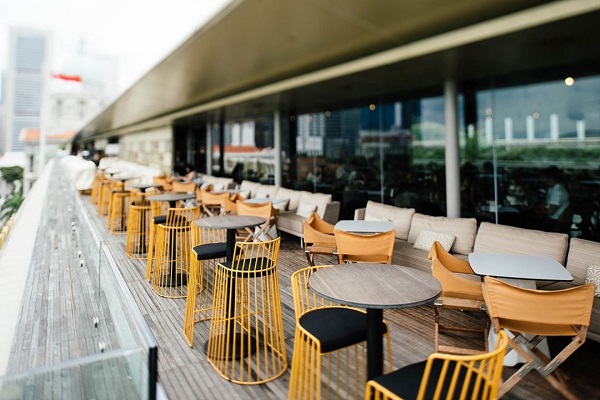
Outdoor Dining

Who doesn’t like to enjoy dining in the open? Fresh air, scenic views, aromatic ambiance can be therapeutic for any customer. Apart from improving your restaurant’s visibility, outdoor seating makes for an interesting dining experience besides increasing its capacity. The enticing sight of dining outdoors can be a rewarding prospect for your potential customers passing by.

Therefore, investing in creating an outdoor dining area can be a sensible choice that pays off quickly. Sure, it is a considerable investment. But if you choose commercial, high-quality materials, it can be a profitable asset. Although the considerations for outdoor dining furniture don’t vary much from indoor furniture, there are some extra factors you need to account for. Now that you are aware of the additional revenue your patio furniture can generate, here are some crucial parameters to consider.

Choosing material carefully

Be it a windy, snowy, rainy, or sunny day, restaurant patio furniture bears the brunt of harsh weather conditions. Therefore, getting the perfect material is even more crucial for your outdoor restaurant table. Finalizing the material for outdoor dining sets the tone for choosing the other design elements. Some of the most popular materials for patio furniture are:

     1. Granite

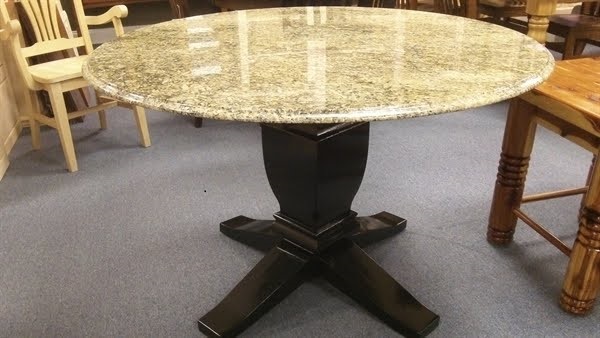
granite table top

Granite, one of the hardest materials, offers resistance to scratches or chips and continues to be an excellent choice for outdoor restaurant tables.  From left-over stains of foods or beverages to burn marks of grills or hot plates, granite tables can take it all. Essentially, granite is a hardened magma, and different environmental conditions result in unique patterns across the globe. Albeit a costly alternative from its counterparts, the versatile granite can over great returns on your investment.

     2. Aluminum

Aluminum, a lightweight, inexpensive, and durable material, is a good choice if you are tight on your budget. It is all-weather proof and resistant to rusting. Also, it is easy to move around and clean, so your staff will love it. Some types of aluminum can hold heat on a warm day, so consider umbrellas or some type of shade for your guests.

     3. Resin/Plastic

Resin or Plastic is another popular material for outdoor dining tables. Due to the evolution of molding technology, these tables are available in eye-catching colors, designs, shapes, etc. Moreover, the current minimalistic trend makes them one of the most sought-after materials for outdoor furniture. Plastic furniture is inexpensive, light in weight, offers protection against fade and corrosion, and is effortless to clean.

     4. Wood

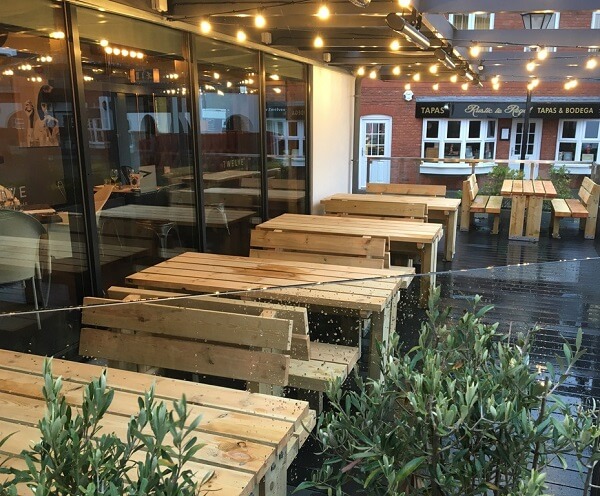
wood outdoor tables

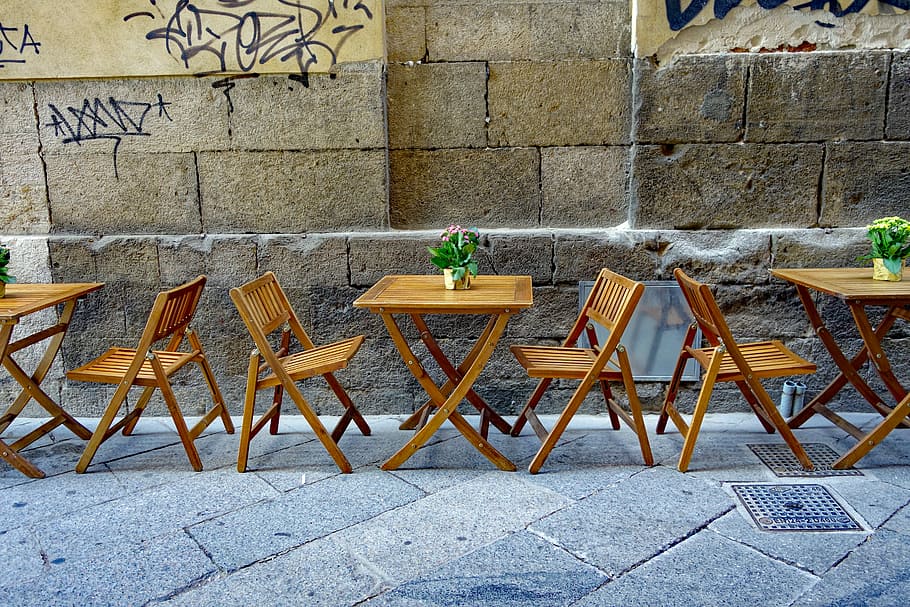
The classic, evergreen appearance and texture of wood is hard to beat. However, many types of wood are not suitable for outdoors. Thankfully, faux teak, having a protective sealant, is perfect for outdoor use. These are easy to clean and can withstand the outdoor conditions of rain, wind, and sun.

     5. Quartz

Quartz restaurant tables are perfect for indoor or outdoor use.  They are a smooth natural stone table top material, and are available in a wide variety of sizes and colors.  They are easy to clean and maintain. Their glossy sleek look makes them a gorgeous highlight in any commercial dining space.

     6. Wrought Iron

Probably one of the oldest materials, the vintage look of wrought iron furniture is sturdy and visually appealing. If cared for properly, they could last a lifetime and even beyond that. This heavyweight, durable material, usually treated with a protective layer, can withstand rainy and windy conditions. Wrought iron furniture requires periodic checkups and maintenance to prevent rust formation and moisture absorption.

Decide Right Shape & Size

restaurant dining

When it comes to the outdoor dining area, most restaurant owners tend to crowd the space. Remember, the appeal of your patio lies in its open and airy feel. Make sure you don’t spoil that feeling when you add furniture. Consider more minimalistic options instead of bulky designs that take too much space. That way, you can maximize your restaurant’s seating capacity without compromising on your customers’ comfort. For example, you can consider backless chairs or barstools to complement bar-height outdoor tables. When it comes to their shape, you can either consider identical tables in circular, rectangular, square, etc., or experiment by mixing different ones.

Accessorize your Outdoor Dining Tables

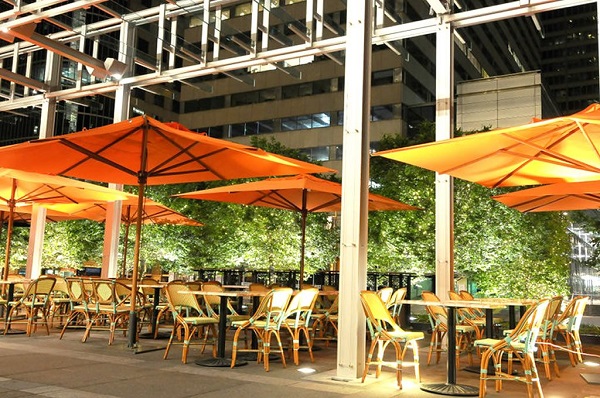
Proper accessories serve many purposes – they create a decorative theme, make the dining experience enjoyable, and help in protecting the tables. For example, umbrellas can offer a comfortable dining experience for your customers on a hot day. High-quality, commercial umbrellas are fade-resistant and can sustain fast winds. Additionally, you can consider investing in air-coolers or mist-fans during the summer season. During winters, create a romantic and surreal experience with bonfires or fire pits. Commercial patio heaters are another way to show that you care for your guests’ comfort.

Consider Theme Consistency

Rather than considering your outdoor dining as a separate entity, think of it as an extension of your indoor dining area. Your restaurant’s indoor design themes, elements, setups, etc., should organically flow to the patio. Although you won’t be able to use the same materials indoors and outdoors, consider complementing furniture. For example, if you have wooden furniture indoors, consider laminate or resin furniture outdoors without compromising durability or appearance. Similarly, using similar colors, artworks, shapes, patterns, etc., along the pathway or sidewalk help in carrying the theme from indoors to outdoors.

Partner with an Experienced Supplier

Buying the perfect restaurant patio furniture can be confusing. As a restaurant owner, you would furniture options to be durable, affordable, functional, attractive, and easy to clean, etc., without compromising your guests’ comfort. This article focuses on some of the most crucial aspects of outdoor dining tables. Hopefully, the points mentioned above guide you in selecting the best restaurant patio furniture that results in a complete dining experience and a profitable business.

When it comes to outdoor restaurant table tops and tables, partnering with a reputed and experienced supplier gives you quality products and peace of mind. At Missouri Table & Chair, with over 40 years of professional expertise, our quality craftsmanship, trendy designs, and personalized products ensure that you get the best outdoor restaurant tables at competitive prices. Explore from our wide range of products or get in touch with us for your custom requirements.

banquet stackable chairs

An Ultimate Buying Guide to Select the Perfect Stackable Chairs For Your Restaurant

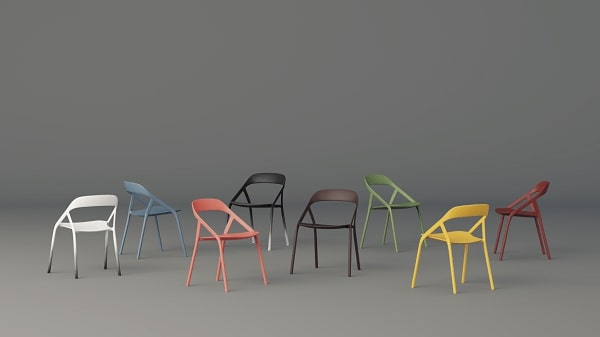
In a restaurant, its furniture is a crucial design element. As a customer, one expects the restaurant chairs to be comfortable, trendy, and visually appealing. As a restaurant owner, you want them to be space-efficient, durable, and affordable. On top of this, it must go with the restaurant’s theme and be easy to clean or maintain. An out-of-place or mismatched furniture might leave your customers confused and even hamper their dining experience. Whether you are opening your new restaurant or remodeling the existing one, investing in stackable chairs and barstools can be a wise decision. High-quality stackable chairs, available in various designs and colors, complement and enhance the interior of any theme significantly. Read on to know how you can choose the best stackable chairs and barstools for your restaurant:

stackable chairs

Types of Stackable Chairs

1. Banquet Chairs

Stackable Banquet chairs with metal frames combine the durability of a busy banquet room and the attractiveness of a classy setup. From traditional designs to contemporary styles, these chairs are available in various colors and patterns to suit your restaurant’s ambiance. The sturdy metal frames, available in steel or aluminum, are easy to clean and tough to stack together for storage. Moreover, you can customize these banquet chairs with fabrics, vinyl, or leather seating options as per your restaurant’s theme. Crypton-treated fabrics are moisture and stain repellent, making them easy to clean. Additionally, fully upholstered backs are stylish, durable, and provide maximum comfort to your guests. Depending on your budget, you can select from the various cushion and back materials.

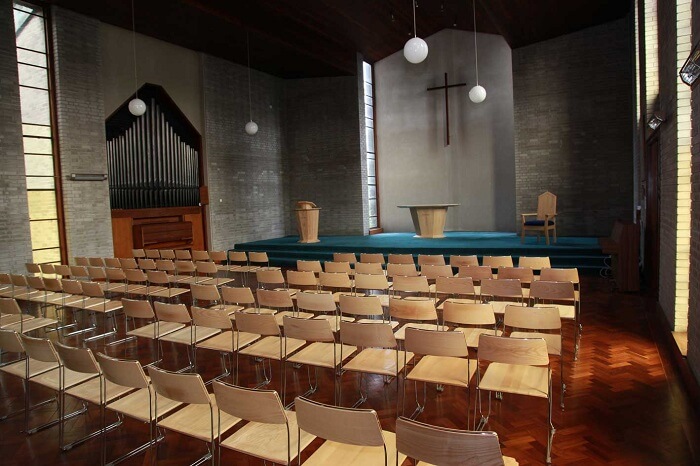
2. Auditorium/ Church Chairs

Auditorium or church chairs also make for a portable, affordable, and versatile seating option in your restaurant. From conferences to social events, from lobbies to the waiting areas, you can arrange them in several ways according to the crowd. They are durable, space-efficient, and ergonomically designed to provide comfortable seating for a longer duration. When in use, you can connect and fit them together in rows for group seating. When they are not in use, you can fold and stack them for storage. These sturdy, stackable chairs are available in gravity-assisted spring mechanisms that retract the seat quietly and effortlessly when not in use. The front-to-back footprint of these chairs is probably the narrowest allowing you to maximize the capacity of your restaurant. Custom options, with or without armrests, let you maximize seating capacity by managing space constraints. The comfortable seating available in several designs, colors, and patterns is easy on your pocket and goes with any theme in your restaurant.

Chair Storage and Transportation

In a restaurant, like any commercial property, you have limited storage space. Whether you are storing the outdoor stackable chairs in between the seasons or the stackable buffet chairs between events, transporting and storing restaurant chairs can be a nightmare. Invest in high-quality, durable carts to make your staff’s life easier. Here are a few options you can try:

  • Chair Carts:  Perhaps the simplest and the most economical way, chair carts are perfect for storing or transporting restaurant stackable chairs. They usually have four caster wheels under a tray and a long handle to push it around.
  • Multi-Mover Carts: The heavy-duty construction of multi-mover carts allows the effortless movement of bulky restaurant chairs. They feature four big wheels that are easy to navigate on any terrain- perfect for moving stackable patio chairs. Additionally, you can use these carts to lift and move other restaurant items like tables, tents, equipment, dishware racks, etc.
  • Mantis or Chair Dolly: Similar to multi-mover carts, mantis consists of two forks that scoop the stack of chairs. First, the chairs are stacked, strapped, and loaded on top of a pallet. The pallet is then scooped by the mantis and transported. This technique is perfect for moving a large number of stacking chairs quickly and works on any terrain.

Stacking Guidelines to Consider

Regardless of their material, construction, and weight, finding the right stacking height for your restaurant chairs is an important safety issue. Although the industry standard for storing and moving stackable chairs is in the sets of 25 or 50, consider the following things:

  • Pay attention to the instructions provided by the manufacturers.
  • Follow the safe-working guidelines for material handling.
  • Clean the chairs thoroughly and let them dry completely.
  • Ensure that you are using the right trolley for storing and transporting.

Summing it up

Stackable chairs and barstools are the perfect way to give a facelift to your restaurant’s ambiance. They are space-saver, affordable, versatile, durable, long-lasting, and visually appealing. Their availability in different materials, colors, patterns, features, etc., makes them suitable for any restaurant theme. Before selecting a particular stackable chair and barstool for your restaurant, understand your requirements, your clientele, your budget, and its intended use.

This article highlights some of the most crucial aspects of restaurant stackable dining chairs and barstools. Additionally, it serves as a handy guide to select, use, and store them, regardless of your restaurant theme. Hopefully, by taking cues from the points discussed above, you will be able to give a complete makeover to your restaurant’s ambiance with lots of happy customers and profitable business.

restaurant table tops

6 Points You Must Know While Buying Wood Restaurant Table Tops

When purchasing wooden restaurant tables knowing about moisture content, selecting the right wood from a quality manufacturer, the durability of the correct finish, where to place, and knowing how to maintain these table tops will help ensure that a mistake is not made when purchasing wood restaurant table tops.  Here are 6 considerations that a person in charge of purchasing restaurant table tops should consider before buying.

wooden restaurant table tops

1. Keep Table Tops at a Balance of Temperature and Humidity

Before manufacturing, the moisture content of wood along with the temperature and humidity of the restaurant environment where they will be used should be considered. Some regions of the USA have different relative humidity than others.

Balance of Temprature

For example, in Florida table tops will have a moisture content of 12% and Arizona may have a moisture content of 6% with the mid-west having a table top moisture content of about 8%. The manufacturer should check the lumber moisture content by computer to be 7- 8% moisture content which then can be built and shipped anywhere in the USA. Splitting or warping problems rarely occur, but when they do it could be due to extremely low moisture content in the wood, such as the table tops being placed next to a wood burning stove. It could also be due to large swings in humidified air or temperature. For example, if table tops are in storage where there is no heat or climate control, the table tops have a good chance to split and/or warp.

Balance of Humidity

Wood restaurant table tops will generally acclimatize to their environment and become very stable if they are in an environment that has consistent humidity and temperature like found in most restaurants. Wood table tops will reach moisture equilibrium matching to the relative humidity of the restaurant. If a temperature and humidity balance between the restaurant and the table top is not established relatively soon after delivery, that is when problems with the table tops will occur. For example, when restaurants are being completed, new table tops many times arrive and are stored in very low or very high humidity levels which can cause the table tops to split or warp.

Wood table tops do not like wild swings in humidity or temperature, and splitting and warping of table tops may occur if wide swings are allowed to persist for more than a few days. The lesson here is to always keep wood tables in a climate-controlled environment allowing several weeks for the table tops to adjust to their new home after being delivered. Shrinkwrapping tables in storage can help maintain the same moisture in the table tops.

2. Select the Right Wood

Wood Type

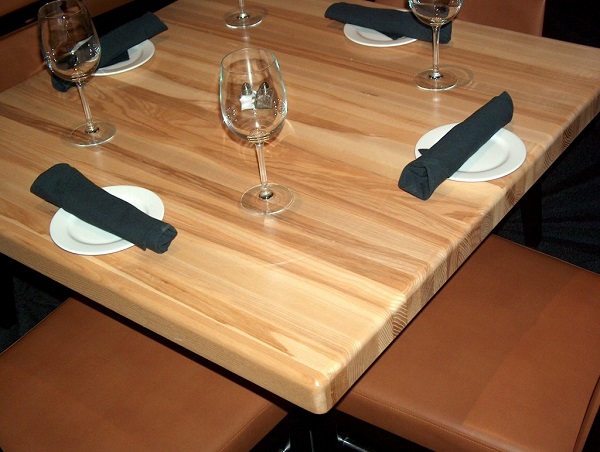
Some woods will absorb moisture and give off moisture faster than others. For example, oak is a more porous wood than ash, so oak will have a tendency to split faster than ash in the same environment. Ash, maple, and walnut have smaller veins and if made with the right moisture content are not as likely to split. Butcher block tends to split or warp less than plank lumber in environments that tend to have moderate swings in humidity and temperature. A few species of wood are not suitable for some applications.

For example, pine is soft and while some restaurants like the worn look of dents tableware make in the pine table top, easy denting of wood is unacceptable to other restaurants. Wood like lyptus, sycamore, teak, or aspen may not hold glue well or be too soft. Teak wood is very popular with many restaurants, but it cannot hold glue well. So the boards on the table top are not usually glued together.

3. Pick the Right Manufacturer

Experienced restaurant table top manufacturers will have the right moisture meters to make sure what is not seen is correct. For example, as mentioned above, if the moisture content of the wood is too high when the tables are built, they may look great, but in a drier environment, they can more easily split. The right manufacturer will know that it is not a good idea to make tables with the wrong moisture content. Quality manufacturers know the behavior of various species of wood and would not frame a solid wood table. Because the flexing of the main part of the table is likely to damage the corner joints.

4. Know the Durability of The Finish

Ironically, table tops that have water spilled on them usually will not be harmed if the table is finished correctly. However, a finish on a table will not prevent the wood from warping or splitting. If the table is manufactured with too much or too little moisture. The technology of wood finishes has changed dramatically in the last 20 years. Lacquer, catalyzed lacquer, conversion varnish, epoxy, and polyurethane are various finishes that can be put on wood restaurant table tops. Even in one category like polyurethane, there are many manufacturers and many different chemical compositions. Today, among the best finishes are good quality two-part polyurethanes. It can last until the restaurant is up for remodeling, which could be up to 10 years.

5. Where to Place Wood Restaurant Tables

All wood table tops should be put in a climate-controlled environment by a manufacturer. It makes the tables close to the environment they are going to be placed. Outdoor placement is not recommended for wood table tops because expansion and contraction of the wood happen more easily outdoors. This expansion and contraction, along with being placed in sunlight, breaks down the wood and finishes very quickly.

6. Know How to Maintain Wood Table Tops

Polishes like those found for maintenance of a residential wood table are not necessary. A quality finish from the manufacturer is all that is needed for a commercial application. It is a good idea to make sure the table tops are not used as workbenches. They are cleaned regularly. If any defects arise like splitting or abuse, these tables should be taken out of service as soon as possible. If the finish is missing and the raw wood is showing, then water can get underneath the finish. Also, cause further damage, which if left uncorrected, will eventually make the table top unusable. A secret some people perform is to recoat their tables with regular polyurethane from time to time. They are making the table tops last the lifetime of the restaurant.

Wood tables are an excellent choice for an indoor table top, as they are inviting to the restaurant customer. Wood restaurant table tops can last many years if they are manufactured correctly, placed in the appropriate environment.

How to Make the Most of Restaurant Business

How to Run a Profitable Restaurant Business during the Slow Season

The restaurant business, like any other industry, is prone to fluctuations in demand and supply. As a restaurant owner, you can only hope to fill your dining area with customers throughout the day, every day. However, the economy is not always prospering, and people are not always ready to splurge on dining out. Seasonal changes, healthy eating habits, holidays, etc, are some of the reasons that affect traffic in a restaurant. The Covid-19 pandemic has made things even worse.

Tips to Make the Most of Restaurant Business During the Slow Season

So how can you prepare your restaurant for the slow season in these testing and uncertain times? Read on to know how to make the most of your restaurant business during the slow season:

1. Update Restaurant Layout

Have you been postponing that much-needed renovation of your kitchen? Perhaps the restaurant tables or dining area requires a change in its layout or design? Moreover, since the Covid-19 pandemic has emphasized outdoor dining, your guests would prefer to sit on outdoor tables and chairs amidst nature.

restaurant-layout

If it’s possible to add outdoor dining somewhere, the slow season may be time to consider it if you can afford it.. If you update your restaurant layout during the slow season, you won’t incur a significant loss in revenues. Consider adding outdoor furniture in your backyard, garage, front yard, or parking lot to elevate their dining experience.So, once the business resumes and customers pour in, you are ready to welcome them with a fresh setup and vigor.

2. Respond to Online Reviews:

Ever wondered that improper customer experiences are affecting your restaurant’s brand image and denting its revenue? The restaurant business, being a service industry, thrives on customer satisfaction and trust. In the world of social media, bad reviews spread out like wildfire. On a busy day, managing and running your restaurant tends to take a toll, and restaurant owners, quite often, just haven’t had the time to properly manage customer feedback on social media.

Response to Customer Reviews

You can utilize this time to read and respond to the online reviews left by your customers. It takes maturity, diplomacy, and courage to take criticism and admit the concerns rose in the negative reviews. Addressing the customer’s grievances shows your commitment and willingness to improve your restaurant’s brand image.  Most customers will feel positive about an owner and restaurant that responds to their reviews.

3. Trim Excess Burden of the Restaurant:

As a business owner, you must manage the finances and prioritize what matters. Here are places to consider cutting back spending.

  • Cut Working Hours:

Although you would want to operate consistently and timely to miss out on any customer, a lull in business might compel you to change the operating hours. For example, you might want to open only during evenings or weekends to optimize the operating cost. In such cases, make sure that you update the timings on your website and inform your customers.

  • Cost-Cutting:

Analyze your finances and find ways to reduce spending towards operation and material costs. For example, if your business has shifted to mostly carryout, you can cut down the inventory of liquors and spend less. Additionally, it makes sense to prepare separate budgets for the slow season to limit your spending.

4. Form Partnership with Local Business:

Collaborating with local business owners can lead to a lifelong relationship built on mutual trust and advantage. Partnering with local businesses allows you to develop a strategy that benefits the entire locality and community. For example, by partnering with local manufacturers of commercial-grade restaurant furniture, you can get discounts and generate business for them as well.

Farm-to-Table

Similarly, by buying ingredients from local producers, you can implement the farm-to-table concept in your restaurant.  As you get the fresh produce straight from farms, your customers feel more confident about the dishes. Additionally, this approach creates trust between the farmer, restaurant, and its customers.

5. Update the Food Menu

The slow season also allows you to update the food and beverage menus. With reduced footfall, you can analyze the orders and take off the dishes and drinks your customers don’t prefer. Similarly, you can identify high-cost items that seldom generate sufficient profits. As people are becoming more aware and conscious of their eating habits, you can include vegetarian options in your menu.

Restaurant Menu

Vegetarian dishes, when compared with their meat-based counterparts, take less time to prepare, don’t require much inventory, and are cost-effective. More importantly, including vegetarian dishes broadens your target segment as you can cater to more customers. With vegetarianism and veganism becoming popular, fashionable, and cheaper, you can adopt them and stay ahead of your competitors.

6. Engage Customers with Live Events

Live events continue to be one of the old-school yet effective means of attracting customers during slow seasons or weekdays. The type of event you select depends on your restaurant type and target customers. For example, if yours is a family restaurant, you can consider karaoke nights or themed parties. Similarly, live musical concerts or DJ nights are popular among youths.

Engage Customers with Live Events

Alternately, if most of your restaurant’s target customers are sports enthusiasts, you can set up a projector and host live screenings of matches. Stand-up comedy show or competition is another fun way to engage with your guests.  Think of inventive ways to add outdoor social distanced events.

7. Exclusive offers for Weekdays Only

Exclusive offers for Weekdays Only

Running promotional campaigns or discount offers on weekdays is an effective way to cover your operational costs. By encouraging and incentivizing your customers to dine during weekdays, you generate additional revenue for your restaurant. You can either update the price of menu items or offer meal and drink combos for weekdays.

8. Focus on Delivery Orders and Take out:

Focus on Delivery Orders and Take out

Take out of food items is a quick and cost-effective way of increasing sales. As the people are reluctant to dine-out during the slow season, you can focus on food delivery and takeout. You can set up a mobile app or website that offers special delivery discounts to your customers. Alternately, you can collaborate with third-party food-delivery apps and incentive your customers with discounts.

Conclusion:

Surviving during the slow season requires you to analyze your entire restaurant business and its operation. Sure, it poses new changes for your business and can be arduous or even frustrating at times. But, it also presents an opportunity to re-invent your business and adapt.

This article gives you some practical tips on preparing your restaurant business for the slow season and making the most of it. Hopefully, by learning from these tips, you can keep your restaurant going even during unfavorable times.