

A Guide to Butcher Block Table Tops: Types, Materials, Benefits, and Care!
Table of Contents
- What is a Butcher Block Table Top?
- Different Types of Restaurant Butcher Block Table Tops
- What types of wood are used for butcher block table tops?
- Various shapes of Restaurant Butcher Block Table Tops
- What are the Benefits of using Butcher Block Tables?
- Pros and Cons of Butcher Block Table Tops
- What do you seal a butcher block table with?
- Match Butcher Block Table With Table Base
- Butcher Block FAQs
Are you considering opening a fantastic new restaurant with the best durable table tops? Then butcher block table tops that are timeless in style and elegance are one of the best options, and will help you achieve your goal. Their rustic look adds natural charm to any space, and will make your restaurant look classic, yet extraordinary. Restaurant butcher block tables are not just a piece of furniture, but also a piece of the decor that adds ambience and style.
What is a Butcher Block Table Top?
Butcher block tables are crafted from straight trips of naturally grained wood that is either fused or glued together. A sturdy and smooth surface that has been used for ages for food preparation. Due to their durability and classic good looks, they have become one of the most popular table styles in restaurants and many other hospitality businesses as table tops. Hard woods like maple, ash, oak, etc. when crafted into butcher blocks and well sealed and finished with a protective coat can be used as one of the most durable restaurant table top styles.
Different Types of Butcher Block Table Tops in a Restaurant
Butcher Block Table tops are defined into three categories below:
1. Edge Grain Butcher Block Table Top
An edge grain butcher block table top (also known as Long Grain or Side Grain Butcher Block) comes in a striped appearance which is crafted by laminating long strips of wood parallel to each other. To create a colorful variant, even two different tree-wood species are often used. Why called the edge grain? Well, the wood craftsmen turn the wood on its edges along the length of the grain, so that it is extremely visible in terms of lending beauty to the table top. And not just restaurant table tops, these Edge Grain Butcher Blocks make great, durable surfaces for baking, rolling the dough and more.
2. Face Grain Butcher Block Table Top
This style is also known as the Plank Style Butcher Block Table top when you have premium grained wood and you wish to show off its grained pattern. Then wide planks of the same are glued together to showcase the same through the length of the table top.
3. End Grain Butcher Block Table Top
In the End Grain Butcher Block Table tops, the hardwood is laminated at the ends of grain in a vertical orientation. And this lends the table top a “checker board” appearance, where you can see small squares of end grains of wood, placed end to end with each other to give traditional style that has a deep aesthetic look and feel.

What Types of Wood Materials Are Used For Butcher Block Table Tops?
Ash, Oak, Maple are just some of the most sought after hardwoods used to craft premium butcher block tables.
A. Maple
Traditional Butcher Block Table top style is crafted from Maple wood. Maple butcher block table tops are not just great grains but also are more durable than others, relatively inexpensive and are more widely available than others.
B. Cherry
When you talk of colorful table top, cherry wood steps in with its warmth and elegance, Edge grain and end grain butcher table tops look great in cherry wood.
C. Red Oak
If you are looking for either side of the table tops to be available for greater versatility in looks, color and elegance, then Red Oak is the one to go for. It is not just strong, but its light-colored hardwood and prominent grain patterns which have a coarse texture make it stand apart from other table tops crafted in wood.
D. Ash
Ash is one of the most practical hard woods that can be used for butcher block tables, as well as many other furniture pieces. Ash takes a finish stain really well to create a stunning looking wood table top.
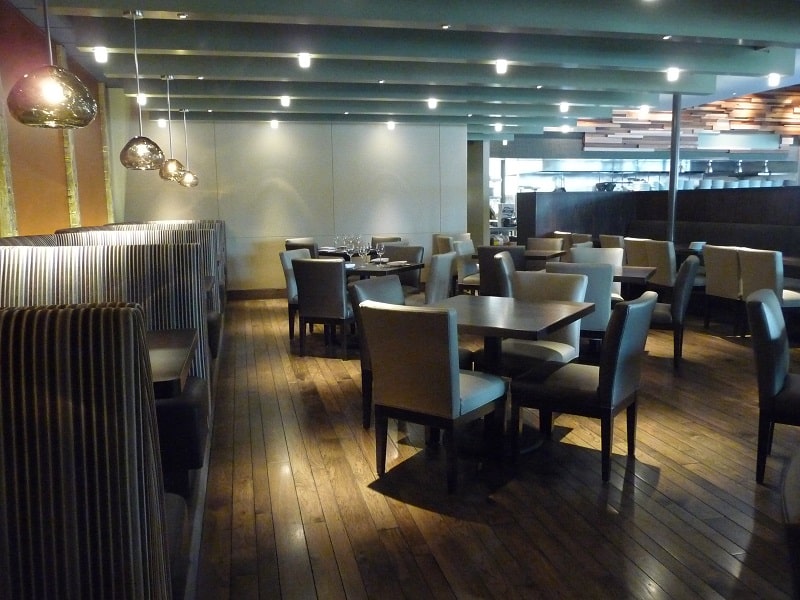
Various Shapes of Restaurant Butcher Block Table Tops
- Round butcher block table tops: These shapes look great in restaurants which have small dining space. And usually, end grain or edge grain wood gives them a great look


- Square butcher block table tops: This is the most used shape as it is great in space-saving plus, every kind of butcher block grain assembly looks great on this style and shape
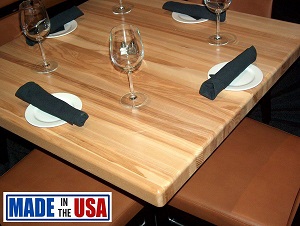
- Rectangular Butcher Block Table tops: These table tops look amazing when in plank/face grain style and edge-grain style and are usually used in restaurants in the family dining zones and even come out great as home dining tables too.
What are the Benefits of Using Butcher Block Tables?
Due to their gorgeous design and durability, the butcher block table tops are always a popular table option in the restaurant industry. Read below for some of the main advantages of butcher block tops:
1. Timeless Style
Known for their strength, the classic style of butcher block table tops works well in a variety of themes, from modern restaurants to farm-to-table to sports bars. When properly sealed and well maintained, butcher block table tops can last for a long time. This is a significant benefit and gives you a great return on your initial investment.
2. Fully Customizable
Butcher block table tops are highly customizable. You can get them in standard 1 1/2 inch thickness or customize them with 2" or 3" thick tops. There are standard colors available such as natural, oak, mahogany and more, or you can bring your own stain color and we'll match it for you. There are also a wide variety of edge styles so there is a custom table top for every single restaurant space.
3. Budget Friendly
The cost of a new butcher block table is economical considering that you are purchasing a table top that has one of the longest life spans among restaurant table materials. When you consider all the custom options you can get, many at no additional cost, you can see why butcher block table tops are consistently one of the top selling restaurant table styles.

Pros & Cons of Butcher Block Table Tops
Every kind of restaurant table top has its own advantages and disadvantages. And it is better to know them beforehand, to ensure your table top remains durable and looks great throughout its lifetime.

PROS
- More sustainable and durable than other types of table top materials.
- Natural antibacterial properties due to raw wood being used which has counter-bacteria oils
- An assortment of colors and styles are available to fit any kind of restaurant, be it a cafe or a five-star dining area
- Restaurant butcher block table tops are budget-friendly due to various types of woods that can be used
CONS
- Over time, if not maintained properly and sealed from time to time, dents and scratches may accumulate
- If you wish to have it longer durability, avoid using the restaurant butcher block table tops for cutting purposes
- A regular maintenance routine is a must which needs proper sealing of the wood time-to-time to protect its smooth surface.
- If left untreated, it is prone even to water damage among all liquids. Be careful and use thick coasters while serving alcohol and acidic juices/soups
What Do You Seal a Butcher Block Table With?
Sealing the restaurant butcher block table tops ensures that the surface retains its elegance and original character plus also stays off harboring microbes. The most common sealing agents are polyurethane and wood oil.
- Natural wood oils penetrate deep into the wood to retain its original texture and shine.
- Polyurethane is a chemical-based sealing agent that keeps the moisture out because it dries into a plastic-like coating over the table top.
Thus, oil the butcher block table top and leave the oil to seep in for a few hours. Then wipe the extra oil away and seal the table top with Polyurethane. While oiling can be done weekly, the Polyurethane use can be monthly or earlier as per the corrosion on the top.
Tip of Caution: Never use sealed restaurant butcher block table tops for cutting purposes
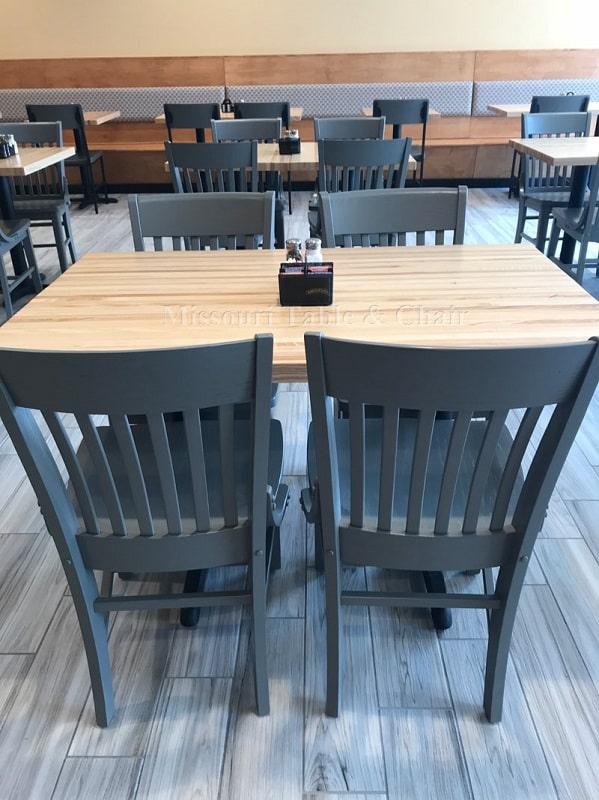
How Do You Maintain Butcher Block Tables at Restaurant
If you practice the following tips of maintaining restaurant butcher block table tops, then we can assure you that your butcher block table tops will last as long as possible.
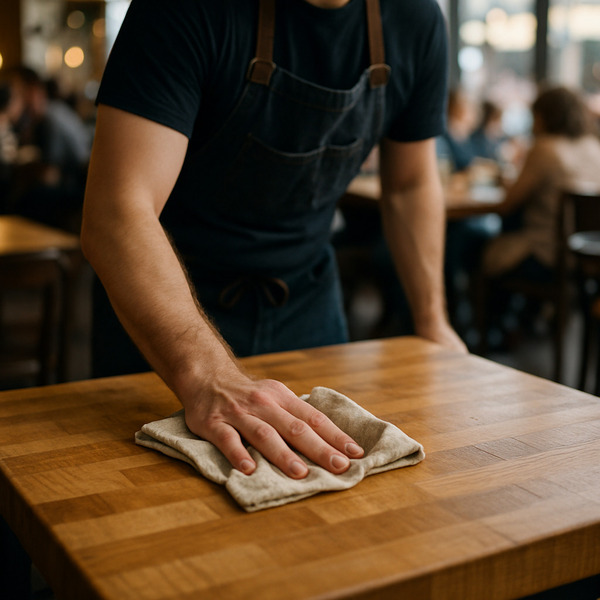
- Regular cleaning of the butcher block dining tables is a must with mild soap and water.
- Each butcher block table manufacturer leaves a maintenance guide for a specific wood table top. Adhere to it throughout life, because they give you the best advice on perfectly maintaining their specific finish.
- Any kind of liquid spill needs to be immediately wiped away; don't allow liquids to soak into the table finish.
- Never use bleach or alcohol-based sanitizer to clean the butcher block table tops. These are corrosive to all kinds of woods
- Only specific wood oil is to be used for sealing, not vegetable oil or any other kind of cooking oil.
- Clean the table top with a soft cloth or sponge; not a scrubbing pad or other abrasive cleaning tools.
- A sealed table top should in no condition be used for cutting.
- Create a fixed cleaning schedule that needs to be daily, weekly and monthly, so that the restaurant butcher block table tops exude the same charm and elegance throughout their lifetime.
When it comes to butcher block table maintenance, the most important element is to wipe up stains quickly. Some butcher block tables have a protective coating with a water-resistant sealant while others may not have a coating. It should be noted that it is not fully waterproof, and if there is an opening in the seal, water can definitely get into the wood. With butcher block tables, it is best to keep them clean from the beginning instead of making the job harder for yourself by waiting. If you promptly wipe up spills, you can avoid damage in the seal altogether.
Aside from wiping any spills quickly, there will be routine butcher block table maintenance to keep in mind to extend the life of your tables. Cleanintg them daily with a mild cleaner and a sponge, as well as a mild disinfectant to eliminate any bacteria harboring in the wood. It is important to remember that some butcher block tables do not have a protective seal and feature untreated wood instead making it more porous. In order to care for your butcher block table properly, you should know which type you have and let that determine how to tailor your maintenance.
As long as you clean the surface regularly and treat any issues that arise promptly, your butcher block table can last for years while retaining the original natural beauty. The more your restaurant staff do to prevent dirt and debris, and keeping the wood table tops properly cleaned, will increase the longevity of your restaurant furniture.
How Do You Match Butcher Block Table With Restaurant Table Bases?
Here's the simple guide to help you how you can adjust your butcher block tables with table base at restaurant.
|
Table size |
Weights |
X Base needed |
Round Base needed |
Seats |
|
24 x 24 |
24 |
T2222 |
TR18 |
2 |
|
24 x 30 |
30 |
T2222 |
TR18 |
2 |
|
24 x 36 |
36 |
T2222 |
TR18 |
2 |
|
24 x 42 |
42 |
T2430 |
TR18 |
4 |
|
24 x 48 |
48 |
(2) T0522 |
(2) TR18 |
4 |
|
24 x 60 |
60 |
(2) T0522 |
(2) TR18 |
6 |
|
24 x 72 |
72 |
(2) T2222 |
(2) TR18 |
6 |
|
24 x 84 |
84 |
(2) T2222 |
(2) TR18 |
8 |
|
30 x 96 |
96 |
(2) T2222 |
(2) TR18 |
8-10 |
|
30 x 37 |
37 |
T2222 |
TR18 |
2-4 |
|
30 x 36 |
45 |
T2222 |
TR18 |
2-4 |
|
30 x 42 |
52 |
T2430 |
TR24 |
4 |
|
30 x 48 |
60 |
(2) T0522 |
(2) TR18 |
4 |
|
30 x 54 |
68 |
(2) T0522 |
(2) TR18 |
4 |
|
30 x 60 |
75 |
(2) T0522 |
(2) TR18 |
4 |
|
30 x 72 |
90 |
(2) T2222 |
(2) TR18 |
6 |
|
30 x 84 |
105 |
(2) T2222 |
(2) TR18 |
8 |
|
30 x 96 |
120 |
(2) T2222 |
(2) TR18 |
8-10 |
|
30 x 120 |
150 |
(3) T2222 |
(3) TR18 |
10-12 |
|
36 x 36 |
54 |
T3030 |
TR24 |
4 |
|
36 x 42 |
63 |
(2) T0522 |
N/A |
4 |
|
36 x 48 |
72 |
(2) T0522 |
N/A |
4 |
|
36 x 60 |
90 |
(2) T0522 |
(2) TR18 |
6 |
|
36 x 72 |
108 |
(2) T2222 |
(2) TR18 |
8 |
|
36 x 84 |
126 |
(2) T2222 |
(2) TR18 |
8 |
|
36 x 96 |
144 |
(2) T2222 |
(2) TR18 |
8-10 |
|
42 x 42 |
70 |
T3030 |
TR30 |
4-6 |
|
42 x 46 |
80 |
T3636 |
TR30 |
4-6 |
|
42 x 60 |
105 |
(2) T0522 |
(2) TR18 |
6 |
|
24" round |
19 |
T2222 |
TR18 |
1-4 |
|
30" round |
30 |
T2222 |
TR18 |
2-4 |
|
36" round |
43 |
T3030 |
TR24 |
3-4 |
|
42" round |
59 |
T3030 |
TR30 |
4-5 |
|
48" round |
77 |
T3636 |
TR30 |
5-6 |
|
54" round |
97 |
T3636 |
TR30 |
6-7 |
|
60" round |
120 |
T3636 |
TR30 |
6-8 |
|
36 x 36 to 51 |
106 |
T3636 |
TR24 or 30 |
4-6 |
|
42 x 42 to 60 |
140 |
T3636 |
TR24 or 30 |
8 |
Butcher Block Table FAQs
Q. 1. Why are butcher block tables are better than regular wood tables?
A: Because these are customizable into any kind of wood color combination, the shape of size is as per the grain type you pick. Since they are made of raw, natural wood, these are budget-friendly due to quick assembling. These have an edge above the regular table tops in look, charm, color options as well the wood character - all in all a timeless charm!
Q. 2. What makes butcher block table tops special?
A: The wood grain character that gives butcher block table tops their warm hue and ambiance; their amazing durability; high-end heat resistance; and above all it is eco-friendly.
Q. 3. Is butcher block a solid wood surface?
A: Usually, the restaurant butcher block table tops are assembled by fusing the grained wood of choice. But the Plank or Face Grain Style can be crafted in solid wood with just one block or two fused together.
Q. 4. Where are butcher block tables made?
A: Butcher block wood table tops can be made almost anywhere. Here at Missouri Table & Chair, though, we manufacture ours from the best wood right here in the United States.
Q. 5. Can I buy butcher block tops that match my space?
A: Butcher block table tops are highly customizable, with a variety of edge options, thicknesses, and the ability to match your butcher block table tops to almost any stain color in your restaurant.